
Rock n Roll Chicago Podcast
The Rock n Roll Chicago Podcast is a weekly podcast that interviews bands and musicians from the Chicago area. The podcast is hosted by Ray Bernadisius ("Ray the Roadie") and Mike Metoyer ("Hollywood Mike" of Cadillac Groove, Mike & The Stillmasters). The podcast covers a wide range of topics, including the history of rock n roll in Chicago, the current state of the scene, and the challenges and opportunities facing musicians today.
Founded in 2019 by Ray the Roadie and Paul Martin, the two co-hosted the show until 2022. In 2023 Ray was joined by Mike Metoyer as the new show co-host.
The Rock n Roll Chicago Podcast is a great resource for fans of rock n roll and musicians alike. The podcast is informative, entertaining, and inspiring. It is a must-listen for anyone who loves rock n roll and wants to learn more about the Chicago music scene.
Here are some of the things you can expect to hear on the Rock n Roll Chicago Podcast:
Interviews with bands and musicians from the Chicago area
Discussions about the history of rock n roll in Chicago
Information about upcoming concerts and events
Tips and advice for musicians
And much more!
If you're a fan of rock n roll, or if you're just curious about the Chicago music scene, then you need to check out the Rock n Roll Chicago Podcast. You can find the podcast on iTunes, Spotify, and other major podcast platforms.
Show your support of the podcast and visit our Swag Store. Just click copy and paste this link in your browser: https://tinyurl.com/yr5pa7zt
The Rock n Roll Chicago Podcast is edited by Paul Martin.
Theme song courtesy of M&R Rush.
Rock n Roll Chicago Podcast
Ep 241 Chad Link
Use Left/Right to seek, Home/End to jump to start or end. Hold shift to jump forward or backward.
Chad Link is a pouring out of emotion! He'll sing you through a tangle of lyrics about struggle and love! Passionately indulging his creativities and deep diving into soulful music. His originals traverse multiple genres from singer songwriter, rock, and progressive loops that blend acoustic percussion with electric guitar improvisation. Born and raised in small town Illinois with a sound as big as the River!!
Podcast edited by Paul Martin.
Theme song courtesy of M&R Rush.
www.rocknrollchicagopodcast.com
Ep 241 Chad Link
Coming to you from the studios at the Illinois Rock and Roll Museum on Route 66, it's the Rock and Roll Chicago Podcast. Hey everybody, it's Ray the Roadie. And this is British Mike today.
British Mike. Yes, do you know what today is? Cheerio day? No, somebody made up a tea, it's national tea day. Oh, okay.
Is what's been going on. Letter T, like in Sesame Street? Well, you know, that would be kind of good. We could do that, you know, a little phonics lesson.
But no, I'm talking tea. Like Earl Grey. Like Earl Grey.
Wow. Or English breakfast tea. Every day is some kind of a day.
It is. They're just making that crap up. But you know what I had though? Some tea? Somebody gave me two samples of Buffalo Trace infused black tea.
Really? Yeah, it was fantastic. Was it? They gave you two samples? Yes. So you sampled both of them? So I did, I sampled both of them.
Okay, you didn't. I thought maybe you brought one with. That's what I did.
To share. Kind of calm the nerves. Relax me in a little bit and everything.
I'm going to fade back into the chair like that. So you can't hear my voice. Yep.
We tell everybody they shouldn't do. But you know. That's right.
You'll be asleep before it's over. Yeah. No, it was interesting though.
They took, it said bourbon. It said bourbon grains. Fermented bourbon grains.
So I guess what they did is they fermented it. And you had the crap left over. And you dry it out and you stick it in a tea bag.
So it probably got corn and barley and rye and wheat and stuff in it. And it tasted like Buffalo trace. It was pretty cool.
Cool. But you can't feed it to the cows because it'll be all like staggering. It'll be all loopy and everything like that.
Yeah. Although we used to feed the fermented apples to make apple wine to chickens and they loved it. Well, it's because they were buzzed.
There you go. They didn't know when you're, you know. That's right.
That's it. And we're getting dark. This went dark fast.
It did. Yeah. Usually does.
Well, should we get on to what we're here to do? Yeah, let's do that. All righty. Let's welcome Chad Link.
Thanks guys. All right. Now, is he the missing one or no? I don't know.
No. Okay. No, but he's here.
So he's not the missing one. He's not the missing link. The missing ones are the two we had to bring in here, I guess.
Right. No, that's chain. Chain.
Gotcha. That's chain link. That's chain link.
Oh, wow. That's too funny. And you can do a lot with it.
You can do a lot. I thought of another one and I forgot it. Yeah.
I thought one too, but maybe it's not appropriate. Sausage link. Yeah.
There you go. Sausage link. There you go.
Smokey. There you go. All righty.
So how are you doing? Real good, man. I don't know what we're here for now. Smokey.
I think it's that smokey link. How are you doing, Chad? Real good, man. Man, good to see you.
So we've seen each other around town. Yeah, yeah. Where'd you come in from? I'm from Ottawa.
You're from Ottawa. Okay. Ottawa, Illinois.
I'm a singer-songwriter. So trying to get out there and play as much as I can doing open mics and doing my own shows and things like that. Okay.
That's good. Yeah. Open mic's the best way to do that for if you're doing solo acoustic stuff and everything.
Yeah. Yeah. Cool.
Cool. So tell us how it started and how you put your sound together and what made you want to do this crazy thing that we call music. Yeah.
Oh, wow, man. To go back to the beginning, I was a hand drummer, high school, long haired hippie kid playing in the canyons out at Star Rock and things like that. Like the Danielson thing with the little hand drum that you spun back and forth like this? No, no, not that kind, but a djembe.
Okay. A djembe, right? You know, I bought a djembe at 16 and started playing drum circles and things like that. Got into music and backing my buddies up.
I wound up kind of deciding to play guitar about 19. So just out of high school, started playing guitar and writing songs and self-taught guy, never had any formal lessons. So yeah, definitely a school of hard knocks.
So you started playing these drum circles when you were still in high school? Yeah, absolutely. 16 years old. How many times did you get beat up? Never.
Never. None of that stuff. You never suffered the school band thing or anything like that? No, no, I wasn't in the band.
I was just, like I said, more of a, yeah, moved to my own beat for sure. Yeah. Big excuse for everybody just to hang out in the woods and beat the crap out of drums and do all that stuff.
Totally, man. That's pretty much what it was. We were a bunch of fun loving hippie kids.
No doubt about it, man. High school and moved on from there to writing some songs and really just learned some basic chords and started to write words down and scream over top of it, right? Well, that is definitely a different origin story. I don't think we've ever heard of that one before.
But beating drums out at Starved Rock, that didn't attract any Indians or anything? Oh my God, dude. It is just such a spiritual cool place. It is such a spiritual cool place.
Absolutely. It absolutely is. You feel it.
I mean, you feel the ghosts at the top of that rock if you ever decide to climb to the top of it. You really do. We're lucky to have that in our backyard.
Oh, yeah. Yeah. Pretty cool.
That's right, Ottawa, man. It's a pretty cool place. So yeah, I think, you know, really just immediately, I think I learned a handful of cover songs that were two chords or whatnot, but kind of just started to do that thing and write my own words over top of it.
And I think at like 21, I did a live recording called Live in the Attic. And you probably can't even find it out there. But, you know, I did maybe 20 songs on there and released that to my buddies and things like that and just continue to try to learn and get better at music.
So I think at about 30 years old, I made an album that I was pretty proud of. It's out there on Spotify and Apple iTunes, things like that. It's called Tell Me True.
OK, Chad Link, you can check that out. There's also produced and, you know, yeah, learning, learning as I went type of thing. And it turned out pretty cool.
I liked it. So you went from so you went from drum circles in your teens and you started taking guitar lessons or teaching yourself how to play guitar or whatever it was. Yeah.
So what about so at about what time do you get to the point where you're like, you know, I'm just going to start writing music with this? Yeah, like right away, like as soon as I started to learn, like to strum like E minor and D or D and C back and forth, I just started to write and play. I really had no formal lessons. I had one formal lesson in my life and I never went back.
So, you know, one of them things I had in college, a guy was great. He's actually a neighbor up the road from me. And and I just I learned Wildwood Flower.
Do you know that song? It's like an old folk song. Yeah, yeah, yeah, right. So that was the one song I ever learned formally.
And yeah, I just went on to writing songs and trying to do my own thing. Is that really your your style? Is that what you were most influenced by would be like folk music or some sort? No, I wouldn't say that. I would say that I was definitely more like a classic rock, kind of like classic rock, Dave Matthews Band, Pearl Jam.
You know, the whole grunge scene fueled me. I'm a 90s boy, you know. When did when did Pearl Jam and Dave Matthews Band become classic rock? Well, I'm saying to go from like, wow, that that whole era of of Pink Floyd and oh gosh, man, how many great, great artists in the classic rock era.
But I was a 90s kid at the same time. So I love the grunge scene, Candlebox and all these bands, pop music at the time. Right.
And then, yeah, I think out of high school or towards the end of high school, I really started getting into Dave Matthews Band and Pearl Jam. And these things just kind of started to inspire me. Right, right.
You have to remember, you're talking to a couple of guys that remember when Pearl Jam released their very first song on the radio. Right on, man. What was it, Jeremy? Or what was their first song? I'm pretty sure it was something like it was either Jeremy or it was or it was.
Alive. What's the I was going to say Alive. The other big one off of that hit or whatever.
I completely remember when they came out with that album because it was right about the time that, you know, you know, hair metal started going away. Yeah, right. Right.
80s is kind of falling off. Yep. And here come the Red Hot Chili Peppers.
And here comes here comes Pearl Jam. Nirvana. Here comes Nirvana and all those bands and everything.
And everybody that was in the hair band, like myself at the time, you know, were like, who are these guys? God, I wish they would just go away so I can start playing music again. So I remember when they were on the radio. Yeah.
And I bought that first Pearl Jam album on a CD. You know, for those of you listening to this who are about 30 years old, that's this thing that's round about the size of a donut. Oh, yeah.
Still got them. You used to need something to play it on. Yes.
You couldn't just do it on your computer. Yeah, exactly. Yeah.
We were saying that 10 years ago about vinyl records. Yeah. And they're back there.
Yeah. I can't wait till eight tracks come back. Yeah.
You know what? I actually still have one. I actually still have one because I had a 70. My first car was a 71 Buick Skylark, and it had an eight track player in it.
And the same eight track tape that was in it stayed in the glove compartment the time I the entire time I had that car. And when I got rid of the car, I kept it. You'll never guess what it was.
It was the one that everybody has. Took a wild guess what that eight track might possibly be. Oh, geez.
I don't know. I had a bunch of. I don't know.
I'm going bad company or something like that. No, no, no. I wish it was bad company.
Everybody that had an eight track collection had the village people on eight track. Oh, gee. YMCA and in the Navy and all that stuff on eight track.
White plastic eight track cassette tape. And it only plays if you get that matchbook underneath it to lift it. Yeah, to lift it up a little bit.
Yeah, that's right. Like an NES game. Yeah.
You know, that's that's why people like us are so pissed off, because, you know, we had forty fives and we had albums. Right. And then we went to cassette tapes.
Right. And then we had to get rid of all of our vinyl and our cassette tapes to get the CDs. Then we had to get rid of all of that stuff that we spent that money on.
So now we can download music for free. And we got to have a special thing to play it. And that's that's why that's why Gen Xers are always pissed off.
Think about the amount of money we've spent and had to throw away. Exactly right. To redo to redo our record collections.
That's right. Anyways, right before this went down to the record store, bought the boy 18 a record, right? For his birthday. So go.
Oh, really? Yeah. No kidding. The vinyl record.
Yeah. What'd you get? Got the greatest hits of the Smashing Pumpkins. There you go.
On vinyl. Yeah. Wow.
Pretty cool. Right. Wow.
That's pretty cool. I remember when Smashing Pumpkins released their first song. Jimmy Chamberlain, a local local guy.
I saw the Beatles on Ed Sullivan. Yeah. Did you? Oh, did you really? Nice.
Yeah. Yeah. No kidding.
Well, local band, you know, Jimmy Chamberlain's from Juliet, right? And his older brother, Paul, still lives here and ran a transmission shop right down the road for years. He just retired a few years ago. And Paul and I, his older brother, Paul, who I believe is the guy that taught him how to play drums.
He and I were in a band together. No kidding. Yeah.
So you're talking about some local people. Small world. Absolutely.
Cool. Really cool. So what was the first song you ever wrote? Oh my gosh.
Yeah. Like some of them songs I don't even know anymore. You know, I got books.
They're probably in it. Don't know them, to be totally honest with you. I got a lot of songs I don't remember that I wrote or just certain books that existed.
And but I do have some that from them originals, you know, like when I, I think I did on a recent podcast not too long ago, but it was called Southern Jackets, a 20 some year old song. Yeah. A ton of fun to do.
So some of them do live on. Yeah. But definitely a lot of them have fallen away.
Here's the test. Watch this. How many songs have you written? Yeah.
I have no idea. Yeah. So many.
So it's not four. I mean, you know, if it weren't a lot, you'd know. Yeah.
So many. Yeah. And how many have you not completed? Yeah.
And you know what? It's almost amazing because those uncompleted ones are like the stockpile, you know, right? I always go into these books and I come to points where I'm stuck or whatever. I'm pulling lyrics out of things that sometimes are eight or six years old or whatever. They just been in these books.
So I do have quite a stack of them. I've been writing for years. I think I really got into writing my senior year.
I had a class called creative writing. It was with a guy. We went into this classroom.
It was nothing but couches. Everybody kind of just hung in, hung out in there and couches. And we wrote stories.
We wrote poems. We shared with each other. And man, I just, I loved it.
And I've continued to write ever since. Yeah, man. Are you born and raised in Ottawa? I am.
You are. And you live there now and the whole bit. I sure do.
Ottawa is a cool little city. And I shouldn't say little anymore because it's actually getting pretty big. There's a couple of places like in the downtown area that are popping up that are what's the there's like a there's like a wine.
Yeah, we got. It's like a high end martini bar. And sure, there's there's there's a couple of them.
But you got like the one that you might be thinking of might be like Cat's Eye. Oh, yeah. Yeah.
And then there's Tangled Roots down there. The brewery downtown, you know, so we love that place. Oh, man, martini bars.
There's lots of places to go. Have you played Cat's Eye yet? I have not. Cool place.
I have not played there. Absolutely cool place. When we're done with this, I can probably get you to name and to contact the people that.
Yeah, let's do that. Because I've played there a couple of times. What a cool place that is.
Yeah, I love it. I've gone down and had drinks. I haven't played there, but I definitely have had drinks there.
Yeah, excellent. Good drinks, man. Yeah, no, absolutely.
I like drinks. Yeah, we like drinks. Yeah, we always do that afterwards.
What's the what's the place you guys love that? You were talking about the tea. It was the tea. Buffalo Trace.
Buffalo Trace. Yeah. My my dad was just down there.
Oh, no kidding. And I listened to Dead Freddy. Oh, did you? Recently in the past week or so, I listened to that and he come over with a handle of vodka.
Right. So you guys just said you're not going back to vodka anytime soon. Something like that.
But I thought it was funny. I'm like, wow, here's this Buffalo Trace. I really hadn't heard of it.
So yeah, small world. I was like, OK. Your dad just went down there and he went.
Yeah, he was on a little trip. Did the trip down there. It's a fantastic trip.
It really is. They were closed for a while. They were flooded.
Yeah, I heard that. And I don't know where that fell on his trip. But apparently they're unflooded.
Yeah, they're fine now. I mean, it was just like their bottling facilities and something. I don't think they actually lost any bourbon.
No, I don't think so. Just their bottling facility. Thank God.
Yeah, thank God. I would have headed down there with growlers to fill. Yeah, yeah.
To save it. But you know what I like about auto and speaking from a music standpoint, because I've played there in many places and a few times in the whole bit, you've got that small town feel, right? You've got that small town country feel and farmers and everything. Then because of Starved Rock and that whole thing, you got a lot of visitors going there every single weekend, especially now.
It's going to probably start to ramp up. And you got the river that's going through there. And you've got a club for everybody.
You want a sports bar, there's a sports bar. Yeah, there is, man. You want a hamburger joint, there's a hamburger joint.
But there's always cool music everywhere you can find. And it's a little bit of everything, depending on where it is that you go. If you go, if you go really south on like I-55 and get to places like Dwight and Pontiac and stuff like that, all the booking agents like to send country bands to those places because they think, oh, they're out in the middle of a cornfield.
They want to hear country music. No, you know, they want to hear all kinds of different music. And auto is one of these places where that all kind of comes together.
You got a little bit of everything. You really do, man. It's a cool town.
I've been there, like I said, born and raised. And it's been awesome to watch it like turn into what it is. When I was a kid, man, all them downtown stores were closed and boarded up.
And, you know, it's really a cool place now. Yeah, yeah, yeah. And I'm sure there's plenty of businesses that would like to sponsor our podcast.
Because we're always looking for sponsors. We are always looking for sponsors. Yeah, definitely.
Right, right. So any local bands or artists out of Ottawa that you saw coming up that may been an influence to you over your career? Yeah, I mean, you know, I think that always learning from my buddies. You know, a lot of the people maybe that I played with and grew up through the years playing with aren't really into it anymore.
Maybe I'm 42. A lot of them have just kind of slipped away from it. I never I never grew out of it.
There's all kinds of great artists out there, man. You know, I don't know where to start, you know, or I'm kind of drawing a blank. But it's exactly like you said, it's very wide array of music.
I mean, there's a lot of folk scene out there. There's a lot of great cover acts out there. Yeah, if you're out that way, there's always live music, man.
And there's great people to see. No doubt about it. Yeah.
So 20 years ago, where were you drawing most of your inspiration from for your songwriting? Yeah, I mean, I think that I was drawing it from my buddies. You know, like we were all in a group, to be honest with you, why I started playing guitar and like I was I got a PA system, right? Because my hands are hurting from the hand drums and I'm playing and I'm like, all right, I got to get a PA or something. Now they're killing me, you know, and so then they all took over the PA, right? They're like, all right, we got a PA now to play and sing.
Isn't that how it goes? It's like when you're when you're the first one of your buddies to buy a truck, all of a sudden we all got a truck. Yeah, yeah, absolutely, man. So then I'm getting a guitar, you know, so I started to play guitar and that was kind of my original inspiration.
So and then started writing and we just we all played music, man. There were so many musicians in Ottawa that were around my age. Yeah, so I don't know.
I don't I can't really name drop. I can't really say a certain person. A lot of these people were just people that were my buddies back then that played and don't really keep up with it now.
Was it a lot of it? Just a bunch of guys getting together and jamming and next thing you know, a song comes out of it or or was it more time spent by yourself in your bedroom? Oh, yeah, spent spent by myself, right? And no doubt about it. But we all did that, you know, we all had and we were all about the same kind of artist. We were all original artists making our own music, coming back to the party.
Let's do this one. Just wrote this one and we just we all shared songs. Yeah, nice.
Do you remember your first gig? Yeah, my very first gig would have been like house parties and things like that. But I did have finally had my very first gig when I was 21 would have been at the lounge shooting Park Road. OK, I opened for a group called Punch Fatty.
Punch Fatty. I have heard of that. OK, so it was a reunion.
Wow. OK. And they hadn't been back together for a long time.
Chris Farrell is in that band, was in that band. And I know Brian Newman was in that band. I don't know who drummed for him.
But there was another group called Slick Adams that was just coming out back then. And it was a big country group. And I was just a 21 year old kid.
I had a drummer. Yeah, it was acoustic guitar and a drummer, man. And we got out there and opened up for them guys.
Wow. Probably about 400 people in there. I've been hooked ever since.
Acoustic guitar and a drummer. That's great. Yeah, excellent.
Excellent. And so what's your favorite gig over the years then? Oh, man, I don't know. I love playing everywhere I play.
I really do love to play music. I think one of the cooler things that I've done was maybe like the Northern I just played up at NIU. I did the thing sessions from Studio A. OK.
So that was on NPR and WNIJ radio and stuff like that. So that was nice. You know, radio era guys here.
It was a big deal to be on the radio. That was my first time being on the radio and writing songs for 20 some years. So no kidding.
I was really excited for that one. Yeah, pretty cool. I think it's about time we hear some of these.
Yeah, yeah. Let's let's find out what it's all about. Yeah, let's do that.
Let's take a pause and we'll be right back. Sounds good. You're listening to the Rock and Roll Chicago podcast.
Hey, everybody, it's Ray the Roadie. And this is Hollywood Mike of the Rock and Roll Chicago podcast. If you've been joining our weekly program, we have great news for you.
Just tune in to Road to Rock radio on Mondays at 7 p.m. Central time and you can hear a rebroadcast of one of our past episodes. Then again on Thursdays at 7 p.m., you can hear our most current episode brought to you by the Illinois Rock and Roll Museum on Route 66. So go to Road to Rock dot org, scroll down and click on radio station.
That'll bring you to the Road to Rock radio, a station committed entirely to the great music from Illinois, from Chicago blues born on Maxwell Street to today's rock and roll and everything in between. 24-7 all music with its roots in Illinois. Where Sunday nights just got a whole lot bluesier.
Get ready for the Bus Stop Blues, a show that takes you deep into the soul of the blues with classic hits, road stories and live jam sessions. Hosted by blues man Kevin Purcell and me, the one and only Road Bill. The Bus Stop Blues is two hours of nonstop blues, banter and badassery.
Check out the Bus Stop Blues podcast at thebusstopblues.com where you can listen on Spotify, iHeart, Apple Podcasts or any other major podcast platform. Hop on board the Bus Stop Blues where the blues never stops rolling. And for the first time tonight, we've got in the studio live Chad Link.
I'm going to do an original song called My Oh My. I got my boy Hudson Link on the cajon with me tonight. That look on your face, my personal space, I'm out of due, I'll be turned on by you.
Dreams, blessed dreams. All right, Chad Link brought his own fan club and everything with him. That's right.
How about that? I love that fan club. Yeah, that's great. But it's always dudes.
It's always guys screaming like that though. There we go. You got to balance everything back.
There we go. Now I'm back. There we go.
Now you're back and everything. Nice home playing over there, young man. I was making myself some tea.
Oh, is that what you were? Some tea? Making some tea? Making some tea. A spot of tea. A spot.
All right, we're done. We're just so done. I know.
Yeah, you can put that down. Just come back down and relax. We'll do another one a little bit.
Let's talk a little bit more. Yeah. So what's the story behind that song? Yeah, so that was a song off my last album, um, Tell Me True.
It was, uh, the song was called My, Oh My. Um, story on that song. Oh my.
I guess it's about swooping up a woman and taking off with her, huh? Come follow me with my dreams, man. And it says it right there in the chorus. So.
Yeah. Yeah. That's what it's about, right? Yeah.
Was that you? It's always you. Okay, that's good. I guess making sure, you know, we go telling tales out of school or anything like that.
You never know. Right. Yeah, that's why musicians do it, right? It's always for a woman.
That's right. It is. No, not really.
So it's, uh, man, I've, I've liked that track a lot. Um, it's all done on a, you know, electrified and, and on the album. So doing it acoustic lately has been a lot of fun.
Kind of been, you know, rebirth of it or whatever. Yeah. Going around doing a lot of these, uh, open mic nights and, and, uh, podcast type things like that are acoustic.
So. Do you have your own band or do you always perform solo? So I usually perform solo, but, um, I do do a little bit of, um, band work right now, um, with the family. So it's, it's a ton of fun.
Uh, it's called, um, Rickson Lee revival. Okay. Um, and, uh, Rickson Lee is my three boys, last names, the last three letters of their last name, Rickson Lee.
So we got Hendrix, Hudson and Harley. And, uh, right now we're just a three piece where, uh, my wife plays the bass. Um, my boy plays the drum set and I play the guitar.
Wow. So ton of fun, man. Yeah.
We, we went around all, we're going to be a band for two years here in July. Okay. So, um, you know, Hudson's been able to back me up on the drum since he was seven.
Wow. Nice. And, uh, he, we, I don't know if you guys remember this, but back then, gosh, we're going back about 10, 11 years ago.
Now there was a guy, there was a kid named Avery Mulligan. He used to do Tom Sawyer by rush on the drums on YouTube. Do you remember seeing that? Yeah.
Yeah. So we, and him were watching him and I'm like, Hey, what do you think about playing the drums? It's like, yeah, I'd love to play the drums. And I'm like, let's sell that motorcycle and get some drums.
Cause he didn't like his motorcycle back then. Right. Right.
And I had no kidding, man. He could play right when he picked up the sticks. Wow.
So you sold a motorcycle to get drums. Yeah. He was only seven.
You can't be too hard on them. Oh, that's, that's true. That's true.
And he had a motorcycle at seven. Yeah. How many kids have motorcycles at seven? No.
Okay. Well, I guess that depends on how many kids have insane fathers. True.
Lots of them. I rode a motorcycle when I was seven. I get it.
I get it. That's fun. Well, that's pretty cool.
So about two years, you guys have been doing that together? Yeah. We're going to be a band two years here in July. Last year, we went all over the place and around our area playing.
We played a whole bunch. I don't know. We probably played 15 or 20 times through the summer and fall, and it was a blast.
So we took the year off, get him out of high school. He graduates Friday. Wow.
Congrats. Congratulations. We're just getting back to practicing and kind of getting after it.
We played a gig a week ago and we got some more coming up. Through the summer, not as many as last year, but we do have some coming. Right.
Right. Any plans to really just kind of go for it? Yeah, that's totally why I'm here. That's what I'm doing, man.
I got ChadLinkMusic.com. I'm trying to get out there and trying to push my music. I just released an EP. It's part of a three-volume EP.
Instead of an LP and releasing a whole album, we're going to split it up into three parts. Right. So be checking next month or two.
The volume two will be dropping. That's called Love Songs. And then volume three will be after that.
It's called Bad Tattoo. Right. I just released It's About Time.
OK. It's three songs. Yeah, so I'll self-produce stuff again, you know, and I'm just trying to maybe get my stuff out there, hopefully get a publishing deal, maybe get a chance to go around and play this music as much as possible.
So what are you doing from the business standpoint, from the business side of everything? I mean, to say I'm getting my name out there and you come out here and you do a podcast and stuff like that, but there's definitely a business. So that's why it's called the music business. Right, right.
So from a business standpoint, what are you doing to get yourself out there? I mean, as far as publishing your music, are you doing the thing that everybody does by sticking stuff on Spotify? Or are you taking that kind of like a step further? What are you doing? Yeah, no, I'm just using your simple distributor. I'm using DistroKid right now. So it's a pretty simple platform.
I don't know if, you know, I'm talking to people that don't know what it is. It's basically $40 a year, maybe even cheaper than that now. $25.
I buy the other plan. It costs $40 a year. You can put as much music, unlimited music out there as you want.
You know, back in the day with copyright and things, if people aren't aware of like what really is in play there back in the day was like, how do I copyright this? I don't want it to get stolen this or that. When you write a song and you record it right then it's copywritten. So I always record myself.
I write songs. I just record myself playing them and then go through the whole thing of trying to get some music together to put on, you know, Spotify and iTunes and all that. Right.
Yeah, it doesn't pay a lot. No, not at all. You want to make any money, you got to go play live.
Right. So that's what I'm doing. I'm playing a lot of live shows.
I hope play 100 shows this year. I think I got maybe 35 more shows to get booked and I'll have 100 shows for the year. Nice.
So it's pretty cool. It's a good milestone for me. Yeah, yeah.
You know, all the way up as early as, you know, the mid 90s or even into the 2000s, the way to get your name out there and the way to get discovered was you got to get radio stations to start playing your stuff. You got to get into the hands of the disc jockeys. I don't even know if they call them disc jockeys anymore.
They're radio show hosts. Right. But I mean, nowadays, that doesn't seem like the way to do it.
And you can't do it if you wanted to because, you know, there's a club and most of us aren't in it. Yeah. Right.
I know that. So what's the key? What's the next thing? If you've got 100,000 people all trying to put stuff on Spotify and 100,000 people are all going, well, shit, it's not happening, then what is it that has to be done to make that one person out of 100,000 all of a sudden hit it? It's amazing, right? The odds, right? It's like, yeah, it's a gamble. It is.
It's a gamble. But you know what? Truly, it is. It's my passion, man.
Yeah. I'm a, you know, I'm a heating and air conditioning contractor, professional carpenter. Good to know.
Contractor by trade. But I walked away from it a couple of years back. But, you know, I mean, it's hard work and beat my body down over the years and not getting any younger.
So, yeah, I am a dreamer. I am a dreamer, man. And I never stopped playing all them years of, I think I took about eight years off and didn't play any live music.
I played in my basement all the time, just waiting to get back on the stage, you know, like that was where my life was at the time. It was what I had to do. Right.
And yeah, this is what I got to do right now and play as much as possible. There's got to be some station out, you know, around Ottawa, a small, you know, it's a smaller market and there's got to be some radio station, a rock station or whatever you want, you know, that would play it. Yeah.
I mean, I've tried some things, getting things. I mean, it's funny that you say that because honestly, the other day, me and me and my wife were going down the road and I was like, you know, I need to hit up like 93.3 and these other stations around here because I can't get my music on some radio stations around here. So we'll see what happens, man.
Because I had friends of mine that they got their music out on a station, X Rock in Valparaiso. OK. Small station, small, you know, community out there, but they're playing their music every day.
Yeah. A lot of college stations and college stations. Yeah.
I love what you guys are saying because it actually reassures like kind of what I was saying just a couple of days ago, like I need to hit these places up and go get on their airwaves and stuff, too. You know, I mean. Right here, W.W.L.R.A., the Lewis University radio station.
It's eighty eight point one. It is all the way to the far left on the dial. Right.
And I had I actually think I still have a couple of songs on the radio station because I knew one of the kids that had a had a radio show 15 years ago and they took a couple of things that I recorded and they put it on this playlist and I don't think they've changed that playlist because every once in a while I'll hear this song that I wrote 15 years ago pop up on it. But there's all kinds of stuff like that. I mean, really, I didn't ask that question to put you on the spot.
I asked that question because every time we do one of these podcasts, we've got somebody in here going, what do we need to do, you know, to get our stuff heard? What do we need to do to get out there? And nobody seems to yet have the, you know, the magic potion or the magic formula. You don't think there is, you know, and I really think that it is just playing as much as you can. Yeah.
And you got to get into the bigger markets, man. You know, like me right now, I'm from Ottawa. I'm trying to get into bigger markets like Juliet, Chicago, like, you know, move from there and just keep getting into bigger markets.
If you can get into bigger markets and get on the radio stations, yeah, maybe you can maybe get your music around. The problem is that most of these bigger stations are all corporate owned. Yeah.
And they've already planned out what they're going to play, who they're going to play. And a small group isn't going to make it. Sure.
Yeah. You know, and it's, you know, I'm not going to, I'm not going to bad mouth anybody or talk down about anybody on this, but we've all heard the stories about there's a hit song coast to coast, other countries, wherever. Well, where'd this song come from? We've got this new artist and new artist comes up and says, oh yeah, I was just sitting with my laptop at my kitchen table one day and I put these beats together.
And next thing you know, this person's got song of the year and best new artist. And then two years later, you don't hear this person anymore. Well, somebody found a way to play this song that they, that they put together on a laptop at their kitchen table.
Right. I'm working on that. You know.
Every day. So it's like, how does that, how does that happen? You know, that's what we're, that's what I think everybody's trying to figure out. You know, and I think the reality is it don't happen for most people.
This is a get rich quick. Hell no. I mean, I am in it because I love music and it's what I wake up thinking about every day.
So, I mean, yeah, I don't know, but maybe I'll never see that, but I'm going to keep playing my music. I'm going to put it out there and hopefully can touch some people because even if I can touch a couple of people, that's what it's about. Right.
You know what I mean? The message is that you get sent that said, man, that song was awesome. You know, honest to God, I had a couple of people the other day hitting me up. They're falling in love halfway across the planet on the song that I wrote.
I couldn't believe it. And then I, you know, I see all my stats going up. I see these people watching this video over and over.
It's really cool to see that, man. That's what I'm trying to do. Yeah.
Yeah. You know, do you think there's any, any positives to the newer technology and the new methods for getting your music out there? What's positive about it? You know, I think what's positive about it is it's, it's a user-friendly, you can put a little bit of study in and you can go a long way with a little bit of study. Right.
And so that's a super positive. The negative is it's taken away a lot of the money from the musics, the, from the musicians. I mean, you can put your music out there, you get nothing for it.
I mean, I get thousands of listens. I get no money for it. You know what I mean? That's why we're paying $300 a ticket to go see somebody's big stars.
That's right. Absolutely. Yeah.
They're not making money off the sales of the music anymore. Yeah. And I mean, it's, they're cheap.
Somebody, somebody said, I think on the, in the podcast one time, it's like, you know, you can download my music for free, but if you want to download an app that makes fart noises, it's going to cost you a dollar. Isn't that something? Right. You know, the thing that I use to speak to the world is free, but here, now you've got this 99 cents.
Yeah. Yeah. That makes fart noises.
So that guy found his way to get rich. Yeah. Unbelievable what people are, you know, getting rich from, but, you know, I think, you know, it's also allowed people to, we've got more professional musicians out there that are making their living as a musician, but they're not wealthy.
They're, they're, they're, they're not millionaires by any, but they're raising their families. They're, you know, they're, they're having a pretty decent life. Right.
Raising their families, doing what they love. We wouldn't be able to do that nowadays if it weren't because of anything, you know, for things like Spotify and everything. Truly.
And, and the people have kind of changed. The people like live music more than they maybe did 20 years ago. It is cool.
I mean, there is a lot of live music out there and people support it. Yep. Thank you to everybody that supports live music.
Yeah. It is local live music. It's, it's, it's cool.
It is definitely making a comeback in the eighties and nineties when you tried to book a band, you know, you say, yeah, we don't do bands anymore. We have a DJ on Friday and Saturday night. Yeah.
Yeah. DJs killed it for a while. All they did.
They did until they realized that musicians are a lot more fun. Right. Yeah.
And now I'm noticing that all these venues are starting to have bands on Sunday afternoons, two or three and one after another. And it's, and people are going, they're going on a Sunday afternoon. I love it.
I think it's the coolest thing. And if any of those venues are listening to this podcast, we are looking for sponsors. I suppose.
No. Right. Yeah.
Yeah. There's a lot of places like that. So, hey, so I think it's time to hear another one.
I think so. I think we should. Yeah.
Yeah, for sure. So let's take a little break and we'll be right back. You're listening to the Rock and Roll Chicago Podcast.
And here we are one more time. We got Chad Link. Song's called, Us Do You Love.
Give it all for us. Give it all for you. If it's all for love, there's nothing you can't do.
Oh, it tastes as good as you look. Your story is better than the book. If your life is full of truth, your soul is beating all of you.
You're strong and you stand like a wall. And girl, I know you've never let me fall. You said keep it simple, keep it plain.
And help keep down all the rain. Give it all for us. We'll do it all for you.
If it's all for love, there's nothing you can't do. If it's all for love, there's nothing you can't do. I was going to hit the applause button, but that was a nice ending.
You know, I didn't want to take away from the ending of it or anything like that. Yes, it was very nice. Yeah, bring this back out there.
Very good. Very good. So before we take off, let, you know, talk about, you know, one more time, how people can find you and find out where you're playing and, you know, your websites and all that good stuff.
Perfect, man. Thank you so much. Yeah, guys, I'm just so thankful for you guys.
Let me come on the program first off. And anybody out there listening can go to chadlinkmusic.com. I've got all my dates listed on there. You can find some different links to some videos on YouTube.
And I think I've got a little bit of merch and some things on there. So chadlinkmusic.com is definitely the way to go to find me and any of my dates coming up. Other than that, I'm on all the platforms like Facebook and Instagram and things like that.
So chadlinkmusic, you look that up on online and you'll find all sorts of links to me. What do you have coming up? Let's see. What is it? Probably... Today's June 29th.
Today's June 29th. Okay, so we are looking at July, August, September. You know, what kind of stuff you got coming up? So I have July 19th.
I'm going to be right around the corner from here. I'm going to be downtown Joliet playing the Artisan Market. I believe they're going to be having.
Yeah. So that'd be one place to find me close by here. Other than that, yeah, I'll be out in the Ottawa area.
Definitely, you know, the whole Illinois Valley from Ottawa to Peru, Spring Valley area, I play with the band and by myself through there. Yeah, there's a bunch of dates on there. I don't know where I'm going to be at, but there's definitely a lot of shows.
I see Thumb's working on Bones over here. August of Wine and Music on the Hill on the 13th of July. He'll be in Yorkville at the Barbecue.
Yeah. I can't recall the name of it, but that's July. The festival? The festival in Yorkville? No, it's a barbecue joint.
Yeah, it's a barbecue place on the river. Yeah, yeah, yeah. I played there a few years ago.
Cool place. Yeah, it sounds. I looked it up.
It looks super rad. Yeah, yeah. There's an actual stage there in the whole bit and it's right along the river and it's reminds me a lot, reminds me a lot where I'm from in Louisiana.
It's, you know, it's like barbecue outside, picnic tables in the whole bit. Yeah, exactly. Trees in the river.
It's a really cool place. Yeah, yeah, yeah. It's called, let's see.
I've definitely got it in here. And that's a great spot. South, South Bank? South, South Bank Barbecue.
Yep. And that's such a cool place because half the people that live in Yorkville can just walk there. I mean, it's, it's right, it's right there.
Yeah, cool place. Super excited to do that one. Yeah, we'll be doing music on the hill, which is for the August Hill Winery.
We do that multiple times. I do some solo stuff and we'll do some stuff with the band out there. Right.
But yeah, come out, come out. You're out in the Ottawa area. There's all kinds of places to see music and.
Sounds good. Yeah. Sounds good.
Shadlinkmusic.com, guys. Check it out. Yeah, yeah.
Hey, it was great talking to you. Thanks for coming in. Thanks for coming in.
Thanks so much, guys. Take care. The Rock and Roll Chicago podcast is edited by Paul Martin.
Theme song courtesy of M&R Rush. The Rock and Roll Chicago podcast does not own the rights to any of the music heard on the show. The music is used to promote the guests that are featured.


Podcasts we love
Check out these other fine podcasts recommended by us, not an algorithm.
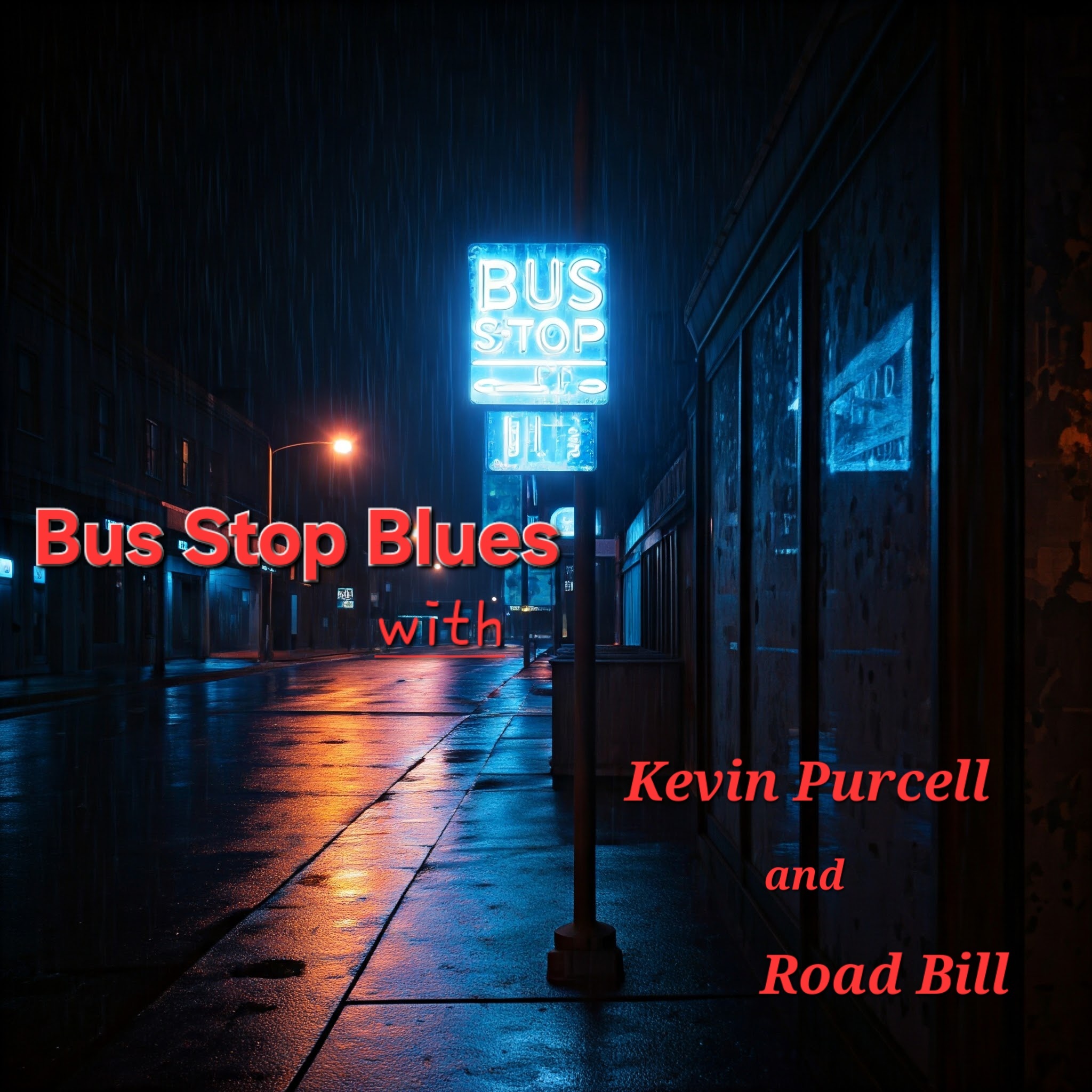
The Bus Stop Blues’s Podcast
thebusstopblues