
Rock n Roll Chicago Podcast
The Rock n Roll Chicago Podcast is a weekly podcast that interviews bands and musicians from the Chicago area. The podcast is hosted by Ray Bernadisius ("Ray the Roadie") and Mike Metoyer ("Hollywood Mike" of Cadillac Groove, Mike & The Stillmasters). The podcast covers a wide range of topics, including the history of rock n roll in Chicago, the current state of the scene, and the challenges and opportunities facing musicians today.
Founded in 2019 by Ray the Roadie and Paul Martin, the two co-hosted the show until 2022. In 2023 Ray was joined by Mike Metoyer as the new show co-host.
The Rock n Roll Chicago Podcast is a great resource for fans of rock n roll and musicians alike. The podcast is informative, entertaining, and inspiring. It is a must-listen for anyone who loves rock n roll and wants to learn more about the Chicago music scene.
Here are some of the things you can expect to hear on the Rock n Roll Chicago Podcast:
Interviews with bands and musicians from the Chicago area
Discussions about the history of rock n roll in Chicago
Information about upcoming concerts and events
Tips and advice for musicians
And much more!
If you're a fan of rock n roll, or if you're just curious about the Chicago music scene, then you need to check out the Rock n Roll Chicago Podcast. You can find the podcast on iTunes, Spotify, and other major podcast platforms.
Show your support of the podcast and visit our Swag Store. Just click copy and paste this link in your browser: https://tinyurl.com/yr5pa7zt
The Rock n Roll Chicago Podcast is edited by Paul Martin.
Theme song courtesy of M&R Rush.
Rock n Roll Chicago Podcast
Ep 243 Modern Daybreak
Use Left/Right to seek, Home/End to jump to start or end. Hold shift to jump forward or backward.
Modern Daybreak is a collective of like-minded musicians seeking love, peace, and understanding. Their music is the expression of years of hard work, heartbreak, and hope, coalescing in a project unlike any they’ve been a part of before. They come from all different walks of life, working together to create music without limits, boundaries, or genres.
Podcast edited by Paul Martin.
Theme song courtesy of M&R Rush.
www.rocknrollchicagopodcast.com
Ep 243 Modern Daybreak
Coming to you from the studios at the Illinois Rock and Roll Museum on Route 66, it's the Rock and Roll Chicago podcast. Hey everybody, it's Ray the Roadie. And this here be Hollywood.
How you doing, Ray? Hollywood? I thought you were going to give us a different name every week. I really, you know, I didn't have a chance to come up with one. No? No, I can come up with one.
Yeah, I know. Yeah. Yeah, so you've been talking to my wife.
Yeah, I have. Yeah, but it would be uncomfortable if you called me sex machine. No, no, no, it wouldn't be that.
Definitely not. I don't know. I mean, but you never know in this day and age.
I mean, we're in a modern day and age and everything, so. That's right. Yeah.
That's right. These guys might know a little bit about that, right? That's true. Yeah.
What is it? What are these guys called again? They're called Modern Daybreak. Modern Daybreak. All right.
Again, with the dudes in the crowd. I wish somebody would come in with a bunch of chicks. I know.
Yeah. Oh, well, we got to look at ugly guys. You know, 90% is ugly dudes that come into this studio.
That's true. Except for, you know, president company. Of course.
Yeah. Thank you. So how are you guys doing? Good.
Good. How's it going? Modern. Modern Daybreak.
That's right. Yeah. Where are you guys coming in from? I'm from Lombard.
Okay. Forest Park. Relatively close.
Forest Park and a whole bit. I was just because I heard one of your songs where you were thanking Crystal Lake and we get a lot of people from we get a lot of people from like way up north around the Kenry and stuff like that. I told him before you came in that I listened to the whole live album this afternoon.
Yeah, I did. I listened to a lot of it too. It was good.
Pretty, pretty darn good. Yeah. I have to, I have to admit when I, I can't, I don't know all the names of the songs yet, but there was one song that came on and that was just a random thing.
It was on YouTube. And for just a split second, I said, no, I must've hit the wrong button or whatever, because I thought I was listening to like a B side of like something from panic at the disco. Because the song had that kind of a vibe and kind of a feel to it.
So if you, I mean, take that as you will, as a compliment or whatever, because I happen to like that band, but I thought it was pretty cool that you guys kind of had a little bit of that sound. And I found one, I don't know if it was on Spotify or YouTube, that I was listening to that I really liked. And it's something in the comments about, it was the first song you ever recorded.
Oh yeah. Headspace. Headspace.
Yeah. I really liked that song. Cool.
I do, I do like that one. Yeah. We actually, see, we actually spend time listening.
We do. Yeah. Yeah.
We don't do, no, no, it's not like we leave here and. Yeah. We tend to do that though, when it's original music that comes in.
Exactly. When it's a cover band, I mean, you don't need to listen to sitting on the dock of the bay for the 15th time. Exactly.
But new music, you know, you got to kind of know what's going on in the hallway. Right on. Yeah.
So why don't you introduce yourselves and tell everybody what it is that you do in the band and maybe let's talk about the folks that aren't here behind their back just a little bit too. I like that part. Yeah.
Yeah. So I'm Justin, I'm the lead singer and guitarist, sometimes lead, sometimes rhythm. And, you know, I've been with Matt here since 2017 when he joined a band that was a previous name that we changed because no one could pronounce it and no one could spell it.
So we're like, this is not working. It's hard to find when you can't say the name. What was it? It was Chaliceer.
Chaliceer. Made up word. Okay.
Fake French. Sounds French. Yeah.
Sounds like some chick. Ladies and gentlemen, welcome Chaliceer. Chaliceer.
Yeah. Hey, she's here. Chaliceer.
Or, you know, it's like if I was looking for a place that did specialty cut glass or made mirrors, I'd look for the Chaliceer company. That's right. That's right.
Fine purveyors of stained glass. Yes, that's exactly it. Hey, if they are listening, though, we do need sponsors.
I'd be happy to have Chaliceer right on our podcast. Yeah. Yeah, that's right.
So we've been together since 2017 and there's a couple of new members we added recently, Mikey and Arthur. Mikey's our drummer and Arthur is our other guitarist and kind of... Keyboardist. Swiss army knife guy.
So they're the guys who have connections in Crystal Lake, which is why we did that show up there. OK. Where was that show? What was it called? The Old Town... Old Town City Hall, I believe.
Oh, wow. Old Town Hall. Old Town Hall.
OK. Gotcha. Gotcha.
Gotcha. OK. Excellent.
Cool. Did you guys know each other before 2017? Were you friends beforehand? We knew each other. We met in college.
I decided to take a guitar class to get an easy A. And found out that that was the wrong thing to do. First level, like the 101, I was the best student in the class. I was like, great, no problem.
Yeah. 102, Justin shows up, shows me up constantly. I didn't really like him very much.
And then we became Facebook friends. I was like, all right, whatever. Our music styles are completely different.
And then he put up an ad saying he needed a bass player. I showed up. I was like, yeah, I'll audition and did it.
And he's like, great. We meet on Wednesdays. I was like, oh, nobody else.
Audition goes, nobody else answered the ad. Wow. OK, great.
So that made it a really easy decision. So by default. Basically.
Yeah, you're going to be in the band. You got the gig. Now, were you a guitar player before that? Or no, you were.
So the easy A was, I already know how to do this. Until they make you read real music or something like that. I was self-taught.
I'm Matt. I'm the bass player. And the lyricist and backup.
Well, I do whatever we need. But I've been playing since I was 10. Come from a musical family.
So a lot of background there where most of the bands, not so much. Arthur is a big musical family. And his dad, he's in a band with his dad.
He's been playing since he was a little kid. But yeah, I got to college. I already knew what I was doing.
And I was closer to Arthur back in college. He went to Dominican with us in River Forest. And he was in the choir with me.
And that's kind of where we met and formed a really strong bond. And ever since, like graduating and moving on from college, I've been trying to get Arthur involved with my music. And it finally happened.
So it took like 10 years. He actually produced quite a few of our songs before he joined the band. He was recording us for a while.
So to get him in was cool. When I was listening to your album, the live album this afternoon, I picked him up constantly. I mean, his playing is fantastic on the keyboard and stuff.
Holy cow. Exactly. And that was kind of where the whole Panic at the Disco thing kind of came in for me.
Because the sound of the keyboard or synthesizer, whatever it is that you want to call it, the way it interacted with the guitars, with the lead guitar and the whole bit was, I mean, reminded me a lot of those bands, for sure. So Matt, you said you came from a musical background, musical family and the whole bit. But you not so much, Justin? My family sang in church.
Yeah. Well, that's a good place to start, though. They're okay.
I mean, our church was not known for singing well, but they put their hearts into it. Yeah. It's not about the singing.
It's about the worship, right? Yeah, that's what it is. So my dad had an acoustic guitar in his closet. And I was going into high school and was looking for something cool to learn.
So I just picked it up. It was terrible. The action was like an inch, a half inch off the board.
And ergo, that's why it was in the closet. Yeah, right, right. Hadn't been played in a long time.
So that's what I learned on, developed a lot of good calluses. And then I got an electric guitar. I was like, oh, this is so easy.
Yeah, it's always easier when you pick up the next instrument. It's the first one that's hard. Yeah, but everybody has to go through that period where you're playing the acoustic guitar that you bought at Toys R Us.
And it's got the one inch height. You have to, because you have to build up the strength and, you know, figure out. You have to experience the bad before you really know what's good.
And it's the deal with the parents, right? Yep. If you play this guitar and you still like it in six months, we'll get you a new one for Christmas. That kind of deal, you know? Right, right.
And so, I mean, that's what they planned the entire time. They're like, after a week, his fingers are going to bleed and he's not going to do it. And then we don't have to buy the expensive gear.
That's right. Okay, got it. Yeah, that's the way it goes.
Backfire. Yeah, that's right. So what were your early influences as you were learning how to play the guitar and everything? What was the early influence? I was learning Weezer.
You know, the... My uncle was teaching me some Metallica, actually. You know, your Smoke on the Water, things like that. Yeah.
Yeah. Yeah, yeah. I'm guessing uncle was a Gen Xer in the whole bit and teaching you all of that Gen X music.
I totally get that. I appreciate that. Yeah, excellent.
So tell us about the rest of the band. How did this whole thing come about? Who made the first phone call? Where does it start, I guess? This is a good story. Basically, we were... So we had a four-piece band before the pandemic that I joined, you know, these three guys.
We had another guitar player leave. So we went ahead as a three-piece for a little bit. Our original drummer didn't quite work out.
So we kind of had to move on. Somewhere in there, in the 2020-2021 area, I missed a gig. I was either on vacation or whatever the case may be.
Arthur had a friend who could drum and he could fill in. And Arthur was going to play bass. I was like, all right, you know, play this gig.
It'll be great. And then they introduced me. They're like, OK, this is Mikey.
You know, he's a drummer. We're going to practice. At his house.
Fine. No problems. I'll play a gig with him, whatever.
We clicked instantly. Especially the three of us. It was like, oh, we can write.
We can do this. We can do that. Asked him, hey, do you want to play? He goes, I can commit to maybe six months.
Maybe six months. Wait, who is this? This is Mikey, our drummer. I think I could do that.
I can commit to half a year. And like two and a half, three years later, he's like, we got to get focused on this next album. He's the driving force now.
He's in it. And then Arthur was, you know, just jammed with us and was like, hey, we need another guitar player. And then he finally said, finally said yes.
Yeah. So it's kind of like we were unofficial for a while. And then I was like, man, should we should we like pop the question? Like, I haven't officially part of the band.
We did. We sat down. We're like, are we going to ask Arthur if he wants to go steady? That's right.
And when you asked, was he like, I already thought I was. Yeah, I thought I was in the band. He's so low key and so just calm that he's like, oh, yeah, sure.
Yeah, yeah, yeah, yeah, yeah, sure. OK, yeah. So who are the main songwriters in the band? Justin and I. And the two of you guys.
OK, excellent. With some input from the other guys, I'm assuming, you know, whenever, you know, they've got to make their parts feel, you know, fit in the whole bit. So what's your creative process? Oh, changes a little bit.
A lot of time what we'll do is one of us will start playing a riff or a chord change, whatever the case may be. And then I get struck for lyrics and I just start writing. Give it to Justin.
He writes the melody. We take off from there. Sometimes we come in with songs fully done, just whatever happens to pop up.
Like what one of you finishes a whole song or something and you bring it to the band and say, here, this is what I've got. Basically. And then if we like it, we move forward with it.
And those songs tend to evolve a lot more than the songs we write like cohesively. Right. Because those songs end up changing quite a bit.
Well, that makes sense when, you know, one person writes it and then all of a sudden you got four other spoons in the pot. Yeah, exactly. So that's that's our main creative process as we get together and we say, all right, this is what we're doing now.
We're writing for the next hour, two hours, whatever the case may be. And then by the end of that session, we usually have at least one or two usable demos. Right.
We work very efficiently, very fast. So when you guys, I guess, how do you put it all together? Do you sit down and say, OK, we're going to write material for a particular album or do you give yourself or is there a timeline associated with it? It's like, OK, it's January 1st of the new year. By this time, we're going to have enough material for it.
And you go at it with the anticipation that there's going to be a forthcoming album. Oh, yeah. Or is it just what the hell? No, last time that the album we have Sound of Nothing, we sat down, we wrote like eight songs in a row.
These are going to be for the album. It's more thematic. We have a theme with that, an actual story.
But now what we're doing, we're writing another album. And it's more like, let's get a whole bunch of songs and just pick our favorites so we don't have to choose whichever one. Yeah, with the Sound of Nothing album, we did have a deadline because we kind of started writing the album and then we booked a venue for an album release show.
Right. So it's like, oh, shit. That's the due date.
We got to have it ready by then. We're releasing an album, but it's not ours. Right.
And so like three days before this album release party, were you literally like rehearsing like the last couple of songs you just finished or did you get it done in time? Most of it was done. Because we had to allow enough time to do the mixing and the mastering. So all those had to be like ready, polished, ready to go.
But of course, we had to rehearse and make sure because this was the album debut. We wanted them to be clean. There were songs that we hadn't played in months because we recorded it in May or June.
We were releasing this in October. So when you're coming up with the tunes, are you releasing an album or are you releasing a song, a song, a song, and then putting it together for an album? Usually where we got an album in mind, pick a song or two that would be good as singles and then just make sure it's cohesive, make sure there's kind of a general idea to pull it all together. Yeah, because a lot of people are doing just they write a song, they put it out, they write another one and then they put them all together and say, here, here's an album.
I don't feel it doesn't feel right for me to do that because it's just like, well, you already know what you're going to get. All right. Bingo.
Right. Yeah. You get one single.
This is kind of what the album is going to be. You know, our single off that one was called Moth and it was the overarching like idea of the album. So I thought a lot of people heard it and then said, okay, this is kind of what it's going to be.
And then the rest of the album was the rest of the story. And we didn't have two singles because Cicada was also a single. I was going to say, you know, Moth and Cicada.
Moth and Cicada. I mean, I'm seeing, I'm seeing the connection here. Given the Cicada, it's props, man.
We have a, we have a running joke on stage that, uh, Cicada, you know, Justin will introduce it. We're going to play, you know, Cicada. Cicada is about a bug.
It's about a Cicada. It's not about a Cicada. It's absolutely not because he's very literal.
And I, I am a little more fancy than metaphorical. So, yeah. So my next question is where do you guys come up with your subject matter? Because it's, if this makes sense, it is off the wall and mundane all at the same time.
It really is. And the only way to, to understand what I'm saying is you guys is to start listening to it. But, but where do you come up with your subject matter? For me, a lot of it is drawing on experience.
Can I see that? Yeah, sure. Um, there's a song called truth be told, which I wrote, uh, cause I was working from home at a call center job. Yeah.
I remember that. I remember. Is that the song about the year you rather watch the wall spinning or something? Um, and, and I, as I'm writing that song, I got fired from that job.
Oh, because I, I wasn't busy writing a song. Um, I, I told my current boss that story and she laughed. She's like, Hey, whatever you can write a song at your desk.
So, so I, you know, the idea of being so annoyed, so wrapped up, so anxious about what you're doing or so tired of it that you would rather go crazy was very appealing. So there are some songs that I write. That's just coming up on my, what's happening in the moment, what's happening in the world, whatever the case may be.
And there's some stuff that's just like moth is nonsensical, right? Moth is a dream. Well, I told, I told Matt, I want to write it. I want to have a song that is about Mothman.
Yeah. Because, uh, in a previous interview, we, we talked about Mothman and how, uh, Matt is a fan and say, we should have a song about Mothman. And so he sat down for 15, 20 minutes while Mikey and I, and I think Arthur was there as well.
Uh, we were just working on the music part and he would bring over the lyrics and I was like, okay, we can put this to a melody. Yeah. The reversal of it, the flame to a moth.
You know, that sounds very, that sounds very cynical because you know, a flame just wants to burn the shit out of them all. It's not good. I'm glad you can make sense of that out of him because it's the only way that fucking lyric fit.
It needed to, it needed to rhyme and that's the way it's going to rhyme. Damn it. That's right.
We sat there like, yeah, it's fine. It's fine. Yeah.
If, if, if Darius Rutger can write about heading East from the Cumberland gap, you know, it'd be geographically, it doesn't work out. Right, right, right. It doesn't work out.
He had to do it that way. So it rhymed. So it rhymed, yeah.
Yeah. But now I see, I see a trend starting here. I think every album you guys put out from now on has one insect song.
Uh, yeah, basically. You said insect song, not incest song. No insect.
Okay, gotcha. No, we're not, we're not, we're not. We, we like bugs.
That's, that's another thing that we, we draw on as a band and Mikey and Arthur won't say it, but they're just as much dorks as we are. Like a lot of our influence, a lot of my influences come from, uh, things I read about aliens and, and cryptids and bigfoot. So it's like, that's really interesting to me.
So that's what I want to write about. Um, but we're dorky. We like dorky things.
Justin likes bugs. He has bugs and collects them. Yeah, I keep them.
Yeah. Wow. You know.
That isn't like totally nerdy. Yeah, it is, but it works. And the new album can be called entomology.
Entomology. Yeah. Volume one.
There's a, there's a song about a bird. I think metal. I might play that one today.
That's fun. Metal Ark. Yeah.
That would be a debut. We haven't played that yet. Well, you know what? I think it's time.
I think it's time to get them all set up and tuned up and EQ'd up. Okay. And let's hear a couple of these things.
Sounds good to me. So maybe we'll hear the song about the globetrotters. Maybe.
All right. With that, let's take a break. You're listening to the rock and roll Chicago podcast.
Your Sunday nights just got a whole lot bluesier. Get ready for the bus stop blues show that takes you deep into the soul of the blues with classic hits, road stories, and live jam sessions hosted by blues man, Kevin Purcell and me, the one and only road bill. The bus stop blues is two hours of nonstop blues banter and badassery.
Check out the bus stop blues podcast at thebusstopblues.com where you can listen on Spotify, iHeart, Apple podcasts, or any other major podcast platform. Hop on board the bus stop blues where the blues never stops rolling. And for the first time this evening, Modern Daybreak.
I love, I love, even more than I used to I love, I love, I love, even more than I used to I'm sorry that I never took your dancing And I'm sorry I stopped putting in the work And I'm sorry I put an end to romancing And I'm sorry I didn't notice all the hurt, the hurt, the hurt Oh, now that you're gone I think I love even more, even more than I used to I love, I love, I love, even more than I used to I love, I love, I love, even more than I used to Yeah Very nice Thank you, thank you so much Towards the end there I was hearing the keys playing a lot I have the little organ sound on that. I have never sung that without an instrument in my hands. You did good, man, you did good.
Because sometimes you can't. Oh, it's very difficult. Yeah, there's sometimes you get used to doing this or whatever it is that you're playing, you lose the words, you forget about it.
You go to sing, you just go, ah, ah. Oh, that's happened, that's happened more than once. Happens to me.
So which one of you guys brought that song to the band? That was mine. That was yours, excellent. So that was called More Than I Used To and that was a post-divorce song.
So it was kind of like, instead of sitting around moping, oh, I'm divorced, blah, blah, blah, I wanted to write a song that was more uplifting, like, okay, maybe I didn't do enough in the previous relationship, that means I just have to do better next time, love more than I used to. And yeah, that was part of our first EP. Yeah, yeah.
Well, that's a good way of looking at it because most of my divorced friends, I mean, they're not sitting around going, oh man, I'm divorced. They're going more like, yeah, I'm divorced, yeah. Yeah.
My wife and I call it the sad Justin time because there was like six months where he was sad and six months where he was like, I need to fucking do this and write some stuff and we got the whole EP out of that. Yeah, basically. Yeah, well, they say, never waste a good tragedy.
That's right. That is also a big part of our songwriting is just terrible shit happens, so write it. Write about it.
Might as well. But I get the impression that you kind of put a positive spin on it because I didn't hear one song that I listened to today that would have sounded like, oh yeah, these guys were in a bad place when they wrote this. I mean, at least you wouldn't hear it in the music anyway.
We try to stay positive as much as we can. Music-wise, personally, obviously we're gonna, I'm usually the saddest, I would say. I would say.
So like, I'm gonna talk about how tired I am or worn out or burnt out or whatever you wanna call it. But when we write, it's like, I don't wanna be a sad bastard. I don't want my whole discography to be, I'm sad, now here, listen to it.
I wanna write songs that I would also want to listen to. Like, I don't wanna listen back to our songs and be like, ugh. And you're doing this sad sack.
And you're doing this because it's fun. Yeah, that's right. Remember that it's fun.
You get to do something that not a lot of people get to do. And, you know, music has its perks outside of writing songs and recording them. You get to play shows.
You get to hang out with your friends. Like, you know. That's the highlight of my week.
But the words, the words from a sad situation or a bad situation, you know, knowing from having done a little bit of acting, it's easier for people to act sad or angry than it is for them to act happy or in love or whatever it is. Because it's very difficult to replicate that. Right, right.
And it is a primal emotion. Everybody feels it. Everybody can identify with it for sure.
That's why I think you get a lot of musicians that, I mean, think about how many times you sit down to write a song and it turns into like a ballad before it turns into like a faster, upbeat, you know, rock and roll type kind of a song. And then you have to flip it around. You have to say, okay, now, we gotta add a faster beat to this or whatever.
Probably nine times out of 10, it happens that way. Nobody ever writes a fast rock and roll song and says, okay, let's turn it into a ballad. Unless you're hanging out in coffee houses.
We had to set up a point and say, no more love songs. Not no more love songs, but we had songs where it was like, everything was about being in love. Well, yeah.
Hey, it worked for Lionel Richie extremely well. You can't deny that. I don't look like Lionel Richie.
I know one artist that took a rock and song and kind of turned it into a ballad. Who was that, Eric Clapton? Oh, well, yeah, that's true. Layla.
Yeah, that's true. That's true. But it worked.
It still worked. It's an awesome, I love that rendition. Yeah.
I think one thing about our songs is I like to have them able to be played either way. So like acoustically, I write the songs on acoustic guitar usually. So when we translate it into a full band situation with electric guitars, it's easier if we have an acoustic gig to kind of scale it back.
And it kind of speaks to the versatility of the band. And I love that we can kind of adapt things as we need to. We're all so different.
We all come from completely different musical backgrounds that getting together, the beginning, it's always like, I don't know if this is gonna work. Like, I don't know, you know. Justin's, when I met him, his biggest influences were like Jason Mraz and Jack Johnson.
Ed Sheeran. Ed Sheeran. There's nothing wrong with that.
Just my biggest influences at the time we met were like Slayer and, you know, hardcore punk bands. And they still are, but now I'm like, oh, well, I guess I could go a little bit. I'm like, hmm.
Believe it or not, I can hear that because as I was trying to put together, okay, what do these guys sound like? When I got past the whole panic at the disco thing, the term that came to mind for me was like fusion punk. And I can totally hear that. Right on.
Yeah, we're definitely inspired by pop punk from the early 2000s. And basically whenever it was on the radio, I think all of us had a growing up experience of like our parents listened to this music. We listened to this music.
Our friends listened to this music. Now let's fucking combine it. Right, right.
And that's what I did because it was, I had friends that wanted to be in a metal band. I had friends that wanted to be in a punk band. I had friends that listened to pop music.
My wife listens to NSYNC, almost exclusively. Wow, oh yeah. Which, hey, she's an amazing person and the light of my life, but her music tastes.
That's gotta be like, that's gotta be like torture. That's gotta be like, that's gotta be like waterboarding, coming out of every Alexa in the house. Oh no, it's not that bad.
It's not that bad. But you know, it does help when I'm like, okay, I can kind of draw on that and say, well, this song, I am feeling a little poppier, so all right, let's draw on my pop music experience. Right, right.
Oh yeah. So how and when did the, you know, because I'm assuming there probably had to be a point in time where the sound just came about and you all kind of looked at each other and said, that's our sound. That was the EP.
The EP. The EP was, all those songs were written well before we recorded them. That was 2022, 21.
When we recorded? Yeah. It must have been 22. It's kind of a mix too, because some of them we recorded earlier.
That's true. But let's say 2022, we recorded everything for the EP. But those songs were written in 2018, 2019, 2020.
Sure, sure. So now we have the people who wrote it no longer in the band. It's just Justin and I. So we've got a new drummer, new guitar player, working on these songs.
How's it going to sound? And then when they were done and finished, we were like, oh, okay, this is how it's going to sound. It's going to be a little more driving because Mikey's drumming is very, he comes from like a jam band background. He loves the dead.
He loves fish. So like way more percussion than I'm used to, which is great, because I'm able to kind of sit back and let him take a lot of the lead. And then Arthur adds anything need.
So it was like, okay, well, we can be whatever we want. So our sound can be bigger, it could be smaller, it could be. I mean, listen to the two singles, Moth and Cicada.
Moth is very driving, kind of a little heavier on the rhythm. And Cicada is so gentle. And we got Adela Skoranski on the cello, and it's just such a gentle tune, but both of them are modern day break.
Yep. Justin and I sat down after, so after we had fired our last drummer, well, I wouldn't even say fired. He just, yeah, he knew it was time.
It was just the two of us and it was like, modern day break can be whatever we want. Like that's the crux of it. We're gonna sound how we're gonna sound because we write these songs, but if other people come in, if we added another guitar player, added a keyboard player, whatever, it's still gonna sound like us.
Because we're gonna mold it to what we want it to be, which is literally anything. It feels like a Rubik's cube. And you have to be open to accept the sound of whoever is gonna come in.
And we are. If that person isn't the sound you want, then you can't keep that person, but you have to be open-minded enough to say, all right, that's not what we were expecting, but sure, yeah, bring that ham and beef through with you or whatever. And there've been plenty of times where it's like, I don't know if this is gonna work.
And it's like, well, shit, it did work. And then, you know, the main point for me, and I've talked about it with everyone in the band, I've talked about it, every interview I've ever done is there's no ego. None of us are a dictator.
None of us have a massive ego. Yeah, and I think it comes from just being in places, bands, relationships, work where you do have that, and you know it's fucking bullshit. So you're like, I'm not gonna do that at all.
I'm not gonna do it. I don't care if you change the words that I write. I don't care if you change my part.
Great. Don't fuck with, you know, nobody from the outside come in and fuck with what I've done already. But, you know, Mike is like, I'm gonna change a drummer.
You do whatever you need to do. Because you're a great drummer. So I need you to do this.
If you're gonna change it a little bit, fantastic. I'm gonna change it. I'm not a drummer.
You are. Exactly. Write the drum part.
And whatever you come up with, unless it really sucks, we're gonna go with it. That man can write, he could record anything. He could be on any album you could possibly throw at him, any song you could possibly throw at him, and he's gonna take it and say, yeah, I think I can do this.
Yeah, he's just a student of the craft, man. Yeah, he is on it. And he's like the most chill person you've ever met, but the preparation is on point.
So what's the white whale? What's the one song that you got, man, we've been working on this song for like three fricking years now. We can't figure out how to finish it. There's no.
We don't do that. No? Nope, because, and I can tell you just from what's on here, Morning Dove is a song that I wrote, lyrics I wrote years ago. I had one line in mind that I wanted to write, and I finally was able to do it, and I don't like the song.
And it's not that it's a bad song or anything. It's just like, it just didn't quite end up how I wanted it, but it's written and it's recorded. You think you forced it? I mean.
No, no, because I did sit on it from like 2016. Like I wrote this line. It was like, this is the line.
I really like this. And it was like, eh, it's just, it was kind of a, it's the shortest song on the album. It's one we, I think we played live twice maybe.
Yeah, not often at all. It just does, it doesn't. So what did you get through where, okay, this thing's been sitting around since 2016.
What did you go through? What got rid of the writer's block, I guess, to allow you to be able to finish it? Yeah, I just found the right thing. I found the right song for it. I found the right time to use it.
Like I have a notes app on my phone that has just lists and pages of song titles, lyrics, little phrases that I read or see that I want to remember. And sometimes I just pick truth be told is one of those. Yeah, there's a ton of lyrics where I'm just like, that's cool.
I'm gonna write it down and then throw it in later. And it's kind of like a, it's like my own personal Easter egg. I know where it's from.
I know where I heard it or when I remember it, but yeah. Morning Dove just didn't, it didn't end up exactly how I wanted it, but I still like it. Do you guys tend to record everything that you write or do you, or have you tossed some of it aside? In some way.
Well, professionally record, I would say probably not. I mean, I've, you know, I write quite a few songs. I'm getting back into a flow, but I always get at least a sample of it and send it to the guys and like, here's something I'm working on.
Are you feeling it? And if not, then we just write another. And we do go back. We do.
We do go back. There are songs that I've written or songs that you've written that are just like, they exist. They're in this big spreadsheet we have or this big, you know, word document, whatever you want to call it.
And then later on, Justin would be like, what about this? I was like, okay, now it works. Cause maybe we have a different idea of what it's going to be. It really just depends on how pressed for time we are and what we think sounds good.
That's why this one was so, like Sound of Nothing was so difficult because it was like, we wrote these songs and recorded these songs. So we didn't really have anything else from those sessions that wasn't recorded. Whereas what we're doing now is, I think we've got like 12 or 13 songs.
I mean, we have enough for an album, but we're still writing and we want to make sure that it's cohesive and- That it could be 12 of the best songs we have instead of 12 songs we have. Right, right, right. You're listening to the Rock and Roll Chicago podcast.
♪ Chicago, my hometown ♪ Hey everybody, it's Ray the Roadie. And this is Hollywood Mike of the Rock and Roll Chicago podcast. If you've been joining our weekly program, we have great news for you.
Just tune in to Road to Rock Radio on Mondays at 7 p.m. Central time, and you can hear a rebroadcast of one of our past episodes. Then again, on Thursdays at 7 p.m., you can hear our most current episode brought to you by the Illinois Rock and Roll Museum on Route 66. So go to roadtorock.org, scroll down and click on radio station.
That'll bring you to the Road to Rock Radio, a station committed entirely to the great music from Illinois. From Chicago blues born on Maxwell Street to today's rock and roll and everything in between. 24-7, all music with its roots in Illinois.
♪ Oh, oh, oh, rock and roll ♪ Well, I think it's time to hear another one of those- I think so too. One of those songs. Yeah, yeah.
There's no reason to pause. Let's just keep it rolling. We should be all set.
Let's go right into it. We're all set to go, yeah. Yeah, so I wanted to play this one.
It's called Meadowlark, and that is a new one. So you will be some of the first to hear it. Not even on an album yet, huh? Nope.
Nope. A Rock and Roll Chicago podcast exclusive. It's about to be recorded right now.
Right? And it'll be, it'll be completely different by the time it actually comes out. Yeah. That's right.
All right. Hopefully not too different. No, this one's pretty good.
I'm afraid of the way we're going. We're going against the river flowing now. Spirit's up, but now we're going down.
Spirit's up, but now we're going. Lay down the hay for the blind horse. Look him in the mouth and a gift comes forth.
Take the truth straight from the source. Take the truth even if by force. I'm afraid of the way we're going.
We're going against the river flowing now. Spirit's up, but now we're going down. Spirit's up, but now we're going down.
We're going down. We're going down. Spirit's up, but now we're going.
Thank you. I want to applause, but applause isn't for everyone. I know, I know.
Just a little applause. Just a little tiny bit. There we go.
That's perfect. That's the one. Wow, that was very nice.
Very nice, wow. Almost soothed me to sleep on that one. So you guys do all your own recording? All your own mixing, mastering? So far? Mixing and mastering, we do have someone.
Hello. This is Marco Abaya from Eve Casino. Oh, no kidding.
Marco does, no kidding. Wow, okay. So he did the mixing for us, and we got Nick.
Oh my gosh. Why don't we put anything on the TV? We all just know him as Nick, because nobody reads liner notes anyway. Nick Stenna, Stenna's the guy.
They're both wonderful. Yeah, we record everything in Mikey's basement. Excellent.
Drive out to practice, we record on his computer. Yeah, and we don't bother anybody, and we don't have to pay for it. And no click, no click track for us.
No, not that. Good. Yeah, that's good.
I would say we recorded almost everything live on Town of Nothing. Yes, the album. As a full band.
And the live album, No Click. Our single, Covered in Light, does have a click just because it's more of a poppy tune. But yeah, the albums are no click, just following Mikey.
It's amazing. Recording music has been a thing for decades before click tracks came along. And some people sit there and think, how could that possibly be? Because you are a musician.
Because you rehearse, you play. And you feel it, and you leave mistakes in and realize that it's not supposed to be perfect. We need to get back to that.
We really do. We need to get back to that where it shouldn't sound perfect. There's an onus on perfection.
There's a song we did called Peace of Mind that's on the EP. And my dad is actually playing one of the guitar solos in those. And he did one solo, and he kind of flubbed a note, but it made this cool little whine.
And I like the character of it more than the perfection of the note. So I was like, that's staying in. And he's like, I'll do it again, I'll do it again.
That's staying. You can do it again if you want, but this take is the one that's going in there. He did it again, and he's like, I can do it better.
I was like, don't do that. I like the character of it. It's like watching a movie.
If something happens in the background that messes something up, and it doesn't affect the performance, why get rid of it? It's actually fun to see those mistakes. Because it's something, hey, look at that. So I know it.
Yeah, that's pretty good. I can't believe it's already after the 4th of July. Yeah, I know.
Amazing. All the festivals have been going on. It is hot.
Where can people find you? Where are you going to be playing? Oh, God. Let's see. We're going to be at Homegrown at the end of the month.
Yeah, Homegrown Music Fest is July 26th. Is that still taking place over there at Seven Bridges? The base camp. The base camp? Yeah.
Okay. All right. So we're doing that.
We're playing 645, I believe. Yeah. Inside on the main stage.
That'll be fun. Okay. We're also doing, in August, we're going to Cubby Bear.
Yeah, that's at the end of the month. I think that's August 29, I want to say. Cubby Bear is becoming relevant again.
Cubby Bear went away for a little while, and now it's starting to come back again. That's a make-up gig, because we were originally supposed to play on St. Patrick's Day. Yeah.
We put together a great show. We have really, really great people to play with us. And at the last minute, they told us, oh, yeah, at St. Patrick's Day, we need a DJ.
Oh, boy. They canceled our gig. And they gave us another day.
But we got Eve Casino on. How many times? Put another chalk mark on the Eve Casino board. Nice.
You make friends. You play good shows with them. You keep playing.
Yeah, yeah. That's what we like to do. Last month, we played the Glacier Valley Fest.
It's a camping festival. Camping in Wisconsin, yeah. That was a lot of fun.
And then we played Summerfest. Oh, nice. Both of those were with Aaron Williams.
He invited us graciously to join him. So that was a lot of fun. That's a lot of fun.
I had never been, so I was just blown away by the magnitude of it all. A million people that day? It was so cool. Yeah, crazy.
Crazy. Well, that's pretty good. Anything else important coming up for the remainder of the year, like September, October, anything like that? Mikey's getting married.
Yeah, our drummer's getting married in October. That'll be fun. Dun, dun, dun, dun.
So far in the band, we have what? Everyone's going to be married after this year. Not me. Well, you were married.
I was. That's why you have a divorce album. You have divorce songs because of it.
But everybody's pretty happy, and our wives are nothing but supportive and love that we do this because they get to go and have fun. And be rock and roll wives. Well, my wife really loves when the band pays for dinner.
Oh, yeah. Of course. Yeah, let's go.
Well, that's good. So socially, where can people find you? Let's see. I'd say Instagram, we're most active.
It goes to Facebook, but not as active there. I don't like checking things on Facebook because it's just not a good user interface on the band side of things. And also our website, moderndaybreak.com. Check out the Homies Through Music, Music Homies page on there, and check out some other great local and kind of far out.
We got some people from California. Yeah. But original acts on there.
And we made the page so that we can promote our friends and just say, hey, here is who we associate with. Here's who we like. Check them out.
Cool. Very cool. Very cool.
Excellent. Well, thanks for coming out, guys. Yeah, this is a lot of fun.
Pleasure meeting you guys. Thank you so much. Thank you for having us.
Good luck out there. Yeah, thanks. The Rock and Roll Chicago podcast is edited by Paul Martin.
Theme song courtesy of MNR Rush. The Rock and Roll Chicago podcast does not own the rights to any of the music heard on the show. The music is used to promote the guests that are featured.


Podcasts we love
Check out these other fine podcasts recommended by us, not an algorithm.
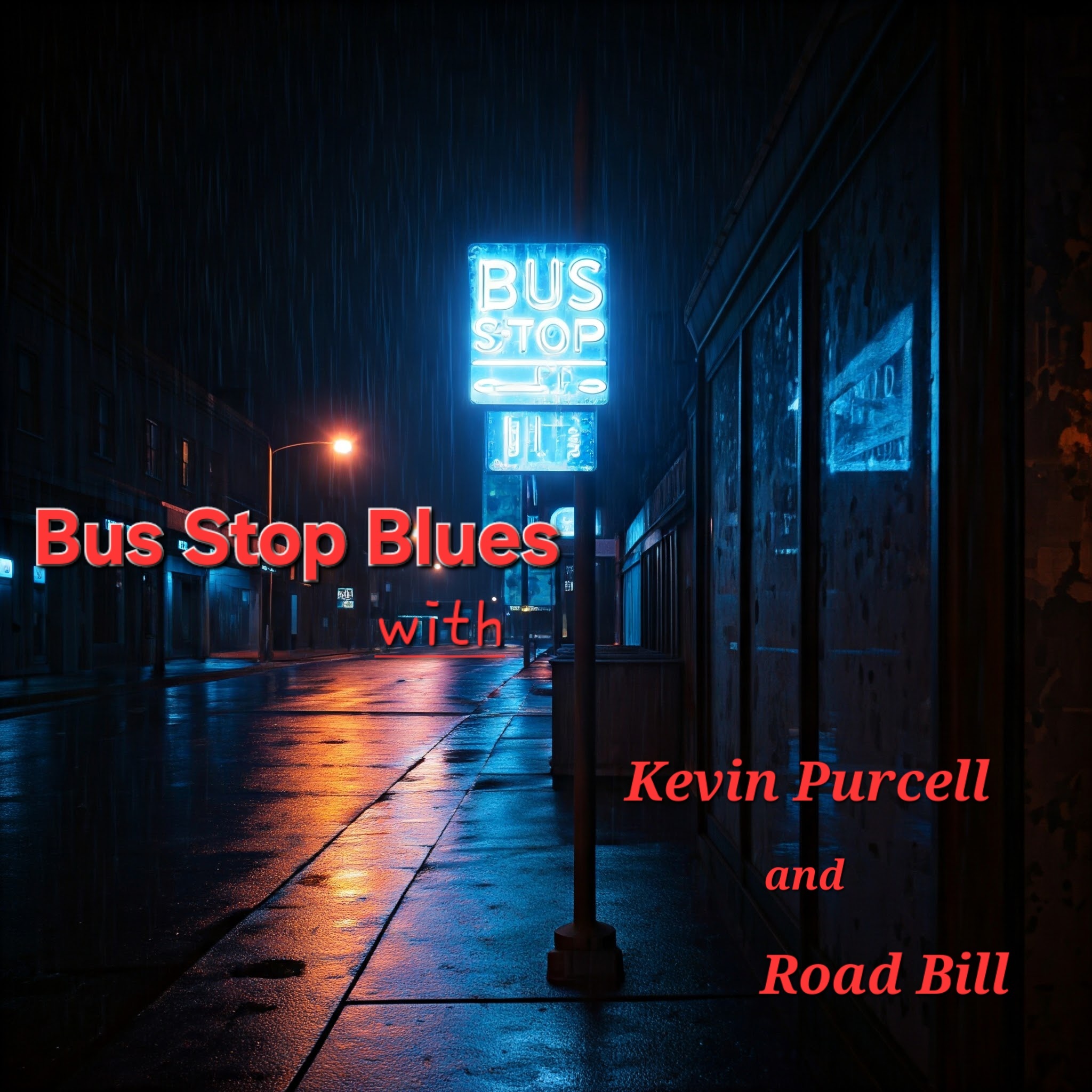
The Bus Stop Blues’s Podcast
thebusstopblues