
Rock n Roll Chicago Podcast
The Rock n Roll Chicago Podcast is a weekly podcast that interviews bands and musicians from the Chicago area. The podcast is hosted by Ray Bernadisius ("Ray the Roadie") and Mike Metoyer ("Hollywood Mike" of Cadillac Groove, Mike & The Stillmasters). The podcast covers a wide range of topics, including the history of rock n roll in Chicago, the current state of the scene, and the challenges and opportunities facing musicians today.
Founded in 2019 by Ray the Roadie and Paul Martin, the two co-hosted the show until 2022. In 2023 Ray was joined by Mike Metoyer as the new show co-host.
The Rock n Roll Chicago Podcast is a great resource for fans of rock n roll and musicians alike. The podcast is informative, entertaining, and inspiring. It is a must-listen for anyone who loves rock n roll and wants to learn more about the Chicago music scene.
Here are some of the things you can expect to hear on the Rock n Roll Chicago Podcast:
Interviews with bands and musicians from the Chicago area
Discussions about the history of rock n roll in Chicago
Information about upcoming concerts and events
Tips and advice for musicians
And much more!
If you're a fan of rock n roll, or if you're just curious about the Chicago music scene, then you need to check out the Rock n Roll Chicago Podcast. You can find the podcast on iTunes, Spotify, and other major podcast platforms.
Show your support of the podcast and visit our Swag Store. Just click copy and paste this link in your browser: https://tinyurl.com/yr5pa7zt
The Rock n Roll Chicago Podcast is edited by Paul Martin.
Theme song courtesy of M&R Rush.
Rock n Roll Chicago Podcast
Ep 261 Pete Stillwell
Use Left/Right to seek, Home/End to jump to start or end. Hold shift to jump forward or backward.
Pete Stillwell is an American singer-songwriter and guitarist, mainly known for his rock music in the Illinois music scene. His songwriting combines '90s rock and classic rock influences with hints of blues, funk, and southern rock. His personal influences include the Steve Miller Band, Bob Seger, Pink Floyd, Credence Clearwater Revival, and the Beatles.
Podcast edited by Paul Martin.
Theme song courtesy of M&R Rush.
www.rocknrollchicagopodcast.com
Coming to you from the studios at the Illinois Rock and Roll Museum on Route 66, it's the Rock and Roll Chicago Podcast. Rock and Roll Chicago. We're rolling.
We're rolling. No, you're Ray. Oh, that's right.
Hey everybody, it's Ray the Roadie. And this is Hollywood Mike. What's happening, Mike? And we're rolling apparently.
We are rolling. Rolling, rolling, rolling. See, that shows the generation.
You went into rawhide and I went into rolling, rolling, rolling. You went into the blues, brother. Actually, boy, you're older than we thought because that was not the blues, brothers.
That was Limp Bizkit if I... Oh, your version. Yeah. So what's going on? You could see a doctor about that, Limp Bizkit.
Yeah, yeah. Actually, no, HIMSS. If anybody from HIMSS is listening, we're looking for sponsors.
We are looking for sponsors. We own HIMSS. Right.
That's right. We'd be happy to. So what's going on? Still freezing my ass off.
Yeah, it's cold. It's cold, man. I don't like winter.
I got to get back to Florida. And all this rain that's coming down is probably going to turn to ice in the morning. It will.
It will. I don't know what the heck's going on. Nothing.
How was Florida? That's right. You were in Florida. We haven't talked since then.
It was wonderful. It was warm. It was great.
We were in Fort Myers, of course. Have you met up with Terry? No. No? No.
We just decided to hang out at the beach, at the pool. You know, we did nothing. We just... Just, that's what you do.
And that's what we wanted to do is do nothing. And nothing. And we're pleasantly surprised that Fort Myers looks pretty good.
Yeah. You can tell where all the homes are missing and businesses are gone and stuff. But it's cleaned up.
It's coming back. Well, that's good. It was nice.
We had a good time. We're talking about going back in February or March or something. Did you, by chance, see D-Rox? No.
She plays at the place we were staying at, the Lighthouse Resort, every Wednesday. Just so happened that that Wednesday we were there, she was not playing there. Oh, no kidding.
So if she was playing anywhere, we couldn't really get to it because we didn't get a car. Yeah. Yeah.
It's shocking. There's like a half dozen or so people that used to live in this area here, and they've all moved down and they're playing the circuit in Fort Myers. It's beautiful down there.
Beautiful. Yeah. It's a lot of fun.
If you get on the Facebook, there's a lot of people that listen to the podcast. They go down there and they have pictures of themselves with people we've had on the show. Yeah.
See? Playing a circuit down there. See? Yeah. I'm sorry.
Who's this guy we got in the studio here? Pete Stilwell. All right. Wrong one.
You hit the wrong button. I don't know how you can not remember which button it is. I don't know.
But you know what? This is totally- This is kind of cool. But it totally sounds like this is Pete Stilwell. This is his theme.
This is it. He's walking in the studio. You should see him.
He's coming down. How you doing, Pete? Good. Good.
All right. Stop. Good to be here.
There we go. There it is. Anyone want to stop? I dig it.
Yeah. Thanks for coming in. Yeah.
Thanks for having me. How's life? Life is good. Life is busy.
Yeah. For sure. Tell me about that.
You're hosting a podcast. Or not a podcast. You're hosting an open mic.
I do. I host an open mic every Tuesday at Social 45 in Frankfurt. So we do that from 7 to 10 every Tuesday.
I've been doing it for coming up on five years here. At the start of 2026, it'll be March of 2026. It'll be five years.
Wow. No kidding. Pretty good haul.
Yeah. And again, if anybody at Social 45 is listening to this podcast- Wants to sponsor us. We are looking for sponsors.
If any of you three people listening right now work at Social 45. That's right. I might know a guy.
So he's been hosting an open mic night for almost five years at a place that's at the other end of the mall that I work at. Two days a week. No kidding.
And you guys have never met. I've never gone in there. No.
I mean, I work an 11 hour day when I'm there. So I'm like eight o'clock. I'm out of here.
Yeah. But now I'm going to have to go in there. Yeah.
Go check it out. And that's on Tuesday night. Right.
Yeah. It's a cool spot. I mean, the food is really, really good.
Really? It's a little hidden gem. People don't know about it. I mean, some people do, of course.
Yeah. Not as many as should know about it. And it's really good.
Yeah. Excellent. Right.
Huge portions. Jeez. Might have to get them for a sponsor.
Yeah, that's right. Yeah. That's right.
Like I said, I know a guy. You know a guy there? So tell us about your musical journey. Little Petey Stilwell was rocking and rolling in a crib, looking at that little mobile thing going, I got a Play-Doh.
I had one of those. It was, who is it? Pooh Bear. Winnie the Pooh.
I said Pooh Bear. You did say Pooh Bear. Man, I'm never going to live that one down.
No, it was Winnie the Pooh. I had one of those things. A mobile? Is that what they're called? Yeah.
Anyway, no, I- Unless you're in England. It's mobile. Mobile.
Yeah, I've been playing out at some level since I was probably, I think I did a talent show when I was in high school. And so like the mid to late 90s. But then I started gigging when I was probably 21, 22, something like that.
I'm 46 now. So I've been, I don't know, 25 years of playing shows and stuff. But took the guitar up.
I play piano a little bit too. Played the trombone in high school. Got a jazz scholarship offered to me at the U of I. And I turned that down because of course, I said at the time, there's no money in music.
So that was what I said. And I didn't do it. That's a smart move.
You know, got a jazz scholarship to play the trombone in college. Yeah. And they wanted me to go to- I think I'd prefer to get laid.
Thank you very much. I tell you, it's not a sexy instrument. Although we were the most fun.
Oh no. We were the most fun instrument in the band. You know, like the trombones are always the crazy players.
Right. That's in like every band I've ever seen that has instruments. So, but I did.
Here's something cool though. So when I started my first band, this was in Champaign, Illinois. We had like five songs that we wrote and trombone was on those songs.
So it became the most popular part of the show sometimes because they would wait for me to turn around, pick that thing up off the stand and rock it, you know. Yeah. And it was cool.
It was a cool thing to have in a kind of a funky jazz little element that we threw into the rock band. Yeah. Yeah.
Well, it came in handy. Yeah. It works out as a gimmick until people realize that it's actually kind of cool.
Yeah. Yeah. Yeah.
Well, we had the Omnitones in here not too long ago. Yeah. And they had a guy with a horn.
Yep. Just a single trumpet player. Yeah.
Guitar player and a trumpet. And they sounded great. Yeah.
It's different, you know. So did you play the trombone first? So I played the, I took organ, technically organ lessons, but piano lessons. So did you.
So did I. Wow. Look at that. Yeah.
I played my organ constantly when I was 12. That means two things. There go any potential sponsors.
Well, you never know. We talked about hymns. It's what they call a double entendre in the biz.
Yeah. I played from eight to 12. I quit taking lessons because the teacher is not nice.
And it's the only thing my parents ever let me quit. And I kind of regret it. But so I quit that.
I took trombone from fifth grade all the way till I was out of high school and then started guitar in high school just by myself. Never took lessons or anything. And that's what I wish I would have really taken lessons on.
I'd be a lot better than I am. But I started writing songs and started a couple of bands. And here we are.
I did the same thing. I started on the organ, but instead of going to trombone, I went to saxophone and then picked up the guitar. Sax is what I wanted to play.
Yeah. I couldn't get a noise out of it. It is weird.
It is weird. That's why I didn't stick with it. I kept breaking reeds because I was biting down on the thing.
Oh, man. Yeah, I just couldn't do it. So I was, you know, I'm done with this.
I did that for a few years. Tried to play in the junior high band and decided, nope, this is no longer for me. I used to roadie for a saxophone guy.
Yeah. I used to have to suck his reeds before. That's just gross.
Sounds like a real job, too. Like I could see that being a thing, you know, like some diva, some guy, you know. Oh, I bet you there's somebody out there that does that.
I don't even know where to go from here now, Ray. You got to come up with the next question because I'm just dumbfounded. He's sucking on reeds.
So when you started putting the band together, what were you playing? I played guitars. I mean, music wise. Oh, music wise.
Yeah. Um, people said we were a mix of like counting crows and black crows, which I always thought was kind of a cool way to use crows. Yeah.
But it's pretty accurate. So a mix of like classic rock, kind of bluesy rock style with a more 90s kind of vibe, I guess you would say. But I'm, I listened to a lot of oldies and classic rock growing up.
So I, um, I don't know, that definitely played into the songwriting. I was the main songwriter. I mean, all the lyrics and probably 90% of the music or 80%, I don't know, like most of it.
But yeah, I, I picked up the guitar to write. It wasn't so that I could be like a lead player. I never got into it.
Ironically, my first guitar that my parents and grandparents bought me was an electric guitar, but I didn't use it for lead guitar work. So I just learned chords and started strumming. And I think the first album that I, I mean, I think I remember right, what I taught myself on was Dookie by Green Day.
Oh, wow. In 92 or three or whatever that was. So I, um, I just learned it by ear.
I've always had the ability to play by ear, which has come in handy in recent years of playing shows because I take requests on the fly and kind of like a live jukebox. But, uh, yeah, I, um, started that. And I, like I said, I did it just to be able to write lyrics mostly.
Yeah. Right. And it worked out.
Yeah. Just something, uh, and, and potentially you could perform them by yourself because you, you'd have a way to accompany yourself. That's right.
When you're, when you're writing them though. That's right. So tell us about your first band.
Like, like how, how'd you put it together? Was it college guys or? Um, it was a mix. Yeah. Yeah.
You know, being at Champaign, um, we had the U of I, you know, it's 30,000 undergrad kids a year that come through. So you always have a fresh base. Yeah.
And, um, it was a mix of a few different guys. We were just a four piece. Um, it was called eclectic theory and it was exactly that.
It was very eclectic. And we had a lot of, uh, um, a lot of different styles rolled into one. So I had a very funky bass player that was incredible.
I mean, he could, he wasn't even a bass player. This is a crazy thing. I've always have said this.
He was a guitar player who got recommended to us. And he's like, yeah, Steve can play bass. Steve picks up a bass and just plays it like he's been doing it for 20 years and he's 20 years old.
You know what I mean? Right, right. Um, he could, he could run scales up and down one handed without even touching it live, like playing solos and stuff. It's like, man, just crazy how good right out of the box.
Right. So we had a funky kind of bass player. We had a drummer who to this day is one of the best drummers I've ever probably played or seen live outside of like a major, you know, like United Center type show, like for a local type band.
The kid was phenomenal. And, um, so he, he would play anything and everything. We'd give him like a 20 minute drum solo in the middle so we could take a break and the fans loved it.
And we had our whole little thing down with the trombone and the drum solos, you know, it was a show. It was good. Yeah.
Um, but he was phenomenal. And then, um, Duffy, the guitar player was, uh, Hendrix-esque kind of guitarist. So we had a mix of different types of players.
Oh, I should have said the drummer was very Dave Matthews-esque. He had a huge kit, Carter Beauford style. Um, and he, he pulled it off too.
That was the thing. So, um, it was cool. It was a, it was a fun thing.
We, we had lines down the street to see us. I mean, it was hard to get in to see a show if you weren't there early, like an hour ahead of time. Yeah.
Um, you know, that, that's, uh, something that nobody ever talks about very much when you talk about music and influences from Illinois is the, um, uh, I guess the, the University of Illinois campus has always been a fantastic place to be for music. Even back in the fifties and the sixties and the seventies, the bands that would go through champagne and the college kids would go and see, like, um, I remember being in high school, um, had some friends that graduated a couple of years before me, went down to visit them. And before they were anybody, we saw REM playing at just, you know, we snuck into a bar and saw REM playing.
I can't remember the name of the bar, but, um. Red Lion? It may have been. Was it REM or REO Speedwagon? It was REM.
Okay. REM. REO Speedwagon is from Champaign.
Right, right. The former. And the Red Lion.
Right, right. No, but this is REM. I saw REM play then.
That's wild. And a few years later, REM's on the radio and you're like, holy crap, we've, we've seen these guys play before. But you, I hear stories like that all the time about the influence that Champaign has, has, has had on the music, not only just in Illinois, but nationally.
Yeah. Even, even internationally. So that's a place to start.
It's a good town. Um, a lot of fun. It's changed now.
The campus is unrecognizable compared to what it was 20 years ago. Oh yeah. There's nothing over two stories on the main drag green street.
Right, right. Nothing was over two stories. Now it's all 10 story steel and like, it's like Chicago.
I'm there all the time, actually. I do a lot of work on the campus there, but yeah, I've seen, I've seen it grow over the years. Well, I'm there every single, I'm there every year or almost every year, or actually twice a year at the Performing Arts Center because that's where they have trade shows and stuff like that.
That's a beautiful Performing Arts Center. You got over there as well. Yeah.
The Krannert Center. Yeah, absolutely. So fantastic.
Yeah. So you graduate from college? I did. I didn't go to U of I. I should probably say that as a disclaimer of some sort.
Okay. So because I turned down that scholarship and for other reasons, you know, financial and otherwise, um, I, I was pre-med, pre-physical therapy, um, kind of mix of that. Right.
So I went to Parkland, the community college. Oh, gotcha. Okay.
Which is like little U of I, right? Yeah. Right. So I went there for two years.
Um, didn't transfer, um, took a year off, went back in business for a couple of years and then started my own company, uh, several years later after that, but just ended up working at the time for Papa John's, um, and well, another pizza place than Papa John's. Yeah. And I did that.
Um, and that's how I met some people. And then the band started around that time. And, uh, cool story about this.
I will say this. So when I was working in the pizza place, I had terrible hours. I was, I was a manager.
So I was there from like 4 PM to 4 AM. Well, yeah. Awful hours.
And therefore we couldn't play music very often. We couldn't practice. We couldn't gig out.
So my guitar player was like, I got to get you a, uh, job that you don't have these terrible hours so we can play shows. So he got me a job working at a place for people with disabilities. Fast forward, after I'd been there for maybe a year, I don't know what it was.
Um, a woman walks in who turned into now my wife and that's where I met her. So had I not managed a pizza place and had a band that needed me to move out of the, out of the pizza industry to get into a better job, might not have met who I'm married to and have three kids with. So.
Wow. Wow. Kind of a cool band related thing there.
Yeah. Yeah. And, uh, and a band actually caused a family to come together.
Rather than break it up. So are the, so the guys you're playing with now, the band you're playing with now, are, are any of them, were they the guys you first started playing with? Well, so I'm not in a band anymore. Oh, you're not.
No, I'm solo now. I just play solo, like cover shows every once in a while, some original shows, you know, if you get lucky and find somewhere where you can play a half an hour or an hour of original tunes. But, uh, no, they're all split up around the country now.
Okay. So don't talk to him that often, but that's how life is. Right.
Right, right, right. But I am trying to get back in the studio. I'm supposed to do it this winter, but I'm already, it's already a midwinter here and I have not done it yet, but I'm supposed to get in and do an album.
Okay. First one I've done since the band was together. So in that case, I'm thinking about importing them back in to the mix and doing something.
Sure. Uh, so we'll see. Pretty nice.
Pretty nice. Who are your main influences or, or I guess what's your, what's your preferred genre? Who are some of your favorite artists? Um, I love, you know, I love the 60s, 70s rock for every reason that everybody loves it for. Um, but I, I was influenced heavily by Bob Dylan.
I can't lie. I mean, lyrically more than vocally, I hope. Um, and then 90s rock was a big thing, you know, like, uh, that was in my formative years of junior high, high school.
And, um, when everything's starting to come together and. Right. So that had a big effect on me.
So I think Counting Crows is definitely one of those bands. Yeah. Um, again, lyrically speaking, uh, Matchbox 20.
Yeah. That kind of stuff, right? Yeah. Um, so that was big.
I, I, I was always, people always told me, like, I sounded kind of like those bands and I thought, well, that's really a huge honor to me because that's like who I was listening to when I was writing. Um, but I, you know, I never got into like, uh, the harder, heavier metal stuff. I mean, I like it, but I just never like super hard stuff.
I'm talking about like screaming and all that. I never got into that. Right.
I was more of the folk end of the spectrum. No, I get that. I get that.
Well, I'll tell you what, let's take a quick break and, uh, get you set up and, uh, have you play something for us. Sure. Love to.
Yeah. Be right back. You're listening to the Rock and Roll Chicago Podcast.
Your Sunday nights just got a whole lot bluesier. Get ready for the Bus Stop Blues, the show that takes you deep into the soul of the blues with classic hits, road stories, and live jam sessions. Hosted by blues man, Kevin Purcell, and me, the one and only Road Bill.
The Bus Stop Blues is two hours of nonstop blues, banter, and badassery. Check out the Bus Stop Blues podcast at thebusstopblues.com, where you can listen on Spotify, iHeart, Apple Podcasts, or any other major podcast platform. Hop on board the Bus Stop Blues, where the blues never stops rolling.
Hey, everybody. It's Ray the Roadie. And this is Hollywood Mike of the Rock and Roll Chicago Podcast.
If you've been joining our weekly program, we have great news for you. Just tune in to Road to Rock Radio on Mondays at 7 p.m. Central Time, and you can hear a rebroadcast of one of our past episodes. Then again on Thursdays at 7 p.m., you can hear our most current episode, brought to you by the Illinois Rock and Roll Museum on Route 66.
So go to roadtorock.org, scroll down, and click on Radio Station. That'll bring you to the Road to Rock Radio. A station committed entirely to the great music from Illinois.
From Chicago blues born on Maxwell Street to today's rock and roll and everything in between. 24-7, all music with its roots in Illinois. All right.
We're back in the studio. But before we get to the singing portion in a little bit, explain the hole in your guitar. He's got a hole in his guitar like Willie Nelson.
Willie Nelson's guitar is called Trigger, I believe. He's got this giant hole in it. This one's not that big, though.
It's like mini Trigger or something. But no, I had a bigger body guitar before I had this Taylor. And the pick guard was twice as big on that one as this one.
And I was strumming way harder when I was playing with a different duo-trio kind of thing I had going on. And we'd get jamming pretty good. Well, the pick would just catch that part of the wood over time, and it just wore it down and then turned into a hole.
It's been the same size for years. It doesn't get bigger. It just is what it is.
And here's the crazy thing. I went online one time, was looking at guitars, and I saw what I thought was my guitar on like a Google photo. Right.
I was like, who's got my guitar? Why do they have a picture of it? It was exact. Yeah. Turns out that this is kind of a thing that harder players get sometimes with this exact guitar because of the strumming pattern and the pick guard being narrow right there and stuff.
So it's like a Taylor thing that I've seen now online. So I don't feel as bad about it, but it also makes it original. Yeah, that's crazy.
Anybody who wore a hole through the- Yeah. All right. Well, if you look at it, the pick guard is only an inch wide.
Yeah, that is actually crazy. It's almost like it's, yeah, the pick guard is almost like it's just there for decoration. Yeah.
Like it goes down here, but not up here. And I was playing it up here and caught the wood. And it hasn't affected the sound of the guitar? No, especially because I plug it in anyway.
Yeah, right, right, right. Wow. No difference.
All right. Well, let's hear that thing. All right.
So I don't know. There's a couple that I thought of maybe doing. This is one that I've resurrected.
This is an older song that I wrote. I know where I wrote it at when I was living in Champaign. This is way after the band days.
I was married, already had two kids when I was living there. So this would date somewhere around 2012, I think, is when I wrote this. So it's almost called Jack and Jill.
Just kind of a love-ish song about... Yeah, love-ish, girl chasing boy, boy actually chasing girl, that kind of thing. So... All right. Anyway, it goes like this.
And be gone by dawn, oh, the rest was nice, but a rest nonetheless, oh, it's about time to go. Gonna crush you, I know, it's about time. Well, it's all right with me, if you said I was wrong, I'll shoulder the blame.
As you add fuel to the flame, because a man like me can't sit idle for long. So I'll take your pill and keep tripping, keep tripping alone. Oh, this tryst was nice, but a tryst nonetheless, oh, it's about time to go.
Oh, gonna crush you, I know, it's about time. That lonesome chill rattles my window sill, and that lonesome chill chills me to my bones, and I'm all alone. Oh, the end was nice, but the end nonetheless, oh, it's about time to go.
Gonna crush you, I know, it's about time. About time, it's about time. I got the right button that time.
You did, you did. The boo button, that's right. So after you, after he said, you want me to play the whole song? And you said, yeah, go ahead.
I thought to myself, what is this thing? It's like stairway to heaven or in a god of DeVita, and it goes for like a half an hour. I started thinking the same thing because he's had all, he had all these little tempo changes and stuff in that song, you know, and kind of feeling changes. I was like, oh God, we're going to be here for 20 minutes.
That's why he, that's why he asked us. Are you sure you want this 20 minutes long? Okay, here we go. No, that was actually pretty good.
Yeah, 60s and 70 influence in there for sure. Yeah. I was hearing, I was hearing David Bowie.
I was hearing, I was hearing Oasis. I was, I was, yeah, you know, all kinds of stuff like that. A little bit of Beatles in there.
And the interesting thing is like that, these are all band written songs. Like, I mean, they are written for a band. So like you're hearing the stripped down total acoustic version.
So like you don't hear the drums, you don't hear the bass part in my head or the lead parts and stuff, and it's totally different. I can't wait to get it on. I actually am going to put it on vinyl.
Yeah. Nice. I can't wait to get it on vinyl just so people can hear the opposite.
It's almost, some of them are going to be like so different. I'd be like, that's the same song. But yeah, you know, so that'd be cool.
No, that is, that's interesting. Got to get my button gear and get into the studio though. Yeah.
I was hearing all kinds of strings and all kinds of stuff that could be potentially. Oh yeah, yeah, yeah. There is some of that coming.
So yeah. Yeah. Wow.
And, and what was the influence for that song? You said it was about 2012 you wrote that. Yeah. Just, I think just like every musician you pull on life experiences and stuff.
So a little bit of boy chase girl, girl chase boy. Like there's three different pre-chorus kind of lines that are in there. The first one is this rest was nice.
The next one is this tryst was nice. And then the end was nice. Right.
And so it's kind of like breakup, get together all over, you know, end kind of process of the song. Right. Yeah.
I heard a few spots for a glockenspiel on there. Yeah. You know what? You know what? A glockenspiel would go.
I would do it just so I could say the word. Yeah. He always, you know, he's looking for somebody that has a recorded glockenspiel or glockenspiel in the band.
Yeah. Yeah. We're going to find one.
Well, we came close. We found one. We came close.
Yeah. Yeah. They did have a glockenspiel on one of those songs from that.
Yeah. They did. Yeah.
They did. So very interesting. Yeah.
So what has to happen for you, I guess over the, well, this year is almost over. Right. So what has to happen for you in 2026 to say, Hey man, I've accomplished my goals as a musician for this year.
Put together this album first and foremost. I really want it to be a legacy piece for my kids, if nothing else. Like I don't ever expect to make it anywhere or do anything with it.
And as far as like my, this vocal problem I'm having right now, if you were telling me that this could be a hundred day thing, like if that's the case, it might be 2027 by the time I'm done. Yeah. But anyway, yeah, I just want to, like, I really want to press it on vinyl and have a cool kind of legacy thing that my kids will have forever and grandkids and whatever else, you know? So you don't have, you don't have anything out there right now.
Not new. Okay. Everything is old from, you know, 20 years ago or 15, 20 years ago.
Right. The band broke up the band that when I I've had bands since the band that I did the most with that would have been anything and everything at the time was we ended in 2008. Okay.
Right, right. Um, so yeah, I don't have anything new since then, but, uh, my wife keeps getting on. She's like, just, just put it on TikTok, put it on YouTube.
I'm like, I know. I know you've got, you've got anything written. Ton of stuff.
Okay. Yeah. So you do have some.
Yeah. Available. Yes.
I've got hours of original stuff. Right. I mean, that was one of them, but there's a hundred more probably, or I don't know.
So are you going to be pretty much grabbing music from, from different years and putting this together? If it's like a legacy piece, you're not going to be doing original writing just for this. No, no. Good question.
So there are a few that I wrote, uh, about a year ago now, because I planned on getting into the studio a year ago. Yeah. Um, and then some things happen and I didn't, but, uh, yeah, there's two or three that I want to put on it that are new, like new, new, um, there's one I'm working on right now that I pretty sure will be on it.
And then the rest of it will be from the last 15 years. Yeah. Um, cause I was writing even when I wasn't in a band.
So like before and after bands, I everyone, so I don't force it. A lot of guys sit down and try to like get in writing mode. I write, believe it or not, half of the songs I've probably written, uh, especially in the last five years have come in my sleep.
Oh, wow. Like I had to get a notepad or use my phone and what I started doing was texting myself. I'd wake up, you know, two, three in the morning, the whole song written in my head and I would sing it and write it into my phone and go back to sleep and then wake up in the morning and be like, oh, there's, and sometimes I forget I did it.
So like, oh, I forgot like two days ago by, it's like, oh, I forgot I did a song two nights ago at 3 a.m. See, that is not fair. That's not fair. It's a slow process though.
When you wait, when you wait for it to happen the right way. Yeah. It's a slow process.
Just to wake up and you're like, oh, here's a song. God, bam. Wow.
Yeah. That's not fair to do that kind of thing. So let's, let's get into the Wayback Machine.
I love playing this game. So what's the first song you ever wrote? It was called, um, Hollow. Okay.
And it was, uh, the lyrics were hollow. It was very cheesy, very, you know, freshman high school kind of thing. Right.
So, uh. But you still play it out at me. No, I never play it.
I don't even remember half of it. I, I know, um. It was the next thing I was going to say, play it.
Well, play the half you remember. Um, it was like, I mean, it was really like, I, uh, let's see if I, um, yeah, I think it's something like, uh, I, I honestly don't really remember. I'm not trying to get out of this, but it's like something like, uh.
Like super cheesy. Right. Almost like that eighties hair metal esque.
Yeah. Kind of like Bret Michaels would sing type thing, you know. That sounds exactly like the first song I ever wrote, actually.
I think it's the first song everybody, the only guy who ever made money off of it was, uh, was poison. Right. It was like, every rose has its thorns.
Like that same kind of like, yeah, it's like. Yeah, no, no, that sounds exactly like my first song. I was in high school a little bit before I graduated in 88.
So, okay. I mean, poison, you want to talk. I mean, poison, that was the height of poison.
Right. Right. And guns and roses was just starting to come in, in a whole bit.
But the first song that I ever wrote was literally a, a four chord song on three strings. Wow. Syncopate it.
Right. And the band that I was in said, no, no, you got to sing like the guy from Cinderella. So yeah.
So I was, I was there with the tight pants on. Oh God. Yeah.
I had a hot pink washburn guitar and leather. Oh my gosh. And my hair was about as long as Ray's and it was naturally curly.
So all the girls, that actually worked in my advantage. Cause all the girls were like, who permed your hair? No, this is natural, baby. That's fantastic.
Yeah. It's kind of fun. I'm glad there are no pictures of that left anywhere.
Oh, I'm sure there's something. I even cut my own picture out of the yearbook. So I don't want, I don't want my wife to go through it and see, oh my God, this is what you looked like in high school.
Yeah. They didn't want that to happen. Yeah.
Thank goodness social media wasn't around back then. Right. Oh God.
We'd all be in trouble. I had a bowl haircut. I mean, it really looked like school pictures, you know, from like seventh grade.
Oh my gosh. Terrible. These great big glasses at the time before I got contacts.
Yeah. Yeah. Wow.
So what's the song? What's a, what's a song? Well, you said you, you've woken up out of, out of a dead sleep. Yeah. And had a song written in your head already and everything.
Yeah. What's one of those? I mean, I could play it for you or I could tell you about it, whichever you want. Tell us about it.
So it's, it's called going home to Chicago, which is funny because I don't technically live in Chicago and I haven't for years. I did live there at one time. But it's, it just came.
I don't even know how else to describe it. I don't even, I don't really know what all it's about. I mean, there's some, you can kind of infer from some of the verses what it's about, but it wasn't like I was distraught or if I was happy, like it was nothing.
I was asleep. Yeah. Technically I was asleep.
So, but I woke up and got it down as fast as I could and like wrote the chord structures out and stuff. And I was like, and then I just did it. And then I think I added the, like a bridge part later, but.
And you weren't, you weren't having a dream. You weren't dreaming that you were writing a song or anything. You just woke up and had this song.
Oh, it's weird. Like I, so I, yes, no, the first thing I dream, like I'm laying there like singing, like hearing it in my head while I'm asleep. And then what happens is I kind of wake up like half, right? Like I feel like I'm, it's like lucid dreaming.
That's a good way to put it. It's like lucid dreaming. So I'm laying there thinking that through hearing it.
And then at some point something tells me, I'm like, I got to get up and, and put this out. And so many times over the years, I've told myself, like, I'll just do it when I wake up. I'll remember it's so good.
I'll wake up and remember it. Right. And those are the ones I never wake up and they're lost forever.
Yeah. Are you an alien? Oh, I wish I'd blow this possible. Yeah, let's hear this.
Going home to Chicago is something like that. I don't know if that's the official title, but he came up with everything in his dream, except the whole song. You couldn't come up with a title in your dream.
I couldn't. No, they didn't give me that. The other aliens, the aliens didn't give them that.
They pulled that out with the probe. All right. Let's see if I can do this one too.
The time that you taught me to slow down. Remember that game that we played every time you came around. There's always the need and my always the need.
And I'm thinking about it. Jealous of the way the sun warms your face. And I'm too proud to show it.
I'm scared of how the ghost of my past come out to play. And I might be lying, but truth and consequences are the name of the game. There's no getting around it.
She's different from you, but so much the same. Well, I'm trying to turn back the clock. And I'm dying to be something I'm not.
Well, the headlines may change, but the story's the same. And I'm going back home, home to Chicago. And I'm playing the long game.
Fighting my way through the shortness of breath. My smile's misleading. But don't let it fool you, because I'm scared to death.
And she might be crying. It's not my fault. It's all in her head.
It's all the same to you. I'd rather be drinking than lying here in bed instead. I'm trying to turn back the clock.
And I'm dying to be something I'm not. Well, the headlines may change, but the story's the same. And I'm going back home, home to Chicago.
Home to Chicago. I'm trying to turn back the clock. The headlines may change, but the story's the same.
And I'm to Chicago, going home. And trombone solo. Get it.
Love it. Get that trombone in there. Well, I'm going to go home and drop some acid and go to sleep.
And see what the hell comes out. Oh man, that whole thing came out of sleep, man. That's pretty cool.
That's wild. That's like transcendent. It is really weird.
But it only happens like twice a year. Like it takes me that. I only have like twice a year.
It takes me twice a year. Twice too much. Twice too long to write a song, though.
Or 10 times too long. I mean, I've actively written plenty of songs. Sure, of course.
Of course. Percentage-wise, 10% come like that. But they seem to be the ones that just comes out.
It's done. It's like a package. Like somebody just gives me a gift.
Yeah. It's weird. That's very weird.
No kidding. Yeah. It's very weird.
And I'm aware it's weird. Wow. First admit.
Before we get too heavy into this, how can people find you, first of all? Facebook and I am on Instagram, I guess. Pete Stilwell Music. So two L's in the middle, two L's on the end.
There is a Pete Stilwell with one L in the middle. I think he's in London or something. It's not me.
It's Stilwell. Yeah. There's a style.
Yeah, right? OK. OK. So you got any gigs coming up? Well, let's see here.
You know, I don't have too many. I've got one, I think, a private. I do a lot of private parties these days, too.
Just to switch it up. So I'm doing one of those December 18th. And then I've got some other stuff, I think, in January and February.
But I can't remember when and where. I don't play as much as I used to. I used to be at one point a couple of years ago, probably.
Well, it's probably been five years ago now. I was playing like two or three shows a week and hosting at one point three podcasts a week. All right, now I'm doing three open mics a week.
Yeah. So I was out six days a week. You know, it's like it was just too much.
And running your own business. And running my own business with three daughters and the whole gamut. So it was too much.
So now I've dialed it back. I play maybe one show a month. OK.
And I'm trying to, like, get my energy back for music. I'll be honest, like, and anybody that plays out often, I think, can relate to this. The bar gigs and stuff, take it out of you.
Oh, yeah. Like over time, because you're playing the same. It is work.
And it's mental work. You're playing the same songs over and over and over and over. And it's like, talk about playing something in your sleep.
Yeah. That's the stuff, right? So I just mentally, like, just like I said with the open mic at Social 45, I took a month off from it. And it came back stronger than ever.
Now we got twice as many people showing up. I'm refreshed. So I'm a better host.
And it's just one of those things. So that's kind of what I'm in the middle of right now, gig wise. Yeah.
And it's no fun to play in the winter when you got to schlep through the snow with. Tell me about it. You know.
I'm dreading the coming months. Yeah. I hate that time of year.
Warm weather. I'm going to pick it back up again for sure. Which is what I'm booking now.
Because you got to book. That's the other thing. I don't know if you guys have realized this or been part of this.
But booking shows now is like, you got to book the year at some of these places. They're like trying to book everything at one time. And they get everybody in a rotation.
And then they can be done with it. Right. And they take, you know, which I hate.
I'm like, I don't know. It just feels like it's, there's no thought put into it, right? Oh, we've got our 10 musicians. Here they are for the whole year.
So anyway, excuse me. There's that thing again. So it makes it hard to book and play shows.
I'm old school. I like to just call up a place and take my flyer. Right.
No kidding. But no, you're right. You got to start now.
They're booking now. And when March rolls around, you're hunting for gigs because everybody tries to fill it up. That's it.
That's the way it goes. So anybody that checks out my pages, well, I do one thing. Well, I don't post a lot of music, but I post my shows and let everybody know where I'm at.
So I do that well in advance. I'll tell you what, why don't we sign off and play us out? I know you probably have one in your mind that you definitely wanted to get out. Maybe.
Let's see here. All right. I'll do one.
I'll do an old one. Okay. This goes back to the eclectic theory days.
So before you start, everybody look for that one show he plays a month. If not, if not, you can catch him Tuesdays. Tuesdays at Social 45.
At Social 45 in Frankfurt. And I'm assuming you're opening up the night so they can see you before you start bringing other fantastically talented musicians from the area out there. It really is a good open mic.
Yeah. I mean, I got to say, I've been doing a lot of open mics for a long time. And I tend to, for whatever reason, there's no doing of my own.
I'm not patting myself on the back. I just tend to accidentally attract good talent and we get good players. You know how some open mics, it's kind of like, oof, right? It's almost like worse than karaoke kind of thing.
This is not that. We get good quality. A lot of the people that eat there come up afterwards.
We even get people that walk up and like tip the musicians and stuff. So like it, it turns into like a group gig kind of thing. So it's really cool.
If there's any musicians listening to this, they should definitely check it out. Excellent. Excellent.
It's fun. All right. Play us out.
All right, we'll do. A little different than ourselves. This town is evil.
It's got something up its sleeve. So unbelievable, but still too hard to leave. Didn't know if I was wrong or right.
Couldn't see I was losing sight. My memories are history. Oh, I didn't listen like I thought I would.
Didn't love you like I know I should. Can't be just what I thought I could. It's getting away from me.
This town is empty. You said it yourself. This town is simple.
No different than ourselves. This town is evil. It's got something up its sleeve.
So unbelievable, unbelievable. It's still too hard. It's still too hard, too hard to leave.
It's all make believe, yeah. It's all make believe tonight. There's a little more, but we'll leave it at that.
Thank you, guys. The Rock and Roll Chicago Podcast is edited by Paul Martin. Theme song courtesy of MNR Rush.
The Rock and Roll Chicago Podcast does not own the rights to any of the music heard on the show. The music is used to promote the guests that are featured. The Rock and Roll Chicago Podcast is produced by MNR Rush.
People on this episode


Podcasts we love
Check out these other fine podcasts recommended by us, not an algorithm.
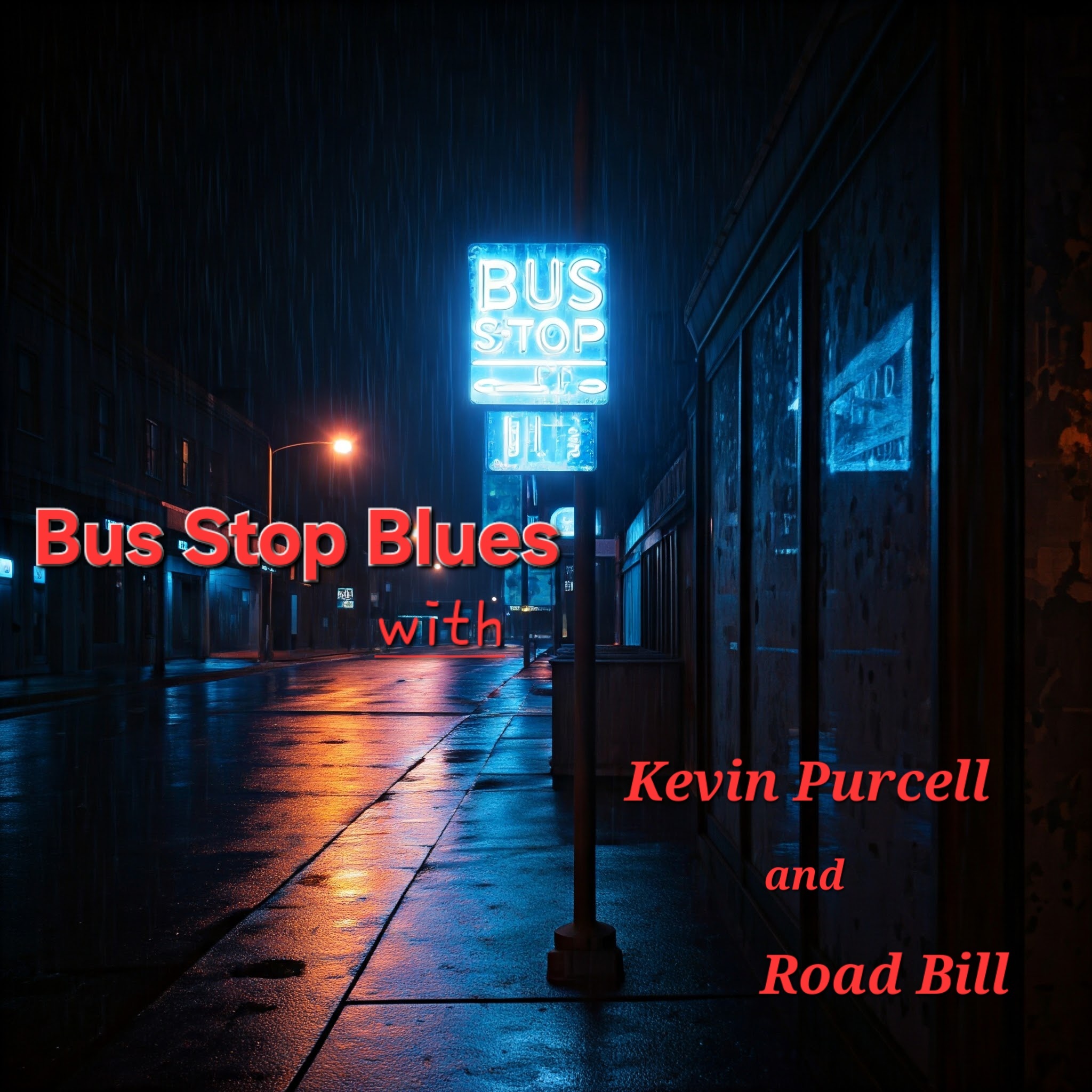
The Bus Stop Blues’s Podcast
thebusstopblues