
Rock n Roll Chicago Podcast
The Rock n Roll Chicago Podcast is a weekly podcast that interviews bands and musicians from the Chicago area. The podcast is hosted by Ray Bernadisius ("Ray the Roadie") and Mike Metoyer ("Hollywood Mike" of Cadillac Groove, Mike & The Stillmasters). The podcast covers a wide range of topics, including the history of rock n roll in Chicago, the current state of the scene, and the challenges and opportunities facing musicians today.
Founded in 2019 by Ray the Roadie and Paul Martin, the two co-hosted the show until 2022. In 2023 Ray was joined by Mike Metoyer as the new show co-host.
The Rock n Roll Chicago Podcast is a great resource for fans of rock n roll and musicians alike. The podcast is informative, entertaining, and inspiring. It is a must-listen for anyone who loves rock n roll and wants to learn more about the Chicago music scene.
Here are some of the things you can expect to hear on the Rock n Roll Chicago Podcast:
Interviews with bands and musicians from the Chicago area
Discussions about the history of rock n roll in Chicago
Information about upcoming concerts and events
Tips and advice for musicians
And much more!
If you're a fan of rock n roll, or if you're just curious about the Chicago music scene, then you need to check out the Rock n Roll Chicago Podcast. You can find the podcast on iTunes, Spotify, and other major podcast platforms.
Show your support of the podcast and visit our Swag Store. Just click copy and paste this link in your browser: https://tinyurl.com/yr5pa7zt
The Rock n Roll Chicago Podcast is edited by Paul Martin.
Theme song courtesy of M&R Rush.
Rock n Roll Chicago Podcast
Ep 273 Spring Soul Sessions feat. Jamey McLaren & Kiethen Banks
Use Left/Right to seek, Home/End to jump to start or end. Hold shift to jump forward or backward.
Spring Soul Sessions – A Night of Blues, Gospel, Jazz & Soul
Join us for an unforgettable evening of live music as Spring Soul Sessions brings the rich history of American music to life through blues, gospel, jazz, and soul.
This is not just a concert — it’s a cultural experience.
Podcast edited by Paul Martin.
Theme song courtesy of M&R Rush.
www.rocknrollchicagopodcast.com
Coming to you from the studios at the Illinois Rock and Roll Museum on Route 66, it's the Rock and Roll Chicago podcast. Hey everybody, it's Ray the Roadie. And this is Hollywood Mike on a wonderful Wednesday evening.
You remembered your name two weeks in a row. Two weeks in a row I remembered my name. That's good.
I'm not drinking enough bourbon. Yeah, maybe. That's what it is.
I need to drink some more bourbon. We're definitely pouring one out later. Are you taking Prevagen? What the hell is Prevagen? It's for your brain.
Maybe that's why you're remembering your name. Oh, no, I don't know. You don't remember if you took the Prevagen? Yeah, I'm taking something from my head, but not this head.
Oh, okay. I'm just kidding. I don't have problems in that particular area.
Yeah, those who talk about it usually do. Yeah, no, not at all. So, we've got some friends in the studio tonight.
I know, you brought some friends. I didn't realize you had any. Yeah, I've got a few.
I brought them both. Okay. Yeah.
What do we got here? We've got Jamie McLaren in the studio sitting right across from me here. The lovely and talented Jamie McLaren. And to my left, we have Mr. Keithen Banks.
Wow. How you guys doing? Don't do him like that. No, not at all, man.
Not at all. No wonder you only got a few friends. They're going to hear his music a little bit later, so they can make up their own minds.
Outstanding. Outstanding. We're like brothers from another mother, I think.
Yes, sir. I can see that. Yeah.
So, thanks for coming out, guys. Thank you for having us. We've got something coming up here very shortly.
It's going to be a fantastic show, right? So, I wanted to have you out here and talk about it a little bit. And this is your brainchild, Jamie. Absolutely.
Why don't you tell everybody about it? Thank you. I'm super excited about it. We're having what I call the Soul Sessions.
And I try to do a couple shows a year and based on the season. So, we're doing the Spring Soul Sessions on March 29th. I did the same thing you did before.
I just ate my words on that. The Spring Soul Sessions. There you go.
That sounds much better. All those S's. Yes.
Say it 10 times fast. It's a tongue twister. Yeah.
Go ahead. Try it. Yeah.
The Spring Soul Sessions. Spring Soul Sessions. Spring Soul Sessions.
Spring Soul Sessions in Mississippi. Yes. There we go.
That's a good one. That's a good one. And he's from Mississippi.
Crooked letter. Crooked letter. So, super excited about the show.
Something that all the years that I've worked with musicians across the open mic scene, as well as you, Mike, you know, I've been blessed to work with a lot of really, really talented musicians in the scene. And the collaboration that I've got to do with a lot of people really made me want to do something bigger and also give back. So, each show, I want to bring on new musicians with the core group and showcase these musicians and help get them out there while we're also giving back to, you know, non-for-profits like Trinity Services, which is the owner of the venue we're going to be using, the Roxy Theater.
And then New Eclipse Community Alliance, which is our partner. Their donors and sponsors have helped put this show to light and we're raising funds for their program. One of the founders of the non-profit runs a massive community center out in Englewood and she has a food pantry, violence prevention classes for kids.
They have community gardens over the summertime for the community, the kids and adults. They have a bunch of housing assistance programs. So, she's doing a lot there.
So, this is like a way to give back for all her donors and then also raise money for those programs. So, we're also trying to get a music program started over there too. So, to help the youth.
And what's the name of that organization? It's called New Eclipse Community Alliance. Okay. In South Chicago.
And what, I mean, you said what they do, but I guess what would you describe them as? Community outreach? Community outreach programs. Yeah, exactly. And they're located exactly where? I'm sorry, no, Englewood.
Englewood. Okay. Englewood.
Am I saying that right? Englewood, Englewood. Somebody always corrects me. Well, you know, California got an Englewood too, right? Okay.
So, there's with an I, this is with an E. Okay. Yeah. I didn't know that.
Englewood, California is with an I. He was correcting me and I was like, now I'm not confident with which city it is. Yeah. Yeah.
But that's it. And then, and then the other organization that owns the Roxy Theater, which we had Jess in the studio a couple of years ago, actually, and she talked about that, but tell us a little bit about their organization as well. Yeah.
Jess is doing amazing work over there. She's really turned that into a machine for that nonprofit. So, it's Trinity Services.
They help adults with developmental disabilities, getting them housing assistance, food, clothing, and job support, like getting them training and things on jobs. So, all adults with developmental disabilities that need those types of things to get them more normal living. And they're, they're based in Lockport, right? I believe, yes, I believe so.
They're headquartered in Lockport, we should say. Yeah. I'll tell you what, let's, let's talk about the Roxy Theater for a second, because there's a lot of people that don't even know that it exists.
I mean, it's right in downtown Lockport. It's centrally located for most of the people that live, what I call like on this side of the town or our suburbs. And most people have no idea that it's there.
It is, it is an old theater. It's got, what is it, a hundred years old? Yeah. It's got to be.
Exactly. And I was born and raised in Lockport. So, I remember that sitting empty and my whole life, I was like, I wish that was still a theater.
And I'm so happy to see somebody come in and do something really great with it that's good for the community and also musicians, because the whole program that she has going in there, it's a really like amazing experience. Like the venue was beautifully built out with a lot of thought and just a lot of care to really give the musicians, like as a performer, a high-end experience. You've performed there, you know, like you, when you perform there, the green room itself makes you feel like a star.
And you feel like you're transported back in time. Exactly. Because the entire thing is newly decorated and you feel like it's the 1920s.
And I love the fact that they've got the, the movie projector is right there by the front door when you walk in, you don't realize that the movie projector is so big, you know, over time, you know, things have gotten smaller, but this movie projector is huge. When I first saw it, I mean, it looked, it looked like the, like the gun on the back of a Jeep or something is what it looked like. And now the movie projector is this computer.
This computer. For all 18 screens. Right.
Right. Yeah, exactly. Exactly.
I mean, you can buy one that's the size of your phone nowadays. Yeah. Yeah.
Carry it with you. I mean, everything in the place from, from, from the facade on the outside of the building to the decorations in the inside, you feel like you've been transported back in time. The performance room is, it's, it's like a, it reminds me of performing in like, like the old cotton clubs with the dance floor and the red curtain on the back and a real stage and a sound system.
And, and downstairs, like you said, the green room for the performers. It's, it's fantastic. When, when Cadillac groove played there, we walked in and kind of did a scouting of it to just look at the stage and the whole bit.
And, and immediately we said, no, this is not a regular gig. Right. Because we, we play some bars and we play festivals and things like that.
So when we sold the tickets and put out the invitation and stuff, we requested that everybody dress up and people show it up wearing suits and ties and dresses. It was fantastic. That's awesome.
That's why I'm looking so forward to this. It's going to be a good time. Yeah.
Yeah. I'm really excited. Overall, just the community in Lockport, I just want to be able to get them more involved with music and, and other things that are needed.
So, and I'm excited to have Keith in as one of the main singers, the band leader. Yeah. Captain.
That's the, that's the deep voice you've been hearing. Yeah. Yeah.
So how you doing, man? I can't complain. Nothing broken, nothing missing. That we know of.
Cause if it's missing, how do you know it ain't there? That's right. You got him on that. No one ever gets him on something like that.
See, only, only a musician would do that. We just talked about that. Musicians always have something else going on in the back of their mind.
That's that Southern-ness in it too. We got quick comebacks. That's right.
That's right. That's right. That's right.
That's all them shrimp boys. I mean, yeah. Crawfish.
Yeah. It's the cayenne pepper in my blood. You know, it distorts your brain just a little bit.
You got too much in there, you know, you know what to do. So you're involved in the project and I've met you in person for the first time at our first rehearsal. Oh, I let the cat out of the bag.
I said, I wasn't going to let the cat out of the bag. It's early and it certainly slipped. I'm involved in the, in the show too.
And I can't wait. I can't wait. So we met first time at our first rehearsal at Johnny's Blitz and Johnny, if you're listening, we're looking for sponsors.
That we are. Yes. Yeah.
So tell us, you know, tell us about your journey. Tell, tell everybody, you know, who you are, who they can expect to see. Tell us about it.
Real. Well, I come from a little small town called Slater, Mississippi, AKA we call it Slaughter. That was the original name.
They changed it from Slaughter. Because of all the bucket of bloods that were all around. That's pretty much.
A bucket of blood was the name of a juke joint, not literally buckets of blood sitting around on the highways. Thank you for clarifying that. Yeah, I would never have known that.
They were, they were called that because of the violent happenings that would happen thereafter. They called them bucket of bloods, but yeah. So I'm from that.
I call it the blues belt, you know, from Itta Bena. Well, I gotta talk Southern. I can't do this.
It's okay. Be who you are. Be your genuine self.
They called it, it's called Itta Bena, but we call it a Itta Bena. Yeah. You know, you know, just like you guys call it a pecan.
We call it a puckon. Yeah. It's like, what's a puckon? What's a pecan? It's a puckon.
Tomato, tomato, potato, potato. Yeah. So, yeah, so I started, I didn't do research, but my uncle, who was a harmonica player, he started telling me all these stories about people, what's the song, Fattening Frogs for Snakes.
I forget who sings that song, but Sonny Boy Slim. And he started telling me about all these blues. I'm like, how do you know these people? And he's like, well, he said, me and your granddaddy, we used to hang out with Muddy Waters down in Clarksdale because they used to chop cotton together.
My grandfather and mother was. And he would tell me all these, I'm like, he said, yeah, I used to be on the porch with a, he would take a comb and put some paper on it like you got a harmonica. So, and then he talked about how they would have this one string on a piece of wood and they would, they would be playing.
Like Tom the Cat in the Tom and Jerry cartoons. So he would tell me all these just amazing stories about these blues. I'm like, I did not know this stuff.
You know, I didn't know I was a part of, you know, where I came from was so deeply, uh, rich in blues and blues artists. You know what I mean? Like I used to sneak to the juke joint when I was a little boy. Cause you know, we, a small town, we had gas station at this time when I was little, we had two juke joints in the post office and a couple of cotton jeans, you know? So, and so I would sneak off and listen to the, to the blues when I was a little kid.
You know, my grandmother would, she would trip me out. Um, I'd come back home, sing some of the blues songs. And, uh, and I was like, I'd be stroking.
I had no clue what I was saying. And your grandma would turn around and back at you. She'd say, say, excuse me? Boy, what are you stroking? You sing that song again, I'm going to stroke you.
You know, you know, she was a religious woman, you know, it was the devil's music. Oh yeah. So, so it was a real fun experience, man.
Uh, being around like one, you know, juke joint at night and then church on Sunday morning. Right. You know, that's pretty much was a routine.
So we didn't have, uh, we didn't have fast food restaurants. We didn't have all this other stuff, uh, around. So a lot of times, you know, people, we just sang, we played music and we did what we could to, you know, to enjoy.
So, but I didn't know that even Elmore James, uh, from Slater, you know, from Slater, Mississippi. And, um, and I didn't know his, uh, his son. Right.
I was talking to his son, you know, and I'm like, I didn't know. Yeah. Yeah.
I didn't even know. I didn't even know who he's like, yeah, man, I got to get my royalty check. I said, what'd you do? He said, you know, he's like, well, my dad, I was like, oh, cool.
Your dad. Yeah. I, and you know, I had to go look at it and click.
Yeah. I still didn't until I went and looked this stuff up. Right.
You know, I'm like, are you Elmore James, son? Yeah. And he's getting royalty checks. Right.
Even though his father's dead. Right. Wow.
Yeah. Yep. Well, you know, they deserve it because I'll tell you what you look, you, none of those blues artists made any money while they were recording records and traveling.
They made nothing. You know, they, you know, their record company would give them a car, you know, or they'd put it down or they'd own a building and they'd, they'd put them in one of the houses in the building that they own and still charge them rent for it, you know, without having to go through credit checks and doing all that stuff. But they didn't get paid in any kind of real cash or anything like that.
Not at all. Man. And so that's, that's like a brief history of like, you know, where I come from.
And I used to listen to my grandfather sing all the time. I didn't, you know, I didn't pay attention to my grandfather singing when I was a little boy, but you know, he could sing. Right.
Right. Cause you know, of course he could sing. He was hanging out with these blues singers and stuff, you know, he's born like 1908.
And, um, I had fun being around, you know, my uncle telling me these stories and we get together, we play, he plays harmonica and I play the guitar. And I recorded a lot of video, you know, stuff before he passed away. Cause I'm like, you know, I wanted that experience.
And, um, cause he, he came from that. And so present day, you know, as I've done all my hits, I was doing a lot of history, Sam Clarksdale. When you start looking at a lot of these great blues singers, they came from that little area.
I mean, Muddy waters, you got a BB King from Indianola. And so it's that area was so rich with just talent. Yeah.
So much talent down there, man. And then, and then I discovered other things like Bobby Rush, you know, that's my grandmother's nephew. Right.
Right. So I'm like, wow, why you guys didn't tell me this stuff when I was younger? Yeah. Yeah.
But you know, like you said, though, it's, it's like nobody, nobody thought anything of it. No, you know, they were just, that was just Bobby from, you know, the life, the lifestyle. Yeah.
That's Bobby Rush. You know, you want good greens, go see Bobby Rush. Yeah.
I mean, that's, you know, that's, that's the way. But my question is why did they, all these guys all of a sudden one day say, I'm going to move to Chicago. Sam Cook did the same.
Well, he was young, but yeah, he was born in Clarksdale, but came to Chicago. Muddy Waters came to Chicago. Exactly.
Yeah. Well, a lot of that had to, a lot of that had to do. Opportunity.
Money. Opportunity. But, but, you know, if you, if you watch.
The dream was sold to them. You know, if you, if you watch the movie Chess Records or read the books and the biographies about Chess Records and, and Alligator Records, and there was, there were several record companies around in the Chicago, in Chicago at the time that said, we want to, we want to record that kind of music. We want to bring that kind of music to the city, to the masses.
And they actually went there. I mean, it's, it's documented and Muddy Waters was discovered sitting on the porch of his, of a sharecropper shack. And a guy showed up with a tape recorder in a suitcase and said, we're looking to record folk music.
Right. And that was it. Well, now you're going to come back to Chicago with us.
It's really, really the way, you know, there's more involved in it, but. Of course, of course. That's the quick 30 second story.
You know, people actually went through the countryside looking for that type of music. They wanted to record that, that type of music in it. And it, was it luck that it was Chicago? I don't know.
You know, that they just happened to be in Chicago. I can't say that it would have happened in New York or LA at the time because. Exactly.
Or Nashville. Yeah. Cause they had gone, they were, they had already established themselves differently.
It just seemed like the time was right to do it. And it happened to be in Chicago. So yeah, that's interesting.
So when did you, when did you come to Chicago? When I got off the boat in 2000 and I'm just kidding. So I think I came to the city in 2005. 2005.
Yeah. So yeah, I think so. I got out of the military.
And so technically what? Oh one. Okay. So when I, when I, when I made my way up North.
Okay. You know, then I went to school and that's when I got involved in music. I mean, I grew up around it.
My grandmother was a singer, used to be in the church and listen to, what's the name of that band? John, the John and the gospel 10. Okay. You know, they used to, you know, man, quartet music was all I ever knew.
Okay. Cause quartet music, you got, you think of quartet music, you think of another guy from Chicago, um, Curtis Mayfield. Oh, of course.
Right. So that was, that was basically, he was just playing quartet music. Right.
Right. And turning into R and B. Yeah. So, so after, um, getting into Chicago, I did, like I said, I wish I would have experienced Maxwell street.
I wish, man, like I, I'm like, man, I was born in the wrong time. Yeah. You just, you just mentioned it and I can smell it.
All right. You weren't, no way you got to experience it. Oh, you know, you know what? Yeah.
Wow. I want to hear your stories. Yeah.
Yeah. You know, because you know what, what Maxwell street is today. Um, that, that wasn't, that change didn't happen very long ago because, um, I went, I went to, I went to college at UIC, which the, the PE building, uh, the, the, the, the back end of the PE building borders along Maxwell street.
And so in 1990 to 94 is when I was there and I used to park, um, in front of a police station that was behind the PE building. And at Maxwell street was immediately right here. And that picture on the wall here in the museum that we were just looking at, that's exactly what it looked like up until 1994.
And it was around 95 and 96 when they started buying up a lot of the houses and stuff over there and just kind of gutted it. And now it's the Maxwell street that it is that you wouldn't recognize it. If, if you, if you were here in 1994 and you saw Maxwell street and you left and you came back and the first thing you did was say, I'm going to go find Maxwell street.
You wouldn't find it if there weren't street signs because it looks completely, it looks completely different. Yep. It looks completely different.
I'm not saying that it's a bad thing. It's because it's a different thing. I wish they would have, I wish they would have preserved a little bit of the feeling of it.
Yeah. But they sterilized it. Unfortunately, it's, I mean, they sucked all the life out of the soul out of it.
I mean, we got to bring the soul back to Chicago for sure. But you're, but you're right though, because immediately when you said that I smelled greasy Polish sausage and Maxwell street was basically shut down in 1994. Yeah.
Oh wow. Not that long ago. The market, the Maxwell street market was shut down in 94.
Cause I remember I used to, I used to see it. I used to go, I used to, I used to walk it as they were setting up on Friday afternoons. I used to walk it and get lunch and then 94 came and it was all gone.
Nothing like a Maxwell street Polish. Yeah. Yeah.
You're listening to the rock and roll Chicago podcast. Your Sunday nights just got a whole lot bluesier. Get ready for the bus stop blues show that takes you deep into the soul of the blues with classic hits, road stories, and live jam sessions hosted by blues man, Kevin Purcell and me, the one and only road bill.
The bus stop blues is two hours of nonstop blues banter and bad assery. Check out the bus stop blues podcast at the busstopblues.com where you can listen on Spotify, iHeart, Apple podcasts, or any other major podcast platform. Hop on board the bus stop blues where the blues never stops rolling.
So, so how did you guys meet then? How did, how did, how do you guys meet so that, that you were both involved in this project though? Keaton and I met through mutual music friends, again, great collaborations and just kind of crossing paths in the scene. And, um, I had crossed paths with you in the scene actually early on in my music career where I had like given up music. I was a college dropout, classically trained opera and jazz.
And I was like, I'm done with this. And I got drawn to the blues and the soul and it literally revived me. Rest in peace, Twist Ferguson, who was the one that really made me go out to open mics and get involved again.
Cause I never sang like that before. You know, it was totally new to me. So I found myself coming across more and more musicians and I came across Keaton who had that soul that, and you'll hear in his guitar playing, like he reminds me a lot, those chords he plays reminds me a lot of Twist Ferguson's soul.
Cause that one thing that Twist always said, he loved the blues, but he would get bored with it. So he was, he had a different way that he played the blues that was enchanting and it was very, um, mesmerizing. So, and he does the same thing with his blues music.
And so I went on a trip with him in 2024 to Mississippi. And we did, um, basically like a whole, like just like a blues trip. We went to the Delta Blues Museum.
We went to Clarksdale. We did a lot of sightseeing. I introduced her to the catfish sandwich.
Oh wow. And chicken on a stick. And then just barbecues in the front yard with the entire neighborhood.
Catfish sandwich. Why'd you have to say that? Catfish sandwich. Oh man, man.
Oh man. You can't stay down there. You can't stay down there a week, man.
You got 400 pounds. I'm telling ya. He was laughing at me every time I got something new that I haven't had before.
I'd almost lost my mind. Like, what is this? It was the, uh, stopping at the gas station. Yeah.
Yeah. Yeah. Oh, they sell this here.
That's right. That's right. A catfish sandwich, man.
Oh my God. And an okra pickle. Oh my gosh.
That's crazy. I love those. Those are good.
Yeah. They're starting to pickle everything nowadays. Oh man.
That's cool. Why do you have to say that? That food, that food will take you there, man. But he really introduced me to the community and just like the family, um, values down there.
It was really beautiful. And, um, you know, through my experience with the music scene, the blues scene and the soul in my background and classical and jazz, I'm like, this is American music. This is the root of American music.
Like I've been very drawn to tell the story across the many different musicians I've met in my life and, um, continue doing that in creative ways. So this is our second show. Um, super happy to continue doing this with the Roxy.
They gave us the chance to bring this to life, which I've been thinking about for years, really. Um, and I just never had the guts to do it, so to speak. So here we are today, show number two, we did the Christmas soul sessions and now we're doing the spring soul sessions and we're up in the game this time.
And we have a horn section. We got powerhouse singers. We have you, Mike.
Well, thank you. One of my, one of my favorite singers on the scene for real. Um, he does a fantastic job with a lot of traditional.
I didn't pay her to say that. But for real, every time I'd go see Mike, I would sit and I knew I would go to open mics and I knew when to be a student and I would sit and I'd watch these performers and I'm just like, come on, you gotta pay homage where it's due. Okay.
So, and, and that's how I felt when I met Keith and so, um, here we are. Yeah. Yeah.
You walked into, um, yeah, you walked into the place that we do not mention on the podcast, but you know what, you probably know what I'm talking about. Yeah. Yeah.
Good thing I didn't mention it either. Yeah. I didn't even know.
And I think it was a night that, uh, Jesse Perez and I were both co-hosting. Correct. That was that night.
And the first song we did was. Come on, you know it, everyone does it. Valerie.
We did Valerie. It was that. It haunts me to this day.
People will ask, can you sing Valerie? And I'll be like, I'll do it because I have respect for it, but it's overdone. Valerie is going to cost you a hundred dollars in the tip jar. Exactly.
So if you want to hear it at the Spring Soul Sessions, it's not at the set, but we do have a nice donation QR code. You send that over and we might make it happen. We might make Valerie happen for the proper donation.
But we, we remixed the song, you know, I put more soul on it. Yes, he did. He brought me out of my box.
Nice. I was like, I can't play this song because there's no. Change it up.
Yeah. Change it like completely. I actually found a, uh, I actually found a version of that sing by a man that I actually really like.
I believe it's. Teddy Swims? No, I believe it's David Gray's version of it. Okay.
I'll have to look that one up. Yeah. And it's, it's slow.
It's a ballad. Okay. Yeah.
And it's, it's really, it's really good. But you know, I, I did not come here from home. I was, I was, I was at work and came here directly from work and I wanted to swing.
I wish I had time. I was going to swing by and get my guitar so we could have done it live in the studio. And I ran out of time.
I'm so glad you ran out of time. Both of you. I'm disappointed.
I asked him too, when we were coming, you had a guitar on you? He's like, no, I'm like, all right. I actually do have one. It's an electric though, but I don't have an amp.
So he might have the amp. But yeah, it would have been, it would have been good. But no, we'll play some videos and just include people in an example of what it's all going to sound like.
So tell us, tell everybody about who else is involved in the show. Give them a little background on who else we got going on. We got Tony Lorenz, who I'm super excited to be working with.
Who is my cousin. I know. Why does this always happen? I introduce you to your own family.
This is a second time. But my, my family is huge. If you go to the state of Louisiana, my last name is like Smith or Johnson.
I'm not kidding you. My mother's maiden name was Metwyer. Metwyer is where it's really pronounced before she married my father and they are not blood related.
At least that's what I'm saying. No, there's no inbreeding going on over there. Is that why you act like that? That's right.
That's right. You know, you know how you always wanted a neck friend. That's not a mole.
That's a residual. Oh my gosh. Yeah.
No. Yeah. He, yeah.
He approached me at the first rehearsal and he said, I saw your last name. And it's like, I get involved in this cause we're cousins. And yeah, it's amazing.
I've never met him before, but he knows my parents. That's really amazing. See, the stars aligned on this one.
Tony's really bringing, he's really helped bring the show to the next level that I've been wanting to get it to. He's playing keys for us, but he also has done arrangements for us on our gospel section. So we're doing a couple mashups.
A lot of really exciting things that he arranged for us. We have a choir section. And when I say choir, it's, you know, three, but three singers, but also the band, they all sing.
So I'll tell you what I, um, I was, I was talking to somebody last weekend about, uh, about the show and I was naming off some of the people that are in the show that I can remember their names of. And I don't know, I never got the names of these, of these guys, but he goes, I know Tony. He goes, I was at a, he goes, I was in Indiana someplace.
I can't remember the name of the place, but he was playing. He says, he says, I was there to see a friend of mine by the name of Jimmy Jay. And I knew who Jimmy Jay was because when I was learning how to play, play guitar and up and coming, Jimmy Jay kind of took me under his wing a little bit.
And he said, learn this scale, learn this and the whole bit. And then I went and participate in some of the open jams that he had hosted. Well, it turns out that Jimmy Jay had actually played with Albert King for a while during his career.
And, uh, and apparently Tony was playing with this guy, Jimmy Jay. And he says, and then Albert King got up on stage and here I am watching Albert King play. And he goes, and I've been a fan of Tony's ever since.
So Tony's played with Albert King. He played with Stevie Ray Vaughan. He's done a lot.
He was nominated for two Grammys. Um, and he's a composer arranger. He is a gem.
Like, I just don't even know how else to explain him. He's well, he took charge of the rehearsal. He had the, he had the choir going, I mean, just tight within five minutes.
And that's, again, I'm sitting there. I'm like, this is a moment for me to learn, you know, this is a moment for me to watch and see how he does this. Cause I wanted to be a choir director in my life, but, um, the roads took me in other avenues, but here I am doing it anyways, still got a lot to learn.
So I'm very, very blessed to have Tony. Hey, and you know, also you better make sure you got some, a cup of coffee or some tea when you're talking to Tony. Cause he's got stories and that's what I love about it.
Cause he tells you the history and it's like, we need more of that old wisdom around so we can pass that along to the next generation. And you know, that's the, I think that's the missing link of today. We're, we're not doing that as like, as they did back in the day.
You know what I mean? Tony is, Tony, when she says he's a gem, when Tony's on the phone, you know, in person, I'm just quiet. I ain't got nothing to say, ain't got nothing to talk about. I'm like, I'm here to absorb what, whatever your experience and, you know, living vicariously through you from being around all these great people.
You know, I'm like, I wish I was born in that era. You know how many times I've said that? Yeah. But, you know, but, but think about it would, it would have been great to experience that, but would you be as the, would you be your distinguished self if you were, you know, because now think about it, the type of music that you prefer to play, type of music I, you know, prefer to play.
It's not mainstream. No, not at all. But back then it was.
You'd be one of another hundred faces. Exactly. That's true.
You know, we're taking the low road, less traveled by. Well, I just want to experience it. I don't care about singing or playing.
It's just like when I saw one of my heroes in person for the first time, you know, Bobby Womack, you know, he came from Sam Cooke, which, you know, a lot of people, Sam put a lot of people on, you know, Lou Rawls, Sam Cooke, Johnny Taylor, you know, those guys, he used to sing with the Soulsters, you know, and again, Sam is from Clarksdale, Mississippi. Yeah. So experiencing Bobby Womack helped me experience Sam Cooke, right.
Because, you know, when you hear, when you hear, you can hear the influence, right. And then Johnny Taylor as well. That's the influence.
He's another one I wish I could have saw, you know, and these, these great, these people are like pioneers, you know, definitely Sam, a pioneer, they call him the father of soul. Yeah, right. You know what I mean? So when I thought about, I remember one day I used to sing at Potbelly's.
I don't know if you remember, you know, the restaurant when they used to have music there. Lunchtime. Yeah.
I used to sing there for years, man. And I remember they, they wanted you to fill out the sheet. It's like, Hey, so what do you want to do with your life? And yada, yada, yada.
And the first thing that came to my mind was I want to be a soul singer. Yeah. Do you soulify everything? When I hear him sing, I know who he listens to.
When I listen to him sing, he'll come out with a run that I'm like, that sounds like Sam Cooke. That sounds like Bobby Womack. But he makes it his own and he sneaks it in there and you can tell like where his roots came from.
And I love that about him. It's hard to, it's hard to hide who you are if you're being genuine. Exactly.
That's, that's it. So he, I like to say he soulifies everything or he cooks it. Sam cooks it up.
Yeah. I mean, you have to, I mean, you said like the show, right? You said soul, blues, gospel, American music. Right.
So I just look at when you, if you go study all the great rock and roll players, right. You go study the Beatles. You study the Stones.
You study all these people. Guess what their roots go back to? It goes back to the American music. Yep.
The blues. Absolutely. Blues, soul, and gospel.
So when I think about, when I hear a song, oh, Rod Stewart wanted to be Sam Cooke. What's the guy from Journey? Steve Perry. You hear Steve Perry say, that's Sam Cooke all day long.
So when you look at, when you look at the influence of soul music on every other genre of music, right. And you just trace those roots back. You go back to Sam Cooke who got it from R.H. Harris, which was a gospel singer.
Right. So, and that, and when I started to realize Chicago was a music soul juggernaut back in the day. I mean, soul Detroit, they were back and forth.
Yep. Chicago and Detroit. And when I looked around in Chicago, I was on the, been on the scene.
I'm like, there's no soul music. Where did it go? Where did it all go? What they done? What they done done? Where did it all go? They're in the burbs. That's where I found some of these cats.
Yeah. Yeah. It's the small places in the burbs.
Yes, it is. Cause they're by the families. They're with their families.
Yeah. It all got pushed out to make room for, you know, stuff that was more commercial. Right.
Everything's a cover band. Everything's a tribute band. You know, that's, that's what Chicago is right now.
Yeah. And you know, and you know, I used to hear the stories. They talked about the guy singing on the corners and all of that.
So I heard about R. Kelly singing on the subway and you know, I had my, I stayed, I was in the subway for about five or six years. I sang in the subway every, you know, almost every day. I did it for employment.
Okay. Yeah. He really did.
He's got videos and everything. Didn't you sing with Crystal Bowersox in the subway? Yeah, Crystal Bowersox. She was on American Idol.
Wow. Yeah. Yeah.
We did, we did a video together, Crystal and a bunch of other street musicians. There was a name, the CSM Chicago street musician organization. Nice.
So they, we did that and that's how it ended up at the house of blues because they took our, they took our show to the house of blues and they saw me at the house of blues. Hey, you want to play? I was like, yeah, sure. Yeah.
Why not? I'm tired of the subway. I got to yell, I got to yell over the train. Yeah.
Subway, subway, world-class amphitheater. Which is hilarious because I'm like, hey, I want to go sing on the subway. Like I want to go, I want to go back and do it.
I want to do it. Oh yeah. Well, I'm trying to drag him back to the subway with me.
Well, I will tell you this. This is, this is the part that I love, but this is the edge that I have on most people that sing and perform. On the subway and nobody come to see you.
Yeah. That's right. They go to Temptations.
Nobody comes to see you, Otis. They came to see me. Like David Ruffin.
Yeah, for real. So when I think about, when I think about the subway, then this is why I say it's the edge and it's something that Ray Charles called biting the pitch. Right.
You know, no, no monitors. He just, you know, he's just saying he, cause he liked to listen to the room. Right.
And. I love that. And all these years, you know, I still carry that biting the pitch because it's hard for me to hear what's going on.
If the stage volume is too loud. Right. Right.
And so, so the subway taught me how to project my voice. The subway taught me how to, uh, to be pleasing to people and not force music down someone's throat. I've seen musicians on stage yelling at the audience because they weren't responding.
I'm like, well, you need to go to the subway. Go humble yourself. And so the subway taught me people, people wonder, they said, like, how did you know to play this song? I was like, well, you know, subway taught me how to look at a person and play a particular song.
Yeah. And, and like, I'm like, they're going, they're like this song right here. And even at the gigs, it's like, how do you know to play that? You know, he's a people reader.
He's a professional people reader. That's you have to be with that hat on, you know, if you're fronting a band or if you're performing or whatever, you have to read, you got to read the room. You have to.
And the subway, listen, when you, I wrote that song trying to get a dollar. I used to have to get up at two o'clock in the morning and, and to go down to get the spot because there were other musicians be fighting for the spot. You stay there.
I get there at, you know, maybe three in the morning, stay there at about six or seven. Wow. So somebody come and say, hey, look, you can take the spot.
I'll be back at eight or nine o'clock. Right. Wow.
Yeah. So, you know, me, I'm a country boy and I believe in working hard. Right.
So I would get the spot. I stay down there all day till I'm tired. Yeah.
I mean, it'll be evening time when I, when I would leave eight o'clock. Right. Because I don't, when I would stay there, most folks take break.
Cause if you take a break. You lose your spot. That's right.
Right. Right. Right.
I didn't take a break. I wouldn't use the bathroom. Had this Sprite bottle.
No wonder why it smells like that down there. Had a Sprite bottle. I see the many people use it.
So, you know, you're not driving a truck, you know, you lose it. You go to the bathroom, you lose it. Yeah.
You lose that spot. So, you know, you have to be slinky. You get the, you get the bottle, you get the jacket and, you know, you kind of cover yourself up.
Did he just admit to public indecency right now on the air? Listen, I've seen worse on the subway. I was going to say, seeing somebody peeing inside of a Sprite bottle is not the worst. I've seen a woman, but naked on the subway.
And that's where he wrote do for a dollar. And when you guys were hashing this out, I just filled this bottle. I'm telling you, man, look, so, so what I got, I started doing from the subway.
I, you know, I made it above ground. Yeah. So I didn't listen.
I didn't realize I was in the subway so long that if I forgot what the real world was like, crawling out of the abyss, he was like in a bomb shelter for 30 years. All I did was go home, go back to the subway, go home. I stop at this spot on the south side on 76th street and give me some catfish and collard greens.
That's some cornbread. Yeah. About $13.
And so for the subway, I went above ground and that's when I was like, okay, there's something happening. So it was, I started playing at the house of blues. I became a regular at the house of blues and I started noticing again, there's no soul music.
And it's like, everybody's just playing blues. And I started a series called soul survivor at the house of blues and, you know, getting people to come out to just like, Hey, we need to read. We don't need to lose soul music because soul music was, uh, was gospel all in one, you know, you get, cause they, they, um, the old school singers, uh, you can take Marvin Gaye for instance, he's always talking about the Lord in his music.
Right. You know, back then they, they put God in the music. And you didn't even realize it sometimes.
No, you did. They snuck it in. Exactly.
I think that's a beautiful thing. And you know, Ray Charles was infamous for it. Yep.
He was using gospel progression styles. His whole, his style was gospel. He was gospel.
And one of the songs we're doing, um, is by the Clark sisters and they actually portrayed, like, actually the idea was written off of a Stevie Wonder song, which is what you're singing lead on. Yeah. Excited for.
I'm actually, I've been working on it. I'm super excited for that song. I'm very excited for that song.
That's a mashup that we arranged ourselves. We're really excited for it. Um, those are some tight harmonies.
You're going to hear a lot of. We're not going to tell anybody. They're going to have to come in.
You'll come in and hear yourself. Yeah. I'm not even going to tell you the names, but just know that those are the music.
Like Stevie Wonder's song mashed up with a Clark sister song. Yeah, exactly. That's, that's history right there.
And that's the story we're trying to tell and just get people more involved with loving the roots of, of blues. You know, we have Charlie Brown, who's our MC, who is a historian. He can tell you anything.
He, he can tell you the day a song was written in the time and what they were eating for breakfast that day. He knows his history. We've had him on the podcast.
He's done that. He's shared some of those stories. Yeah.
So he's fantastic. And when I knew I wanted to do the show, I called Charlie up what like almost two years ago, I said, this is what I want to do. And he was like, okay, let me know when you're ready.
Well, a year, a year and a half later, almost two years later, I called him. I'm like, all right, I'm ready for you to be the MC. Yeah.
So he's going to be opening and he'll be emceeing throughout the show. He's going to give the history of the blues, starting with some spirituals, maybe, and then some blues standards. And then he gives his amazing history lesson behind all those, which everybody really enjoys and really appreciates.
Yeah. Yeah. So without giving away the songs and the whole program or anything, run down some of the artists that are going to be covered.
So we have Shanae Young, who is leading our gospel section. She's an award-winning gospel singer, and she's absolutely fantastic soprano. Really, really on point, tight with harmonies, and just a great lead singer.
We're really excited to have her. And then we have Brittany Ortega, someone I've been singing with since I was 15. We've been in choirs together for a really long time.
She's absolutely fabulous. And then we have Marlon Washington, another singer, actor, theater person who's going to actually be helping with stage performance in general. And then we have, I'll let you introduce your band, Keithan.
Your band. Oh, well, my band, we just have two members from my band is Kenji, calling my Japanese connection, my Asian connection. He's playing bass, and I have Sid Smith on the drums.
And those are the only two, I think, that are from my band that are playing. Yeah. You know, Japanese bass players are awesome.
I got a Japanese bass player in my band too, Goji Tanaka. Yes, Goji's amazing. Yeah, he's a little four-foot-eleven dude with a bass that's longer than he is tall.
The bass is bigger than him. Just can thump and pop. Oh my gosh, yeah, absolutely.
And he does this move, we call it the surf move. He's up there on the stage, he does this. He does.
I mean, him and Kenji could be brothers. No, because Kenji's up there moving too. Does he sing harmonies ever? Absolutely.
Yeah, so does Kenji. And he can sing. I've seen, the way I first met Goji was at the place that we no longer mention, right? And I walked in one day and there was nobody in the place.
And here's this little dude on the stage with an acoustic guitar. And he was singing Joe Walsh in the city, right? With a heavy Japanese accent. It really was.
He was with a heavy Japanese accent. He's playing in the city. And then he grabbed the bass off the wall.
And I played a few songs and he played bass with me. And I said to him, I said, you know, I've got a show coming here. This is my band, Mike and the Stillmasters.
And I said, I've got a show coming up here next weekend. But it's just supposed to be me, right? But if you show up, you know, bring a bass, you know, come hang out with me a little bit. And that turned into, I invited a drummer, right? And I invited a piano player.
We had never, none of us have ever played before. Goji was the first person that walked through the door that night and helped set up the stage and the microphones and the whole thing. And that night, Mike and the Stillmasters was at this place.
And then we got Goji in the Cadillac Groove. He's the bass player in Cadillac Groove now too, but fantastic bass player. Just fantastic.
He's awesome. He's a huge support too. He actually came out when I was helping out Magical Keys in their grand opening at the Music Institute.
He came out and was like supporting it. I was, cause you know, we're another nonprofit I work for. They're putting together programs for kids and he came out and he saw the whole studio.
It's a really cool thing they're doing over there in Payless Heights. Yeah. But yeah, he's a great support and I, a huge shout out to Goji.
He's awesome. Yeah. Yeah.
And then who else we got? We got Deedee Hardy. Deedee Hardy. Oh my gosh.
My mentor. Deedee is a, Deedee can channel when she sings, like she's a real soul singer. It comes from her gut.
Like I don't even know how else to explain it, but she has real heart and real soul behind her singing. And that's another reason why I wanted to do a show like this was to showcase Deedee, showcase these musicians that I learn from on a regular basis and just bring the history out. And yeah, she's one of my favorite singers.
She is probably one of the best female singers in Chicago. I'm just going to throw that out there. I've always, I've always enjoyed it.
It might take some people off, but I'm just going to say this, Deedee can sing. Yeah. Yeah.
I've always enjoyed performing with her. I've shared the stage with her a couple of times. She's always a lot of fun.
She, I love the fact that she's, when you listen to her, she sounds just like you, you listen to those people that the songs that we're singing, you know, you know, your Roberta Flax, your Gladys Knight. To me, I get more of a Gladys Knight vibe because Gladys is like, she's going to take, she's going to take your time. Let me marinate this.
Absolutely. And Deedee has that same, that same style of like, let me marinate this. Yeah.
Right. So, and like, when I hear her sing, it's again, like when I hear Gladys Knight sing, you know, my whole world is like, oh, let me, let me hush up. Let me set it out.
Yeah. And so Deedee has this same effect in her theatrics and how she, I mean, I don't know. It's captivating.
I don't know how to describe it. It's, it's, it's dramatic. It's like.
And she doesn't have to do much. She just needs to sing. Yeah.
You know. And it, and when I, when I hear it, it's like, she's, she's very captivating. She was, she was the perfect, perfect pick for the show.
Yeah. You know, to do anything. I mean, even when we, we did a little back and forth thing, Deedee and I, you know, singing on the Christmas show.
And, and I was like, wait a minute, you know, I'm playing this song, right. And I'm like, well, you know, this is my song. Next thing you know, Deedee, she just hops on.
I'm like, okay. Yeah. That's my order.
Let me be quiet. Let me set it out in there, Deedee. This is her song.
This is her song now. That's okay. She can, when she started feeling it, I was playing the song.
Yeah. And she was just, oh, then she got that feeling. She just, she just took the mic.
She looked at me too. She said, can I, I was like, go ahead, Deedee. Come on.
I was like, you know what? You know, and normally, normally, normally, you know, people, oh, you got to have that etiquette, this and that. But there are just certain musicians where it's like, it doesn't apply. And I don't want to say that lightly because people will take that.
Well, then I'm, I'm one of those. It's like, no, you got to earn those stripes. Yeah.
Yeah. You can't choose that for yourself. You cannot choose that for yourself.
It's like, you can't give yourself a nickname. Exactly. Yeah.
That's why with Deedee, when she did that, like, you know, we're Southern, right? So we, we understand the order of operations, right? Especially when it comes to family. So when, when, when she comes in, when she does, I'm like, you know what? Let me, let nephew sit down. Yeah.
You know what I'm saying? It's the same respect that like, I give all my elders, right? Because you've gone before me. Right. I don't care how good I sound on this song.
You want to sing, sing the song, do whatever you want to do. Let me, let me learn from you because there's apparently there's some stuff that I don't know. Right.
And you've been around long enough. So, and that's how I look at it. Her, Charlie Brown, you know, I love those.
I love those people because it's what I grew up with. I sat down at the seat, at the feet of my elders when I was a little boy and people always say, you sound like an old man. Well, you know, my friends are like 80 years old.
It's like, I don't know what to tell you. They always got the good whiskey. You would know, wouldn't you? Exactly.
Come here, baby. Let me put this in your cup. Yeah.
They had that same bottle since 1980. Don't tell your mama. Yeah.
A little honey and milk, a little honey and a little whiskey in the milk. Mike, why you like going over Ms. Jackson? Hi, Ms. Jackson. She got some good cornbread, mama.
Oh, let me write that down. He's going to have to write a song about that now. Yeah, yeah.
So, you know, I could sit here and talk to you guys all day, but unfortunately we got to end this thing eventually. Oh, wow. Yeah.
Can we wait over? We are actually. Are we really? Yeah. We didn't even play any music in the studio or anything.
We're just sitting around here talking. So I think what we got to do is maybe we just continue this conversation down at judges or something. Okay.
But before we, before we take off though, let's give them all the details. How can we, how can we get tickets and. Absolutely.
Tickets are on Eventbrite. So just type in the Spring Soul Sessions, Lockport, Chicagoland area. It'll pop up.
You can get tickets at the door. Obviously there, you know, the event venue, beautiful venue, but it is, you know, how can I say it's intimate. So it's not huge, but you can fit a good amount of people in there.
So tickets are going pretty fast. And then it's on March 29th from 5 to 7 PM. How much are the tickets? The tickets are $25 and all proceeds are going to the nonprofits and then obviously paying the musicians.
So. Which is a bargain. It's a bargain.
It is. A lot of the nonprofits I work with, you know, upwards, I mean, $30, $60, but you know, where we really want people to experience this show. The amount of music that we are going to be playing, the quality of music that we're going to be playing, the venue.
I mean, it's going to be an experience. It's going to be an experience. Yes, it will be.
Absolutely. And there is, and people don't realize there is a bar. Yep.
It's not just an amphitheater. It is a bar. We're going to have some food vendors there and everything.
The bar is great. Yep. We are doing a raffle.
We're going to do, you can win some money. So if you come, you may leave with more than what you paid for the ticket. And there is a dance floor.
There is a dance floor. It's not, I mean, there are chairs and there's stadium seating, but there is a dance floor right in front of the stage. Don't forget to clap on two and four.
I'm just kidding. You're talking about the white people. I knew he'd correct me.
Social media wise? Social media wise, all the musicians are sharing the show. I have an event page. I have a Facebook page called The Soul Sessions.
I have a the soul sessions.org, which I'm still getting ready to launch the website. That's going to be giving the concert series and just the whole mission statement. So stay tuned for that.
It is live right now for just like a contact me thing, but I still have more work to do there, but yeah. All righty. Well, thanks for coming in.
Thank you guys. This is going to be a lot of fun. I hope.
Yeah. Thank you. I hope to see all the listeners there, or you'll tune in when we post some videos.
We got. This listener will be there. Absolutely.
Thank you. He was the first one to get tickets. I'm so happy.
He was. He was number one. Thank you.
That means a lot. As soon as we talked, I talked to him and he ordered the tickets. Amazing.
Yeah. I had just posted it that week and maybe the day after we spoke. So awesome.
Well, thank you guys for having us and beautiful studio. And I look forward to listening to more of the interviews you guys do. Yeah.
See you guys in a couple of weeks. Absolutely. Thank you.
Bye.


Podcasts we love
Check out these other fine podcasts recommended by us, not an algorithm.
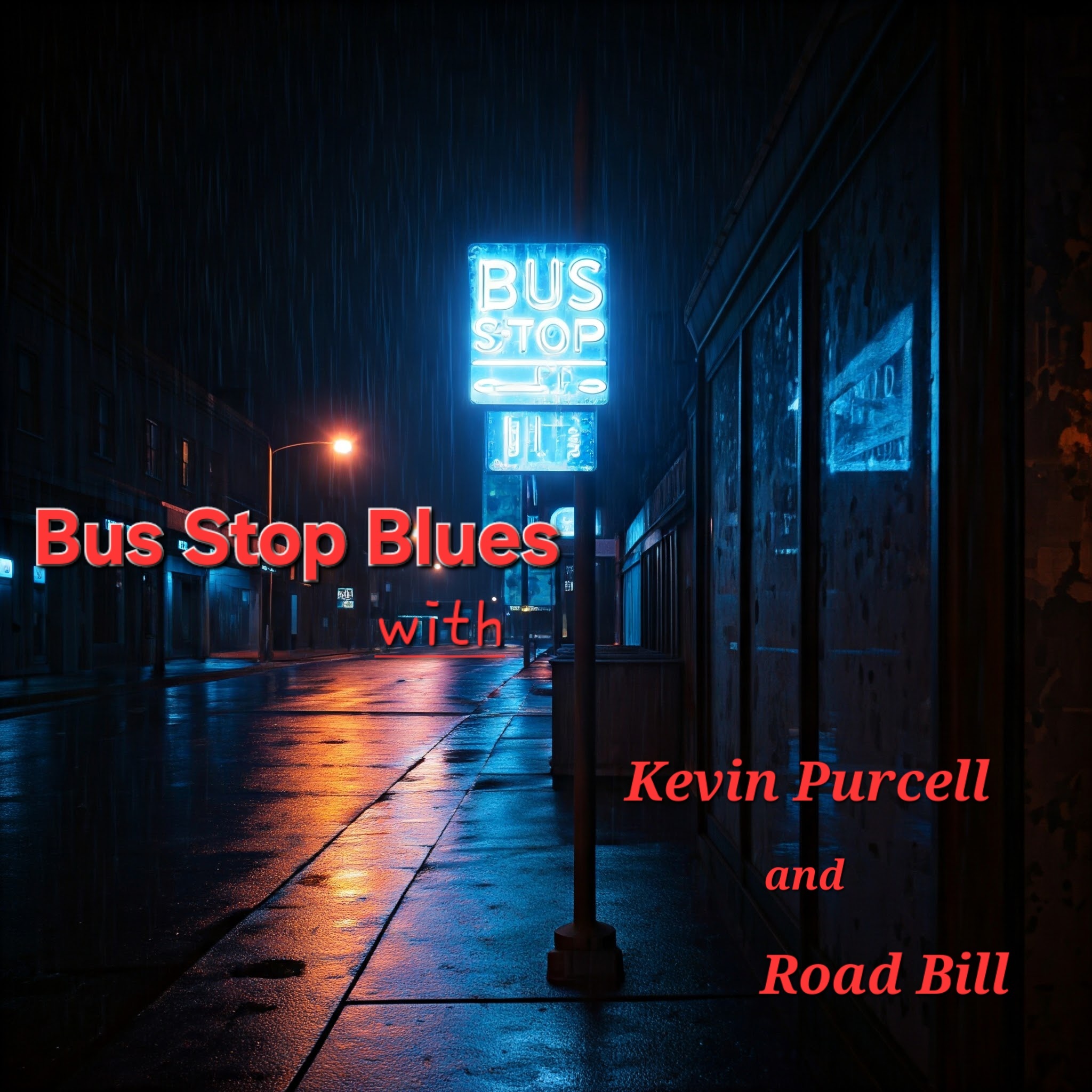
The Bus Stop Blues’s Podcast
thebusstopblues