
Rock n Roll Chicago Podcast
The Rock n Roll Chicago Podcast is a weekly podcast that interviews bands and musicians from the Chicago area. The podcast is hosted by Ray Bernadisius ("Ray the Roadie") and Mike Metoyer ("Hollywood Mike" of Cadillac Groove, Mike & The Stillmasters). The podcast covers a wide range of topics, including the history of rock n roll in Chicago, the current state of the scene, and the challenges and opportunities facing musicians today.
Founded in 2019 by Ray the Roadie and Paul Martin, the two co-hosted the show until 2022. In 2023 Ray was joined by Mike Metoyer as the new show co-host.
The Rock n Roll Chicago Podcast is a great resource for fans of rock n roll and musicians alike. The podcast is informative, entertaining, and inspiring. It is a must-listen for anyone who loves rock n roll and wants to learn more about the Chicago music scene.
Here are some of the things you can expect to hear on the Rock n Roll Chicago Podcast:
Interviews with bands and musicians from the Chicago area
Discussions about the history of rock n roll in Chicago
Information about upcoming concerts and events
Tips and advice for musicians
And much more!
If you're a fan of rock n roll, or if you're just curious about the Chicago music scene, then you need to check out the Rock n Roll Chicago Podcast. You can find the podcast on iTunes, Spotify, and other major podcast platforms.
Show your support of the podcast and visit our Swag Store. Just click copy and paste this link in your browser: https://tinyurl.com/yr5pa7zt
The Rock n Roll Chicago Podcast is edited by Paul Martin.
Theme song courtesy of M&R Rush.
Rock n Roll Chicago Podcast
Ep 278 The Resurrection Blues Band
Use Left/Right to seek, Home/End to jump to start or end. Hold shift to jump forward or backward.
Born From Good Times, Bad Times, & the Blues. Herald-Palladium Readers Choice Award Winners of 2024. Best local entertainment and Blues Rock Band. Rodney Mills on Vocals and Guitar, Frank Rotondo on Bass, Billy Canty on Drums and Percussion. Newest EP out in May 2025 with another EP set for late spring of 2026. Breaking boundaries with crossover songs such as Good, Bad, & the Blues, and One Way Woman the Resurrection Blues Band is making waves on both the Blues Radio and Rock Radio Stations. Broke Down In Clarksville has been a favorite on the United Kingdom Radio Circuit as well as Blame Game and Sugar Daddy, while Happy Days has had a contemporary Rock Success. Any way you look at it, the Resurrection Blues Band is focused on not being pigeonholed into one category.
Podcast edited by Paul Martin.
Theme song courtesy of M&R Rush.
www.rocknrollchicagopodcast.com
Coming to you from the studios at the Illinois Rock and Roll Museum on Route 66, it's the Rock and Roll Chicago Podcast. Hey everybody, it's Ray the Roadie. And this is Hollywood Mike again.
Again. Oh, we didn't record that for a second. No, I got rid of that.
You got rid of all that. That's right. So this is Hollywood Mike for the very first time today.
This hour, yeah. Yeah, what a fantastic day we're having. It's a weird day.
I got up this morning to go to the store. So I throw my jacket on that I've been wearing, which is my winter jacket. It's too damn hot.
Yeah, right. So then when I was coming here, I grabbed my jean jacket, figuring, okay, it's still too damn hot. I put the air on in the car on the way here.
Yeah, well, I switched over to the straw hat. You did. Gotta put the straw hat on after Easter.
Right. You know, so I got my straw hat and I've got one felt hat left just in the hat rack in the closet just in case I gotta switch it over. Just in case, yeah.
Yeah, might have to resurrect the, you know, the wool. The wool. Yeah, one more time.
A lot of resurrection going on. Yeah, a little bit of resurrection. Got the resurrection cemetery.
This past Sunday. Yeah, that's right. The real one.
The real resurrection. The real resurrection. That's right.
And now tonight we got the resurrection blues band. All right. See how we do that, guys? I mean, nobody got hurt, but that takes a lot of talent.
Yeah, it sure does. Yeah, yeah. That's what happens after you've been.
We were out to dinner with the wives one night and they were talking about the podcast and we're like, how do you, when you guys start the podcast, how do you, do you write something down? Yeah, is there a script? And then he goes, give us a topic. Yeah. And they said something and right away he went, boom.
Yeah, within 30 seconds we were back and forth. It was bad, but it just kind of happened that way. I don't know why.
I mean, we're really not that smart. No. No, but it just kind of comes off that way.
That's right. Yeah, that's right. So resurrection blues band, man.
How you guys doing? Good. Doing great. Yeah, let me see if I remember everybody.
We got Rodney. We got Frank. Correct.
Frank and Billy. Yes, sir. Excellent.
What do you got? Oh, look at that. You took your Prevagen. Yeah.
No, I don't have that kind of problem in the bedroom. I'm okay with that. Oh, different head.
Yes. Yes. Gotcha.
Okay. All right. So what do you guys do in the band? First of all.
Well, I'm the drummer. All right. I knew that.
Why did I know that? I don't know. I don't know. He looked like a drummer.
Yeah. Drummers have that look. Do they? Yeah.
You notice how the microphone is furthest away from him too, because he never put a microphone in front of a drummer. Yeah. So Billy's the drummer.
Yeah. Frank is the bass player. All right.
Yep. Vocals and guitar. Vocals and guitar.
Excellent. Excellent. Well, welcome.
And it's glad to hear you. Yeah. We're glad to have you guys here.
Thanks for having us. I mean, I have to say, I definitely have heard of you guys, and I'm pretty sure I've seen you guys before, because y'all look familiar to me on the days that I have off myself. I'm pretty sure I've gone out and seen you guys someplace before.
That's absolutely true. Yeah. So tell us about yourselves.
Well, today I was on the highway filling holes full of stones and rubber. So it was a bit of a journey to get here. Yeah.
We didn't get it done in time. And I'm like, you got to take me back. I got to go to Joliet tonight.
Yeah. So I had to rush back and pick these guys up and get our butts here. So you're on the road crew, basically.
Well, yeah. I work for MDOT. Okay.
Gotcha. Gotcha. Okay.
I mean, that just kind of goes into the whole blues story. Somebody that works on the road crew is also a blues musician. Or it could have been work release.
Yeah, it could have been work release. Same thing. Well, that's how I got the job.
I still have the striped suit. Same job, no chains. Had it made into a three-piece.
Yeah, that's right. That's right. Okay.
Great. So I'm assuming that you're the one that put the whole thing together. Sure.
Yeah. 2018. Yeah.
Okay. Um, really the name of the band, it's got its religious background to it, but I was in another band and I, I, I hate talking about them, but I have to put it in context. They were called the Undertakers.
Okay. So we didn't end well. And I'm like, well, you know what? I'm going to resurrect some old guys I know that haven't played in years, decades.
I'm like, let's just be the Resurrection Band. And well, there's a band called the Resurrection Band. Right.
And it just came to be the Resurrection Blues Band. It's like, we're going to raise up. We're just going to rise up.
Yeah. Right. By the way, he called you guys old.
He did. I don't know if you heard that, but. These weren't the two, these weren't the two old ones.
There were two other old ones. That's very accurate. Okay.
And that was about 2018. Yeah. Yeah.
So what about your background? I mean, where'd you come from before that you, that you decided, okay. So you had a band that we don't want to mention. Yeah.
So I lived in New Orleans for 12 years. Oh, excellent. Just North of New Orleans and didn't play down.
I didn't play for 19 years before I moved back to Michigan and, uh, Not originally from New Orleans. No. Oh, okay.
From Benton Harbor, Michigan originally. I'm from Natchitoches, Louisiana. Oh, Natchitoches.
Yeah. Yeah. Yeah.
Natchitoches. Oh, Natchitoches. When you look at it and you read it, it's, it looks like Natchitoches.
Yeah. Yeah. Yep.
Yeah. Yep. Had to move back and, uh, was in a bar one night and seen this drummer I knew.
And he's like, Hey, if you ever want to play in a band again, get ahold of me. I gave him my number on Saturday night. Sunday I was in the band.
Oh, nice. Did that about two and a half years until I couldn't take it no more. Yeah.
Yeah. It was a bad deal. Okay.
But that wasn't in New Orleans. No. No, that was in Michigan.
After you moved back to Michigan. Did you play while you were in New Orleans? Uh, no. I hadn't played for about 19 years.
I was an offshore welder and worked in power plants and. You know, eventually we're going to find out that we are long lost cousins or something like that. I think so.
Because my father was also a welder. Yeah. I worked for Miso Marine out in New Orleans.
Okay. Yeah. Yeah.
No kidding. Excellent. Until they blackballed me.
Yeah. I hear a song in there somewhere. I do too.
Yeah. Yeah. All right.
So when did you start playing? Uh, about 14 years old, 13, 14. So 79, 80, somewhere in there. Yeah.
Yeah. Was it all, was it always blues or were you into all kinds of different? Everything. My dad was a blues and jazz guy and big bands and my mom was country and a little bit of rock and roll.
Yeah. Good. So.
Good, good, good background. First album I ever really clung to was meet the Beatles. Oh, no kidding.
Yeah. Yeah. Well, that's good.
Meet the Beatles, man. You know, I wish I was a huge Beatles fan because there's a lot of people who are huge Beatles fan, but when it comes to the Beatles, for me, I'm like, okay, I like this song and I like that song and I like this song, but I don't think I've ever sat down and just listened to a Beatles album. My wife hates them.
Yeah. She literally can't take it. Yeah.
And you know, and the weird thing is, cause everybody's, you know, Beatles are rolling stones, right? And I say the same thing about the rolling stones. And because I'm a blues fan myself, blues musician myself, you'd think I would, I really like the stones and I'm the same way with the stones. I like this song and that song and a whole bit, but I think I own one stone song.
No, the Beatles were an influence on your album. Yeah. They were influenced by the blues too.
Oh, absolutely. Absolutely. Yeah, for sure.
For sure. They were kind of my inspiration because when I saw them on Ed Sullivan live. Yeah.
So, oh yeah, he's revealing something about himself there. Everybody, he was a screaming young girl back in the 1960s. Yes.
So, so when did this, when did this, um, I mean, just out of necessity, did you go to blues? Uh, what made you decide that you were just going to, that this project was going to be all about the blues? We were all rockers, you know? Yeah. It just come down to really, I didn't want to be in a rock band again. You know, it, it, well, when I started doing this with almost 50 years old, I'm like, I don't want to be in a rock band.
I don't want to play, I don't listen to this music anymore. I listen to blues. You know, I listened to country and blues down in Louisiana and like, and it just, it just happened that way.
I joined a blues band and that's, it went from there. Yeah. I get that.
After you reach a certain age, you're like, you know, this is music for young kids and nobody wants to see a 50 year old standing up there playing Creed. Well, my fingers aren't that fast anymore either. So it's like, I have to slow down.
Yeah. It was never about the speed for me because as a guitarist, speed is the one thing that's always eluded me. That's why, you know, people who aren't fast say that, you know, I, I like to be more melodic, you know, that's, you know, that's what they say.
But, but that's, but I mean, that's the truth. But I just, I just got to a point where I was just like, man, I look like an old man that he's to these, to these people. I'm just, I'm not going to go out there and do this anymore.
So I've never been a cover band guy. I don't want to play other people's music. So yeah, I wasn't going to do the cover thing.
Right. Right. Right.
I get that. Yeah. Excellent.
And you get to that age when you say, I can't carry that Marshall stack around anymore. No. Well, yeah.
Back, back when we had to carry an SVT up the staircase at the Avalon. Yeah. Yeah.
No, yeah. That wasn't fun. A cranked blues junior works just as well.
It really does. It really does. So these weren't the first guys that you, that you called when you put the, when you put the project together? No, no.
I didn't even know either one of them back then. Okay. Yeah.
All right. So how did the transition happen? Who's the first one of these guys that you called? Frank came, he's what, ninth bass player now? Somewhere in there. And Billy's the second drummer.
Okay. And he just replaced Scotty last September. Well, actually, Scotty left in early last year and he just wanted to move on other things.
He raised his granddaughter. Yeah. Right.
Right. Okay. All right.
So what's your background then? Oh, I'm a Chicago boy. Yeah. North side.
Born and raised. Yep. Okay.
And did the hard rock, heavy metal scene around Chicago, a band called Paradox. Okay. And we used to... I've heard of that band, Paradox.
Yeah. Yeah. We used to get a lot of good gigs, opening spots, you know, Chicago Fest and some of the theaters, the Vic and Holiday Star and... Yeah.
Hung out at the Thirsty Whale. Did you come up through the Thirsty Whale? Yeah. We were one of the bigger drawing bands over there.
But what year would that have been? 82 to 85. That's how I know, because that's when I was kind of hanging out at Thirsty Whale. A lot of good times.
Yeah. Yeah. I went to high school with a couple of the guys that were in Maelstrom for a while.
Yeah. So it was like 82 to 84, actually into 86 and the whole bit. Yeah.
I was hanging out there. So that's got to be why I've heard of that band before. Yeah.
And we were doing gigs up until just like last summer. Yeah. One of the guys moved out to Tucson.
And so it's kind of tough for us to get together. But we do like a couple of gigs in the Chicago area every, you know, like maybe once a year, every other year or so. That's cool.
Right. But yeah, did it, did it for, you know, quite a few years through the 80s here and then moved out to Phoenix, which actually had a really good music scene. Yeah, it does.
89 or so, Tempe, all those different clubs and brought, brought a guy with from out here, a friend, you know, guitar tech from Paradox. And we started a band out there and just quickly, you know, gained some ground out there. And we're playing all the clubs out in LA and Sunset Strip and Orange County.
And which was like a whole other experience then now for the 90s. Yeah. And I spent a lot of time in Las Vegas and, you know, did some country and oldies.
Okay. So, so stop holding back because I get, I get the feeling that you're holding back. He's talking like, yeah, we played a couple of the clubs out there and did this and all that.
Who have you played with and who have you, who have you opened up for? Well, back in the Chicago days, I played with a lot of the more hard rockers, Blue Oyster Cult, Fog Hat. See? Queensryche, Crocus. Yeah.
I see. I felt, I felt that coming. I just needed to give him the verbal.
He got the good guys. I played with Black Oak, Arkansas. Oh, did you really? Oh, yeah, yeah.
Oh, yeah. Yeah. It was a great time and we didn't have the internet back then.
So people relied on Illinois Entertainer and stuff. Yeah. Used to play in Iowa, Wisconsin, and they would have copies of that.
Isn't it amazing that publication is still sitting at some of the clubs and at guitars? It's right here on the calendar. You can go pick one up. That's, it's like, it's gotta be one of the last actual publications around.
Wow. Yeah. I always want to put a band together and call it TBA.
Because you always see that on the calendar, it's TBA. Yeah. Now what are they going to put? Well, that's, that's what a lot of band, that's where a lot of band names actually came from.
Yeah. You know, Bare Naked Ladies used to put, you know, driving by a club and on the sign it says, tonight Bare Naked Ladies. Yeah.
Yeah. They're dudes, man. Free beer is a good, good name.
Yeah. Yeah. So, I mean, always been a musician with, I mean, when you were younger, that was, was the thing like, you know, I'm going to do this, I'm going to make it.
Yeah, definitely. You know, since seven or eight years old, playing guitar, you know, switched over to bass high school years and, and quickly just got in a band with, you know, some guys in the neighborhood. Yeah.
Most of the guys in Paradox were all north, northwest side, Chicago. Yeah. And we just quickly got it going, started out with some covers, you know, but I've always did like blues and some jazzy stuff.
I was a big Steely Dan fan from way back and that started opening the door to other great musicians, Larry Carlton and, you know, Chuck Rainey on bass. Yeah, yeah. So I started getting influenced by that stuff by like by 15.
I've started getting pretty strong, but I still love like the new wave of British heavy metal and that was kind of fun and exciting. And you're a 19 year old guy, you know, the power and everything that went along with that and the concerts, the high energy. It was, it was a fun thing to do.
Right, right. Definitely a big Zeppelin fan, you know, like one of the first bands that really kind of opened the doors for me to get more into blues and stuff too. Well, you know, and, you know, John Paul Jones, I mean, you can say what you want to say about Zeppelin.
There's, you know, now that there's more like information coming out about where they actually got some of their music from in the whole bit, say what you want to say about them. Yeah. John Paul Jones is a, is an underappreciated bass player.
Oh, for sure. He, he was a, he was a musician's bass player. He really was.
I mean, the guy could play absolutely anything, first of all. Oh yeah. Right.
And if you really pay attention and listen to the bass lines and a lot of Zeppelin music, you're like, holy shit, he's really doing that because a lot of times he was overshadowed by John Bonham. You know what he was doing, man. And it makes sense because you need a bass player that was going to keep up with Bonzo.
Right. Oh, for sure. Yeah.
And kept it very melodic too. Right. Absolutely.
Which, you know, still influencing people today. Yeah, yeah. And fantastic tone on, on his bass.
I love the tone of, of, of his bass. Yeah. Old school.
Yep. Fender Jazz. Yep.
Yep. And yeah, still a pleasure to put some old Zeppelin on and listen to it and never gets old. Right.
I, I forget how many years I liked Zeppelin. I'd never seen a picture of him and I never wanted, I didn't want to see one. I mean, I, I had my own vision of what Led Zeppelin looked like just from their music.
And I, then one day I saw a picture. I was like, ah, shit. Yeah.
They're like normal people. Wait, so what did you think they looked like? I don't know. I just had this weird, you know, there was other things involved in my imagination.
So yeah, that was the seventies. Yeah. We will.
Yeah. I don't remember a lot. Yeah.
We won't go into there. Yeah. We won't do that.
Okay. All right. So, um, so how are you going to top that story, Billy? All right.
You said that you're from Louisiana. Oh yeah. I am a Cajun Kunis straight down from Bayou Vista.
Nice. Louisiana, which is on like a pimple on the ass of Morgan city. Okay.
Okay. Which is, isn't that's where you worked out of when you used to be. Right, right, right, right.
Born and raised there? Yes, sir. Oh, excellent. And now we slip into making jambalaya with Mike and Billy.
Yeah. But I prefer to do the gumbo though. Yeah.
Tomatoes or no tomatoes? No tomatoes. I'll see. That's where we differ.
I'm Creole. So we put tomatoes in ours. That's right.
Yeah. But, um, see, I started playing when I was four. My sister and brother-in-law bought me a Bugs Bunny drum set from Sears.
I think I had the same drum set. A little red Bugs Bunny drum set. Yeah.
And I had like the, remember the old school Zenith record players that was like a suitcase. Yep. Yeah.
So, um, they had like this lime green, you know, awful color of Zenith. Yep. Record player.
And my sister and my brother-in-law, they're both 20 years older than me. Okay. So they were really into music.
My brother-in-law was a trumpet player. He used to play in New Orleans, played in dance bands all over the country. Nice.
And, uh, so their record collection was just off the chain. My sister was into everything from Doobie Brothers to Black Sabbath. And my brother-in-law was into more like the Meters and Dr. John and the Neville Brothers.
So he was also into other like horn bands like Tower of Power, Chicago. Right, right. So that's kind of where I started steering.
Even at the age of four, I was, my first record I ever learned how to play was, uh, Return to Forever. And I started playing jazz. Yeah.
And just by listening to it, you know, the old school way, you know, we didn't have YouTube. Yeah. The record player.
Yeah. Pick up the needle, keep putting the needle. Yep.
You know, you get the scratch noises and stuff. Yeah, you got it, man. And then, you know, from playing jazz, playing along to Chuck Mangione and Tower of Power and stuff like that.
I really got a love for the New Orleans scene, you know, the Meters. And I remember the first song I learned by the Meters. I was such a little kid, man.
It was, uh, We All Asked for You. It's about the Ottoman zoo. Yeah.
That was the first song I learned how to play by them. Wow. Little Bugs Bunny, Sears.
Little Sears drum kit. Yeah. Yeah.
It sounded like, yeah, it sounded like cereal boxes and, you know, in a triangle kind of. Yeah. My mom told me that whenever I was that young, I would go on a Saturday morning and get a bunch of extension cords.
And she'd watch me seven, eight o'clock in the morning, haul out the drum set, haul out the record player to the end of the driveway. Right. And we lived on like a big boulevard and the end, you know, a house just right there.
I had a big front yard and, um, get all the extension cords plugged into my record player. And I'd stand up and I'd be like, Billy Canty, thank you very much. And I, I put on, you know, some, you know, some sick jazz and, and start playing.
And then the people would come out. You were just kind of like in a window or on your porch or something like that. No, into the driveway.
Into the driveway. Yeah. Oh, that's great.
And so from that age, I knew I was going to be a performer. I've never loved anything more than playing drums and I've never stopped. Yeah.
Yeah. Were you aware of the tip jar back then? I never heard of that. And you would think I would have.
Yeah. You would have been a millionaire by now. Oh gosh.
But yeah, so that's kind of my, my background. Um, Bayou Vista, Louisiana is where I consider myself from, uh, and a little bitty town. Yeah.
Right on, uh, Bayou Tesh. Right, right, right. Yeah.
I got, I just, I just love the, I love the country over there. I really do. I, I would, I would love to move back, you know, to the state after I retire.
Cause there's not a whole lot to do there. Cause I, cause Natchitoches is almost right in the middle of the state. It's a good three hours away from New Orleans.
But the, the town that my, or the parish, I should say that my father was born in isn't even there anymore. It's actually listed on the national register of ghost towns. Really? Yeah.
My father's from Derry, D-E-R-R-Y, which is sandwiched in between Shreveport and Natchitoches, or really more between Shreveport and Alexandria. Um, Natchitoches is, uh, almost adjacent to, but it's a little farming community. There can't be more than 200 people that lived there.
And there was a school and that one school had kindergarten to seniors in high school, right? Yeah. That's how I grew up in a Catholic school in, um, Morgan city. And we had like 120 people from, uh, elementary school to seniors.
Yeah. It's like 120, 125 people. Then I moved to Florida, uh, with my family and my dad had passed away in 88.
We moved, I guess they wanted to save me. Uh, from never advancing musically of a music career. And, uh, we moved to this place called Cape Coral in Southwest Florida.
Cape Coral. And the, uh, the high school had like 2,600, just shy of 3,000 people in it. Right.
There was more people in the marching band than there was in my entire school. School. Yeah.
Nuts. Yeah. No, that is, that is, that is crazy.
I, uh, when I graduated from high school, it was the same thing for me. I had 2000 graduates in my senior class. My, my graduation ceremony was held at Poplar Creek outdoor music theater up, up in Hoffman Estates.
That's how many, that's how big the high school was. It's, it's because I went to, I went to Lake Park high school, um, and up in Rose, the Roselle area. And they, they had an East campus and a West campus.
But instead of having all four grades at each campus, one campus was freshmen and sophomore and the other campus was juniors and seniors. And it created a class, a graduating class of 2000 people. Talk about, I still run into people that I went to high school with and never met them.
I went to a school that was 3000 plus and maybe 200 graduated. Yeah. Benton Harbor high school was no joke.
Oh yeah. Yeah. No kidding.
No kidding. Wow. More people got shot than anything.
Yeah. Well, you guys all have an interesting background, so I can see why that would make for a kick-ass blues band. You guys have the right kind of, uh, you know, you know, background and influences and, and the whole, but you, you know, the important thing is y'all mentioned the, the influences that you had as musicians growing up.
And we talk about this all the time. I'd love to get your opinion on this, on this whole thing. I just heard you guys talk about, oh, I'm influenced by this person and this person and this person and this person.
You ran the gamut between jazz, blues, uh, rock and roll, disco, yacht rock. Right. The whole bit.
Yeah. That's missing today. That's, that's missing today.
It really is. Because if you turn on radios, if you turn on commercial radio, it's the same crap. It's horrible.
Over and over again. They're playing the same crap on the radio stations that caused me to quit listening to mainstream radio 10 years ago. I, I, I turned on mainstream radio about a month ago for the first time in 10 years.
Cause I took the streaming everything and the same music I was listening to 10 years ago that caused me to turn off the stations was still being played 10 years, 10, 10 years later. Yeah. So what's that? I mean, what's that going to do to our up and coming musicians? It's classic rock now.
Yeah. I drive the guys, we plow snow in the winter time, you know, plow the highway. I drive them nuts.
Cause I listened to Japanese opera. Cue up the mic on the truck. Okay.
Now there's one we've never heard. No. Japanese opera.
Yeah. Anything, anything but radio. I hate the radio.
There's nothing good on mainstream radio. We actually have a song called the blame game and it says nothing good could come from news radio. Yeah.
You know. You're listening to the rock and roll Chicago podcast. Where Sunday nights just got a whole lot bluesier.
Get ready for the bus stop blues show that takes you deep into the soul of the blues with classic hits road stories and live jam sessions hosted by blues man, Kevin Purcell and me, the one and only road bill. The bus stop blues is two hours of nonstop blues banter and badassery. Check out the bus stop blues podcast at the bus stop blues.com where you can listen on Spotify, iHeart, Apple podcasts, or any other major podcast platform up on board the bus stop blues where the blues never stops rolling.
I forgot, I forgot to mention one when I'm not playing with these guys. My whole thing is I practice to and write a technical death metal. You're being 100% serious.
Yes. I'm being 100% serious. Death metal.
Wow. You should tell them about the people you've played with. Man, the people I played with.
Well, when I was 17, I was, uh, hired by this man, uh, Bo Davis out of, uh, Cape Coral, Florida. He owns a sonic recording studio and he was at my senior year, uh, jazz band concert and he came up to me and gave me a card and said, Hey man, you know, on the weekend, come, come check out this place. Right.
I show up and it's like a duplex with no windows, like, you know, stranger danger, stranger danger, you know, and, uh, I walk in and it's a multimillion dollar recording studio. Wow. And he hired me that day to be a session drummer.
Okay. So I've had to learn how to, I guess I could say, uh, authentically play styles of music. Uh, I need, I need to sound like a country drummer.
Right now. Now. And I need to switch.
Yeah. And I've showed up to sessions where I thought it was, you know, pop. Right.
And it was metal. So then you have to switch gears. So I've made sure that I studied all of the different styles authentically, um, when it comes to drums.
Sure. You know, you don't want to go into a jazz session and, you know, sound like you're playing for Rick Springfield. Right.
I don't think anybody ever wants to sound like they're playing for Rick Springfield. You know. Nothing against Rick Springfield, but you know.
But I've taken it very serious. And I learned from a young age that that's what it takes to make it in the music business is, is, uh, don't say I'm a metal drummer and just be metal or, or, or even like blues, you know, having the blinders on. Yeah.
I guess that's cool, but good luck paying your bills, you know, but whenever I can, you know, in a four day span play four different styles and authentically, you know, I've, actually pulled over and ran into Walmart and bought a trucker hat and a flannel shirt because I got hired to play with Amanda Hunt Taylor. She's a Grammy nominated country artist. Right, right.
I was on the way to the gig. They hired me and I was, I met the band after the concert. Sure, sure.
I walk into a big music festival, walk on stage. Here we go, reading charts and yeah. Stopped at Walmart and, you know, bought an outfit.
Had to look the part. Had to look the part. You know, learning the charts on the way at red lights.
Yeah, right. Wow. Yeah.
Yeah. So this is, this is a full-time thing for you? Yes. Music is a full-time thing for you? Yes.
If I'm not playing, I'm practicing or I'm teaching. Or teaching, yeah. And I practice four to six hours a day.
Still doing some session work as well? The last time I did was... Two months ago? Two months ago. I was in Florida, actually for family. And then they found out that I was there.
And then all of a sudden I'm... Sucked him back in. I'm, I'm doing, you know, paid session work. Sure, of course.
But then, you know. Anything, anything that we would have heard? No. No? No.
You know, I've done like, you know, I like to have like the porn fluffer, you know. The chick in the background. Yes, I know that very well.
But you know, the, the chick that keeps things, things going, you know. Yeah, right, right. Well, I've been that guy for music in the studio where I've written or not so much written, but I've come up with parts and I've recorded for musicians.
Yeah. That their drummer, quote unquote, rock star drummer has learned that I wrote. And then, you know, so I was in the pre-production, you know, thing and hung out with a lot of, you know, rock stars.
I went, I went shark fishing with the president of MCA records. Oh, no kidding. And, but I was like 18 years old and I, you know, I didn't even realize who I was with.
And it's around like a singer for bad company tried to get me to smoke some purple fuzzy weed with them. And I, I was like, hell no. I think I would have had to do that.
Yeah. Purple fuzzy. But all Rogers is smoking.
Okay. I was, I, yeah, I don't think I would, I don't think I would pass up smoking weed with Paul Rogers. I would have to do that as a vocalist.
I think I would have to. I remember some purple fuzzy weed back in the day. It was called monkey Paul came from Vietnam.
But you know what I'm saying? Like I was just around a lot of musicians that at, at the moment I, I, I've never been starstruck. Right. That's never happened because when I'm in the situation, I look up, I look at them as coworkers.
Yeah. Right. Right.
And I'll tell you what, that's what a lot of people always say on the podcast here is, when you're a musician in Chicago and you're, and you've got a good reputation and you've been working as a musician for a while and people know he are right. It's you know, I just, I just totally lost my train of thought. What did you, I was thinking, I was thinking about the purple fluffy.
That's why. Is what I was, I was just thinking about it. Yeah.
That's how potent that stuff is. You gotta be careful. It is, it is, but that's what, but that's what people like about being in Chicago as a musician, because you, you can find yourself on stage one night with a, with a Grammy nominated musician and that person just wants to jam.
And you got, and you're just, you're just a couple people standing up there just, just jamming on stage. And, and it, it never even comes up that, oh my God, I was on the stage with this, this mega superstar because nobody thinks that way. I've been to other places and played.
I've been to Nashville. I've been to LA. I've been all over the place.
And there's some places that aren't like that. There's some places that know exactly how to put you in your place, but Chicago's not that kind of Chicago's not that kind of place. Yeah.
Yeah. Yeah. I lucked out one time.
Motley crew was touring and I had some friends working on a tour and I took them around in Chicago cause they were here for like two or three nights playing in Rosemont. Right. And went down to Kingston Nines.
Yeah. And luckily got to go up on stage with Slash and played two or three blues tunes with him. Yeah.
Nice. And, um, I was, I was a little messed up that night because I wasn't planning on playing. We were just out doing the town.
Right. If anybody, uh, from Kingston Mines is listening to this, uh, we are looking for sponsors. Or a gig.
It was a great time. But I was actually shocked cause I ran into Slash out in Hollywood a few years later. Yeah.
And he remembered, you know, he just came up to me and gave me this big old sloppy hug and was, uh. You really opened him up. Yeah.
He was a really cool guy. No, he is a really cool guy. Axl, not so good.
Yeah. Yeah. Yeah.
No, he's, he's a pretty cool guy. You know, and again, that's exactly what the Chicago scene is like. If people have been here and have played here and they, they understand it.
The first time I met Jim Peterick, um, I was a 16 year old kid and I was, I was asked to go to a youth retreat at Illinois Benedictine University. I'm a 16 year old kid and word got out that I knew how to play the piano. So the music director and I became friends when, when everybody was off doing whatever the heck they were doing.
We were sitting in the music room, just kind of jamming in. And I was, I played, um, I can't remember the name of the, the song, uh, Europe. Um, final countdown.
No, it wasn't the final countdown. It was their best. Yes, it was.
It was. And I'm playing out on the piano and he comes over and he goes, Oh, I didn't know you know how to play any. And I said, yeah.
And he goes, you're going to like what's coming up here a little bit later this afternoon. And Jim Peterick was the keynote speaker, right? So he kind of looks at me and he goes, and I get up off the floor and I come over and we're both sitting at the piano together and we've got some sheet music up there. And it was the search is over, right? Survivor.
And I'm just, I'm just on the high end of the piano doing what I think is fitting in. And it's going with what he's doing over here and carrying them. But for that, for that one minute, I was backing up Jim Peterick and I went home and I bought all of Survivor's albums and the whole bit and became this huge fan and everything.
Fast forward, like 15 years later, I just ran into him, um, at, at a place that I don't think it's there anymore. It's, it's not there anymore. It was court on blues in St. Charles.
Right. And I was like, oh my God, you know, I came up, you know, shake his hand and say, I don't know if you remember me. He knew my name, the whole bit, everything 15 years later.
And I mean, he saw, I was a 15 year old kid, you know, now I'm a 30 year old man and he recognized me and remembered my name. Cool. Man, I totally, I totally forget you as soon as we're done with the podcast.
I know, I know. But I mean, that's, but that's, what's awesome about being a musician in Chicago. But right when we were getting started, we were handed these CDs.
Yeah. Tell us about your CD. So the songs are written over a couple of years, things going back and forth.
Uh, Frank plays on two, two or three, two or three of the, and then another bass player plays on the other half. And, uh, the old drummer, Scotty plays on all of them, except Rope Down in Clarksville. It just, the take he did just wasn't happening.
And I got, uh, I can't remember his name now, the drummer, but he plays with, uh, the Verpipe. He's a backup drummer. Um, anyway, but really, really good, really good drummer and never met him.
He, I just paid for him to come to the studio and play on it. Right. And I never, never met the guy before, but, um, it could have been a little heavier cause we've changed a little bit now.
I think we're a little, little more blues rock. And that was, I was trying to be mainstream blues on that, even though the songs are kind of blues rock. And I was, I kept the tone down.
Like, man, I should have put more wah-wah pedal on it. More distortion. I should have done more.
So when, uh, when did this come out? Last, last May. Last May. Okay.
So almost a year. It was number 89 on the last for 2025 on the blues rock charts on, uh, Roots, uh, Report Music. Wow.
Nice. Nice. So, so would you describe yourself as more of a, uh, more blues rock, edgier style as opposed to Chicago style blues? I mean, being a three-piece, question begs, are you more Texas style blues? What would you describe your sound as? Eclectic.
Eclectic. I think I maybe am drawn to my, maybe the Motown sound a little bit on writing, but I don't know what comes across that way. Billy's very Cajun and his drumming, very New Orleans, uh, the beats.
I can hear you. We're working on the next album right now. And so it's going to be the next one is a lot different from this.
Okay. And you wrote all the songs? A few of them we're doing. And, uh, uh, we got some stuff that we're writing together that will be on the next one.
All that, I wrote everything on this one, but the new stuff is more of a joint effort. One remake too. Yeah.
Redid Tore Down, Freddie King, completely different. Doesn't sound anything like it. Right.
Right. It's more of the rock end. Okay.
Okay. So, um, you know, I, I'm sorry, I didn't ask if you did anything other than, other than music. Um, yeah, right now just, um, kind of working and working on homes, self-employed, but mainly it was music ever since I was 18, 19.
Okay. Mainly around the Chicago area. And, um, like I said, out in Phoenix and a couple of times, um, broke into something else, worked in a casino biz for a little while out in Las Vegas.
And, uh, that was kind of, kind of fun, interesting, good money. But I really missed, I remember standing at a blackjack table one night and thinking about it and going, God, am I even a musician still? You know, it's like, here I am doing this and never expected, you know, I never knew how to gamble or anything. Right.
Right. And, uh, and now I'm like, you know, at a five-star casino in Las Vegas. And it's like, how did I end up here? You know, and it's something was missing.
So, so I just kind of put it in my head that, you know, this is like the countdown. I'm going to leave town and next year or so. Yeah.
And just kind of headed back to the Midwest and, um, picked up some gigs right away. And it felt great to be a working musician. The, uh, the scene that with Whoopi Goldberg from Sister Act comes to mind, you know, when she, when she says, when, you know, when you wake up in the morning and all you can do is thinking about singing, you're supposed to be a singer girl.
So when you wake up in the morning and all you think about is music, you're a musician. Yeah. You know, it's pretty much the way it goes.
My wife still takes my guitar out of my hand while I'm sleeping. Yeah. I go to sleep with a guitar.
Yeah. So others, so other than, I mean, Billy actually is a teacher, right. But, um, you know, when you play blues, I mean, I kind of get this feeling and a lot of blues people get, get this feeling.
And I think it kind of stems from, a lot of it stems from Buddy Guy where blues musicians almost have this responsibility to keep the genre alive because it seems like, you know, commercially nowadays, everybody's doing everything they can to kick it to the curb, but it's the musicians that have to keep it alive. So how would you instill young musicians to say, Hey, don't turn your back on this genre because I don't care if you think you're a metal musician, look at these chord progressions. You know, what are you, what are you guys doing? Do you have that kind of feeling or attitude and thinking that you're contributing to that? We just played at South by Southwest down in Austin.
Nice. And the other bands down there came up to all of us at different times and said, I think I'm playing a wrong thing. It's like, you guys look really good.
I need to change my clothes and we might need to think about the style of music we play because we were killing it. We did really good down there. Yeah.
It was amazing. I mean, all different age groups too, like really early twenties, college students really got into it. And, um, yeah, we were doing, you know, kind of the classic Texas blues rock.
Right. And you'd think that would be prevalent being in Austin, but it wasn't. It was, it was kind of, it was, it was more, it was, I guess it was, it was less blues than not.
I mean, that's what was kind of surprising. I've never been, I would like to go to that festival. Yeah.
A couple of bands were like punk, I would say maybe punk, like a new metal punk was at that Tokyo riot. Yeah. Kind of grungy rock.
I mean, it was, I mean, um, bands visiting from all over the world, Australian, I mean, some young guys that were really influenced by Grateful Dead, which really kind of blew my mind. It was like, God, you know, that always surprised me how some of these young guys can still appreciate the stuff from the past. But, um, but yeah, I was impressed that all kinds of young, young to older dudes like us that really still appreciate it really.
And, um, I, um, I think the blues is just kind of evolving really. I mean, you've got a lot of younger bands, Tyler Bryant, Larkin Poe, and a lot of these new bands are just kind of carrying the torch a little bit, slightly different style, but it's still blues. You know, I think there, I think some of that blues is some of what you're talking about is falling into the Americana genre.
Yeah. You know, when you think of people, you know, who's kind of leading the charge on that for the past 10 years is Chris Stapleton. It's like, is he blues? Is he country? Right.
Is he rock and roll? Yeah. You don't really quite know. So they just kind of call it Americana without really knowing what the, you know, what to do with it.
Right. Right. Right.
Yeah. We've been called contemporary blues because I don't like writing the same style really as like, I just write how I feel. Right.
Right. Right. Yeah.
I wonder if there's an alternative blues. Alternative blues. There could be.
Yeah. You know, there could be something like that. We might have to do, what did we learn the term shoegaze? I'm like, what the hell is shoegaze? Yeah.
It was where you stand and stare at your shoes while you play. Yeah. Okay.
I'm like, I didn't, I wouldn't, what is that term? You know, there definitely is because, you know, I started covering the, I started covering the song Hurricane by the band of heathens. I would call the band of heathens are almost like an alternative blues band. It's like the Black Keys.
You could almost. Oh, absolutely. Oh yeah.
That's almost like grunge blues. Yeah. With pop overtones.
Yeah. Right. Right.
A clutch even when they go to their blue side, that's a little alternative grunge when they play. Right. I know they're usually pretty heavy, but.
Right. So you guys had, you guys had young people from South by Southwest coming up to you saying, okay, that was really cool. You sound good.
You know, we're playing this. We might want to do some of this stuff that you guys are doing. Yeah.
Wow. There were a second questioning the songs they were playing. You made them question their whole point of being.
And yeah, I'm that guy who, as soon as I walk into a venue that we're playing at, I whip out my practice pad. And I just find the first person that I can, that's interested. And I just start teaching them.
Yeah. I, it's got nothing to do with me trying to, you know, I get so much hate. Believe it or not over it, but.
I don't know who he thinks he is. Yeah. Right.
Right. Yeah. Who the hell are you? You know, but it's mostly on social media.
Yeah. My teacher, the world famous Jim Chapin, Harry Chapin's father. Yeah, yeah, yeah.
He taught me. We're really close friends. He taught me for six years.
And he literally told me, you know, on his deathbed, he told me, you've got everything. Now go out and spread the word. Right.
So that's what I've done ever since. And I was doing it before anyway. Right, right.
But when we play, you know, a show, you know, we played in Cadillac, Michigan, and they didn't even see me after the show. Yeah, we couldn't find him. Okay.
We played a tour with Scotty Austin up there from Saving Abel. And we're like, where's Billy? I was outside the whole time. I gave like seven different drum lessons to just random people that walk up and like, how are you doing that? How are you doing that? I'm like, well, okay, let me, let's talk about blues.
Let's talk about the history of it. Let's talk about how I'm moving my hands and what comes from that. And now, okay, now let's talk about swing, where it comes from.
And I just love sharing that type of stuff. Yeah. So when we play like in Austin, what was a couple of different lead guitarists of one band? He's interested in drums.
And then a drummer from another band, we're hanging out before the show, just on a practice pad, having beers. And you know, that's my contribution. Usually once they hear them, I get a sound check.
Right, right. All of a sudden, they stare. Was it Aaron Nordstrom from, was it Genesis Syndrome? Yeah, I think so.
Yeah, he heard him practicing. He's like, hold, slow down, man. You're in a blues band.
Yeah, he's doing all this crazy double kick action. Right, right, right. But yeah, great drummer.
But as we know, he plays death metal as well. So, you know, that's a side thing at home. He does after taking a nap.
Yeah. What's your preference? Musically? Yeah. I'd say musically, my preference is fusion.
Fusion, yeah. Like Chick Corea. I can hear, I can see that.
That provides you with a nice, somewhere in the middle of all your influences. Y'all know who Asinoy is? O-Z-N-O-Y? No, no. Do a deep dive, man.
Yeah. It's fusion, real funky, so technical. He's out of New York.
Okay. And guitar player. Yeah, guitar player.
Yeah, yeah, okay. But that's that type of, you know, instrumental brain mush that, you know, where, you know, my wife, I think it makes her so violent that she leaves the house. You know, it, you know, some wives are like that.
Yeah, yeah. I put on like a New York based fusions, like Steve Coleman and Five Elements. Right.
She would probably kick a puppy if she had to listen to that. And my wife loves that stuff, and I would kick a puppy listening to it. But yeah, that's my preferences is really technical fusion.
Right, right. Excellent, excellent. So where are you guys playing? You guys got any shows coming up here? The Acorn Theater in Three Oaks, Michigan, the 24th of April.
Nice place. For the School of American Music fundraiser. Okay, nice, nice.
Yeah. Anything, anything around Chicago coming up? Well, we're working on it. This is a tough town to break into.
I played here all, just like you, I played here all in the 80s. Yeah. I played The Whale, Avalon, every bar that was anything for a rock band back then.
Yeah. Unless you're Chicago blues and you're from Chicago, we've had a hard time getting in here. I've got a, I've got a good place for you to start.
As soon as we're done recording this, we'll talk about it a little bit. I don't want to talk about anybody on the recording without them, without having their permission. But I've got a good place for you guys to start, because I have a feeling you guys would do really well in the area.
And I think this guy that I'm thinking of is going to like you guys a lot. So. That's awesome.
Yeah. Possibly. I can't wait to listen to this.
I'm actually a lucky person. I still have a CD player in my car. I was thinking the same thing.
I'm going to pop it in the CD player. And I'm going, I don't have one. I've got one in my car.
I don't either. I've got a cassette player in my van. Yeah, yeah.
I've got one. I can't wait to listen to that. So where can people find you socially? Facebook, of course.
Everything. You can go to our website, theresurrectionbluesband.com. It takes you to every link is on there for everything. There's videos and there's live videos.
There's produced videos. There's Christmas videos of a song. We're all a little fuzzy, little, kind of like Rudolph the Red-Nosed Reindeer.
They did that animation. That's how we did that video for that. Band Camp, or not Band Camp, but Bands in Town.
Everything linked to find us anywhere you need to find us is on the website. Excellent. Excellent.
And this, your CD, your album, is it on Spotify and all that good stuff? Spotify, YouTube, Pandora, iTunes, all of them. Deezer. Excellent.
Excellent. All right. All righty, guys.
Well, thanks for coming in. Yeah, we appreciate it. We had a bit of a drive tonight and I appreciate having you.
Thank you so much. Thanks a lot, guys. Thanks.
The Rock and Roll Chicago Podcast is edited by Paul Martin. Theme song courtesy of MNR Rush. The Rock and Roll Chicago Podcast does not own the rights to any of the music heard on the show.
The music is used to promote the guests that are featured.


Podcasts we love
Check out these other fine podcasts recommended by us, not an algorithm.
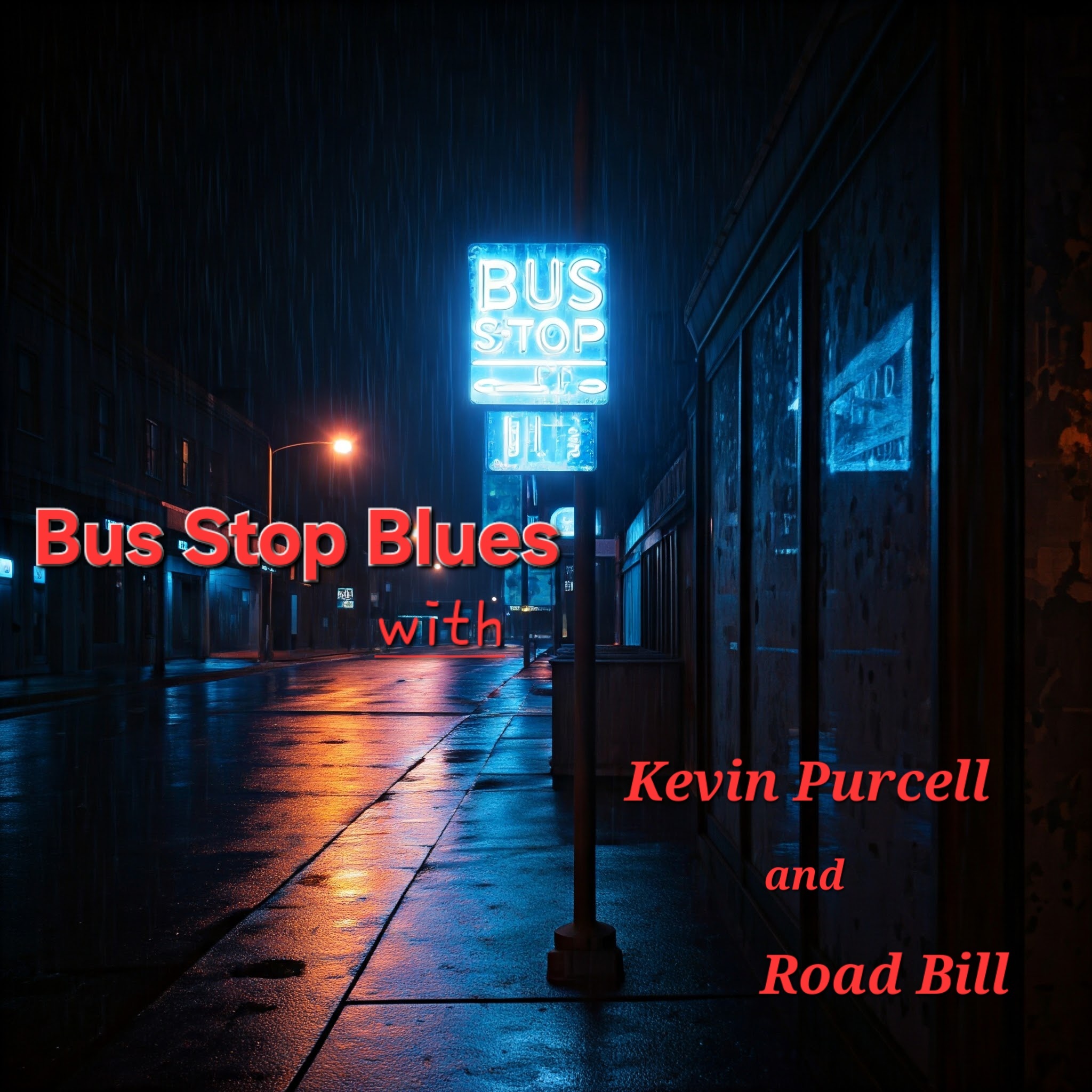
The Bus Stop Blues’s Podcast
thebusstopblues