
Rock n Roll Chicago Podcast
The Rock n Roll Chicago Podcast is a weekly podcast that interviews bands and musicians from the Chicago area. The podcast is hosted by Ray Bernadisius ("Ray the Roadie") and Mike Metoyer ("Hollywood Mike" of Cadillac Groove, Mike & The Stillmasters). The podcast covers a wide range of topics, including the history of rock n roll in Chicago, the current state of the scene, and the challenges and opportunities facing musicians today.
Founded in 2019 by Ray the Roadie and Paul Martin, the two co-hosted the show until 2022. In 2023 Ray was joined by Mike Metoyer as the new show co-host.
The Rock n Roll Chicago Podcast is a great resource for fans of rock n roll and musicians alike. The podcast is informative, entertaining, and inspiring. It is a must-listen for anyone who loves rock n roll and wants to learn more about the Chicago music scene.
Here are some of the things you can expect to hear on the Rock n Roll Chicago Podcast:
Interviews with bands and musicians from the Chicago area
Discussions about the history of rock n roll in Chicago
Information about upcoming concerts and events
Tips and advice for musicians
And much more!
If you're a fan of rock n roll, or if you're just curious about the Chicago music scene, then you need to check out the Rock n Roll Chicago Podcast. You can find the podcast on iTunes, Spotify, and other major podcast platforms.
Show your support of the podcast and visit our Swag Store. Just click copy and paste this link in your browser: https://tinyurl.com/yr5pa7zt
The Rock n Roll Chicago Podcast is edited by Paul Martin.
Theme song courtesy of M&R Rush.
Rock n Roll Chicago Podcast
Ep 279 Reach for the Stars - The M&R Rush Story
Use Left/Right to seek, Home/End to jump to start or end. Hold shift to jump forward or backward.
Reach for The Stars: The M&R Rush Story, the authorized biography of Chicago’s enduring rock band M&R Rush, will be released on May 7, 2026. Written by James Arvia, the book captures more than fifty years of music, friendship, and the unmistakable Chicago spirit that shaped one of the Midwest’s most resilient independent rock acts.
Podcast edited by Paul Martin.
Theme song courtesy of M&R Rush.
www.rocknrollchicagopodcast.com
Coming to you from the studios at the Illinois Rock and Roll Museum on Route 66, it's the Rock and Roll Chicago Podcast. Hey everybody, it's Ray the Roadie. And this is Hollywood Mike.
With a special edition of the Rock and Roll Chicago Podcast. Yeah, I should have called myself Head Down Hollywood because I think I'm going to be humbled. You're going to be humbled? I'm going to be humbled with this episode right here.
Well, you can put your head down. Yeah, I could, you know, because I kind of have a head rush. Do you? Yeah, I do.
Yeah. What about you? I don't know. I'm trying to think of how to respond to that head rush.
I think my head rush is turning into an MNR rush. I think it is turning. It is.
So what we have for you tonight is the book, Reach for the Stars, the MNR Rush Story. And joining us tonight are the M of MNR Rush, Marty Martirosian, and the author of the book, Jim Arvia. Welcome, guys.
Hello. How you doing? Hello, how we doing? Oh, wow, man. Jim sounds like he's like in outer space.
He's on the Artemis space capsule. Oh, he is? Yes. Okay, excellent.
Yeah. All right. So the next controversy is going to be- But I'm here at least, guys.
Yeah, that's good. Well, the next controversy is going to be flat Earth, right? Is that what it is? That's right. Can you believe all that stuff is going on? Can you believe that? Have you seen that stuff? All these idiots talking about how the Earth is flat because of the pictures that they're sending back? It's not a 3D camera, idiot.
Exactly. That's just crazy. Anyways.
So, okay. So where did this book come from? How did this all get started? Well, I guess we'll start from the beginning here. We grew up together in Roseland, the area south side of Chicago.
And Marty's mom, Betty, grew up next door to my family. Her family and our family had lived together for a couple decades, in fact, next door to each other. And so I've known Marty a long time.
I haven't seen him in about 50 years or spoken to him. Hey, hey, wait a minute, wait a minute, wait a minute. I'm only 21 years old.
I mean, he's got underwear 21 years old, is what he meant to say. Hey, listen, let me just say this, guys. I, his mom and I, and his dad, we became really good friends later on in life.
But at the time I was born, let's see, Marty's mom and dad, when they got married, I was exactly one year old. Okay. All right.
So what year was that? No, no. I'll tell you what, let me put it another way. You mentioned Roseland, right? For our listeners.
Yes. At the time when maybe MNR Rush was formed and you guys were all running around the streets of Roseland, give our listeners a little bit of what the Roseland neighborhoods were like at the time. Oh, my God.
Well, we were talking about an ordinary Chicago neighborhood. You know, folks, you know, were doing whatever they were doing, you know, it was, but it was a great neighborhood. It was, there were a lot of groups, different ethnic groups, middle class, hardworking people.
And everybody was, got along and kept to themselves and helped each other when they could. And when rock and roll came around, you know, kind of moved the neighborhood a little bit. And especially for me, you know, I'm older, I'm a lot older than Marty, in fact.
But, you know, for me, rock and roll, I got that at an early age and I started listening to Elvis and the Everly Brothers. And, you know, it just was just a good bringing up and a happy time for all of us. You know, there's a lot of Roseland groups out there on Facebook, and I'm proud of that.
And I've written eight books to date, and they've all been about the folks from Roseland, you know, places, people. So, you know, like I said, I had a good bringing up and I'm still here and still hopefully adding to what the world needs out there right now. And I don't know about Marty.
Well, how about you, Marty? Yeah, well, how were you getting in trouble in Roseland when you were younger, Marty? Again, I was a little younger than Jim. And I just had to say that. And so I started, you know, playing the drums at eight and Jim was there.
That's what all that racket was. Yes, yes. And I would take the drums out with Roger and play in the backyard.
And Jim would, you know, have a cocktail in his hand and over, if I remember right, over the over the fence and watch us back then. And that's the truth. That's the truth.
And it was a it's it was a great, great neighborhood of all different type of groups. And we're proud to be from Roseland. MNR Rush is from Roseland area.
Right, right. Excellent. Excellent.
So, you know, if I'm sorry, if I remember correctly, Marty, my son mentioned this the other day and I don't know if that's, you know, if it's true or if it's just something he thought about. But you said when you guys played in the yard, you put you actually put down an old wooden door and set your drums on there so they wouldn't rock. Yeah, exactly.
And you know, what's funny is, Jim, I always from that point forward, when we started playing shows and I should say socials and and sock hops back then, I always demanded to have a drum riser. So I've always had a drum riser from the day of the door, the door on the on the grass when I was eight years old. Yeah, they put the door up on milk crates is what they did for his drum riser.
There you go. So so how did the whole thing start? So like Jim reached out to us through MNR Rush email and, you know, it's kind of neat. I hadn't like he said, hadn't seen him for a long, long time.
And he started out his email by saying, hey, Marty, I don't know if you remember me. I'm Jim Arvia from next door. And I know nothing about how to play music.
But I wrote these lyrics about Rosalyn called Rosalyn Nights. And I was wondering if MNR Rush would go in the studio and take my lyrics and write a song and perform a song. That's how it started.
Right, Jim? Yes, sir. And then we got into a conversation about the old neighborhood and, you know, being a teenager, growing up a teenager there. And then it came into my mind because my mind, you know, the older I get, the more my mind wanders.
And I'm always thinking about what am I going to write next? And I said, hey, Marty, you know what? I mean, you guys are part of the history of Rosalyn. I mean, you guys were around for so long. You started there.
You know, what would you think if I, you know, wrote a biography on you guys? You know, I'd love to do that. And that's where we started. You know, Marty said, yeah, if you're willing to do it.
I said, of course, I'm willing to do it. I'd love to do it. Well, I don't want to correct you, Jim, but I said, well, holy cow, why would you want to do that? That's what I was going to say.
That was my question. Because that in my wild... And I told him I had some time. He said, why not? Right? And then I said, hey, send me some of your work so I could check your work out, you know.
And again, we did that. And before you know it, I think it was like September 7th or something like that, we officially said, hey, we're going to write this. And what's really ironic about Jim is the way he approached, once I said yes, he really started approaching it, taking charge by saying, OK.
It wasn't easy either. Oh, because he realized, oh, crap, I didn't think he was going to take me seriously. Well, I don't know, it's just that Marty and I are pretty close to the same, have the same attitude on life and how things work.
Yeah, we're both hard workers and we're both, we're both, we're both artistic in our own way and we both have our own ways. But that was good. I mean, that was really good because we, you know, we went through just like the guys getting together, you know, at the studio.
You know, you work it out between each other, you go back and forth and argue and agree and that's how you get things done. And I think that book turned out very, very well. Yeah, and again, what he said, I just want to make sure that you hear this, Ray and Mike, loud and clear is he says, OK, I'm the author.
You're the subject, right? It's your book that I'm writing about you and I have a lot to say what goes in it and what doesn't. OK, now, at the time, I said that to you. Yes.
And I said, well, I can't say what I said to myself, you know, but I said, OK, but I understand what you really, really meant. And so we get into some of the topics that we talked about. OK, is that fair enough, Jim? Yes, it is.
And yes, that's exactly how it went down. And in, you know, in the end, it ended up my book. OK, so then we better get on with the MNR Rush story here, you know, so.
Yes. So I guess my question is, what made you decide that MNR Rush was going to fit so well into kind of ultimately about the larger story that you're trying to tell, which is a story of Roseland, right? Yes. Yes, it was.
You know, as I mentioned, you know, their book is my book that I published in the last nine years on Roseland. I have a pretty good following on the Roseland sites on Facebook. And we, you know, a lot of friends and those memories are so important.
Unless you grew up there, I don't I'm not saying it's a special place, but to us, it was our Camelot. I mean, it was a place where all of us dream about going back to, you know what I'm saying, in our minds. And really, you know, like I said, there are, you know, everybody, everybody on this earth has a story and everybody's story should be told.
But unfortunately, it can't. There are certain stories that stand out. And, you know, when I started thinking about these guys and, you know, what they've accomplished, you know, in their 50 some years, it's part of Roseland's history.
I mean, the story does belong out there. And as I told Marty, I said, you know, there's so many stories on, you know, on Facebook, people are telling all this, this story, that story, photographs, whatever, you know, that's nice. But, you know, in the long run, down the road, it's going to be gone.
In my mind, if it's put in a book, it's there, it's there forever. It's there for their family. It's there for them.
It's there for their families. It's there for their fans. It's something that's going to be around.
It's a legacy. And it's something that, you know, is there that they can keep. So those things are important to me.
And that's what I've tried to do for the last nine years. I've been retired since 2008. And I never, ever, ever thought about, hey, someday I'm going to start writing books.
You know, that isn't what happened. The older I get, the more I understand how the past starts to fade away. And a lot of important things are lost.
And that's what I try to do. I try to keep those, those memories alive for people. And that's the only thing, you know, that's important to me.
So that's, go ahead. PAUL No, so, so, so it was the 1970s, right? And Eminem rushed us out, we're going to form, you know, a band, right? So what was the specific year? RICK It was, uh, 70, 72. PAUL 72, okay.
So what the heck was going on in Roseland? What was, what was going on economically, politically, you know, whatever. What was going on in 1972? That, because it's important to understand where in time you are when a band forms. RICK Yeah, and that's a, that's a great question.
And a couple things, and I can be off by a few years. Remember back then I was a young boy, right? I was two. PAUL Yeah, the steel, the steel, the steel mills, and correct me if I'm wrong, Jim, the steel mills were going down.
And a lot of the people that came to Chicago area to work in the steel mills were from outside the country. And when the steel mills started going down, those people had no place to work. RICK Sure, right.
And so, um, there was a lot of, a lot of need, okay, for entertainment, for excitement. And again, stress relief or stress relief. And, and back then, um, I met Roger, uh, in, in little league in baseball and we started a band.
Um, and the, uh, how old were you guys? Uh, at the time the band was like, uh, I was like 12 years old. PAUL Oh, wow. Okay.
Young. So young. Yeah.
And, um, the, uh, uh, the, the, the goal was just to have fun. And we, you know, we had myself, Roger and a gentleman named Mike Rademacher, who was on guitar and, um, Bobby Tortolano, who was the lead singer. And we just jammed down in our basement, um, and just, uh, had fun.
And, and then all of a sudden, uh, we started, uh, playing little gigs. Yeah. Um, and like, uh, at churches and, and those ice cream socials.
And mostly, mostly cover songs at that time, I'm assuming. Covered songs. But even back then, Mike Rademacher, who was way ahead of his time as a guitar player, he, um, did not want to play anything that was popular.
Okay. Nothing. So, so 1972, let's see.
So there was no Bee Gees. There was no, there was nothing. So, so what was, what was the repertoire? It was stuff like Jimi Hendrix.
Oh, wow. Okay. All right.
Um, it was, uh, things like, um, uh, early, uh, editions of the Allman Brothers. Okay. But even, even, uh, Janis Choplin, we used to have a big holding company.
Right, right, right. But it wasn't, it wasn't the songs that, it wasn't Foxy Lady or it wasn't, uh, um, whatever. Whatever was popular at the time.
It was always deep cuts. Sure. Okay.
Right. And, uh, there was lots of arguments, um, back then, even as 12, 13, 14 years old with him, because I was the one that was pushing the band to play ice cream socials and, you know, you had to be just like it is today. Yeah.
We got to play something that the people are going to like. Right, right. Exactly.
Yeah. They, it has to be recognizable. Right.
Yeah. Yeah. Okay.
So I get, I get that. So you guys were never into really what was trendy at the time? No. Because in 72, the stuff that you named, I mean, you weren't hearing that on the radio.
Especially, especially the deep cuts. Yeah. Yeah.
Were you guys Eminar Rush at that time? Yes. You were. Yeah.
Marty, Mike, Roger and Robert, Eminar and Rush, you know, because we were always late. Is that literally it? Yeah. It's in the book.
Is it really? Right, Jim? It's in the book. Yeah. No kidding.
All right. So, so how long did it take you guys before you actually got to the point where, okay, we're going to go out, we're going to, we're going to start playing, not just the ice cream socials and stuff like that. Because I mean, you probably had to wait until you were at least 18 before you get into some of the clubs.
No, no, that's not, that's not true. No, we were, you were sneaking in. Yeah.
We were doing it. Yeah. So, so when, when the, the band that we call is the, the band that's been together for 50 years, that was with, you know, myself, Roger, Carl, John, Paul, and Jeff.
Right. Okay. We started playing everywhere and anywhere.
Okay. Okay. And that would, could be bars that we can, that they would let us in.
Our parents would actually take us and they'd have to be there. Good, right. You know, all that good stuff.
Right, right, right. So what was the first place? Do you remember that? Oh. You got me.
Well, I want to say the first place like Eminor Rush really played was St. Stephen's Church. Okay. St. Stephen's Church.
Right. And the first, one of the first high schools we, we played was St. Willibrod's High School. All right.
And it's in the song. It's in the song. Oh yeah.
Oh yeah. Talk about, yeah, the song. So this is the song that you wrote, Jim.
Is that what you're talking about? Yes, yes. Okay. Because I, you know, why? Because I, you know, it was before Marty's time, but St. Willibrod's used to be the place to go on, on Friday nights if you wanted to pick up girls and dance.
Yeah. So when you wrote this song, so you basically, essentially wrote a poem, right? Or did you have a melody in your head? Yes. No, it's, it's more of a poem.
Yeah. It's, it's, it highlights all, all the things that I remember. If you grew up in Roseland, you knew that Cruz Neab was the big thing.
Right, right. At the state theater, we had a pizza place, Giovanni's, where everybody used to hang around. The dances, you know, those are all the things that I put into the song and, and just the idea that those, those days are gone, but not forgotten, not forgotten by a lot of people.
Right. So, but like I said, there was something that, that these guys are going to do in their own style. And because it's, you know, it's, you know, I'm older and it's kind of, you know, it's kind of sappy with the, I think the lyrics are really great.
And like I said, I'm sure they're going to make me proud. Right. Well, I think that's a good story to talk about is the lyrics.
So he came up with the lyrics and they're great. It's about, again, Roseland. Right.
And we're going in to take it and, and put, you know, the music and, and, and perform. And we're going to release it as a single. Yeah.
Because every two, three months, Seminar Rush releases a single on, on Spotify and all them. But what's interesting is there was a line in there. Okay.
That what was it? Doo-wop. What was it, Jim? Doo-wop. What was the doo-wop? Shoo-wop.
And so I called Jim up. It was my time to get even with Jim. Okay.
Hey, man, we're the musicians. We're writing the song. Yeah.
Okay. We're going to have a lot of input about what goes into this. A lot of, a lot of input.
And I can, I could tell that Jim was hyperventilating through the phone line when he's saying, Hey, those are my lyrics. Those are my lyrics. I said, no, no problem.
But to make it an Seminar Rush song, we just can't have that. Shoo-wop. Shoo-wop in there.
We're not Paul Revere and the Raiders. And he graciously... He can't even remember shoo-wop. That's how much I liked it.
Yeah. And, and, and he graciously said, no problem. And we came to an agreement, just like a lot of the stuff in the book.
And we're going to go in, like it says, and record it and put it out in a couple months. Right, right, right. Now he had mentioned Giovanni's Pizza.
Wasn't that Paul's mother's place? Yes. Oh, no kidding. Yeah.
Wow. No kidding. Oh, man.
Yeah, Jim. Paul's mom used to run Giovanni's and Seminar Rush used to have band meetings. After we would play, we would go there and have a band meeting and she would give us all this free pizza.
And we would, at the time it was 19 to drink beer and we would drink beer. We were 19. Right, right, right, right, right.
You didn't probably, you probably didn't know that about Paul's mother. No. Yeah, see.
You learned something today. You should have asked me when you were writing this book. Everybody knew everybody, everybody knew everybody's business and couldn't get away from it, couldn't get away from it.
You're listening to the Rock and Roll Chicago Podcast. Your Sunday nights just got a whole lot bluesier. Get ready for the Bus Stop Blues, the show that takes you deep into the soul of the blues with classic hits, road stories, and live jam sessions.
Hosted by blues man Kevin Purcell and me, the one and only Road Bill. The Bus Stop Blues is two hours of nonstop blues, banter, and badassery. Check out the Bus Stop Blues podcast at thebusstopblues.com where you can listen on Spotify, iHeart, Apple Podcasts, or any other major podcast platform.
Hop on board the Bus Stop Blues where the blues never stops rolling. So what other, so what about the scene? Like when you guys are out, you guys are out there, you're playing to different clubs. Did you run into any other bands that have, that have gone on to maybe reach, reach extra heights? Yes, yes.
So at the time we, TW4 was playing, which now is Styx. Right, right. Okay, and we hooked up with them that we were doing a lot of backup spots for them when they were playing high schools.
Okay. When they had two, three albums out and before Lady hit big to make them national. And so we played a lot of, a lot of shows with them.
Okay. With Styx. So that was a big thing.
And at the time, Hartsfield was out there playing. Oh, no kidding. Right, right, right.
Okay. And there was numerous bands that, but one of the biggest that came out was Styx. Was Styx, of course, of course.
And obviously, and that was probably the earliest lineup of Styx. Yes. Like pre-Dennis DeYoung Styx.
No, no, no, it was Dennis and it was pre-Tommy Shaw and it was- Oh, pre-Tommy Shaw, okay. JC was the guitar player. Gotcha, gotcha.
I got the two, I got the two mixed up there. Yeah, no kidding. But here you guys are 50 years later, though, you guys still have your original members and I think they've gone through how many lineup changes? Yeah, they currently have only one, JY.
I mean, that's a story in itself. That's worth the book itself. Yeah, yeah, yeah.
And I guess it's questionable as to whether or not you can call Tommy Shaw an original member or not. He's not. Yeah.
He didn't join them till like 75, 76, something like that. Yeah. Okay, right, right.
Wow. So here you guys are. So you guys are almost kind of like the biggest little band that nobody ever heard of out of Roseland.
Yeah, that's right. What I want to, what I usually say is my son-in-law made it to AAA baseball in, and it's like he almost made it to the show. So close, but so far.
Yep. I compare that with our band. Absolutely.
Eminem Rush. We did a lot of things, a lot of touring, a lot of experiences that are beyond just a regional band. Yeah.
We made it to AAA. Yeah. But we didn't make it to the show.
Yeah, yeah. And it's in the book too about, you know, how that came about. But you know, there's shades of gray, there's shades of gray.
And when you talk about that topic as well, because if you read Buddy Guy's biography, you find out that Buddy Guy recorded with all kinds of, you know, godfathers of blues and blues masters, and he recorded his own albums and everybody heard of him internationally. And Jimi Hendrix would say how he was his favorite guitar player. And Eric Clapton would say he's his favorite guitar player.
And you read his biography to find out that Buddy Guy was in his forties and he was still driving a tow truck for a Toyota dealer. Yeah. You know, that's, I mean, those kinds of things happen all the time.
So, I mean, there's shades of gray in that, you know, as well. So I don't know if you talk about becoming a millionaire rock star, did you make it? No. But did you make it to that level of notoriety and popularity and where people will love your music? Obviously, you're still around after 50 years.
I think you did pretty good. Thank you. I appreciate it.
And again, we're proud of that, you know, with, as you know, being in a band and a musician, the music business is really a different business than it was back in the seventies, eighties and nineties. And with the internet, the good news is you can get it in many, many countries. And we're proud that I think there's about 160 countries that heard our music through, you know, through the social media and all the platforms, which is pretty exciting.
And we're proud of that. Right, right, right. Excellent.
It's in the book too. Yeah, it's in the book. Well, what we're going to get to is, you know, how people can get a copy of it.
Okay. You know, other than doing a podcast and getting a free copy of it, which I have right here, I'm going to have to... He made me pay for mine. Hey, didn't he really? What the hell? Part of that money goes to breast cancer.
I'm going to be able to, I'm going to be able to read this. Remember that. I even have a quote in here.
Do you really? Yeah. Wow. Look at that, he does.
Well, that's the part. That's the, that's the section I'm going to read while I'm sitting on the toilet. Yeah, of course.
That wasn't supposed to be in there. Marty said, don't put that in there. And I said, no, I got to do that.
I believe it. Yeah, yeah. So what was your, so what was your big break? Do you have a defining moment that you think was the big break for the band? I mean, I think that when we started playing, well, the big, the biggest thing was when the Loop album came out.
Oh yeah, yeah, yeah. And it was their first album and there was about 10 bands on there and it was a big contest. You know, at the time you had to send your, your music, original music into, on a cassette.
Right. In there. And I, and again, I don't, I talked to Mitch Michaels.
He was, I think there was like a thousand submittals. I don't know. And they picked 10 local bands.
Right, right. To do that. And our song, Rock and Roll Chicago.
Yeah. Our theme song. Our theme song.
Thank you. I appreciate all those checks I get from every time you use it. Yeah.
But, and I got a, I got a, you know, divided by six, so it's not that big, but is, is that song for whatever reason, became a regional hit. Yeah. And on there, they had the top 98, and we're very proud of this, top 98 songs of 1980.
Right, right. And it was number 45. Wow.
No kidding. Yeah. Most requested.
And, and that, that probably was what changed a lot of things all of a sudden. Right. We're not playing just high schools.
We're playing, you know, little theaters and things like that. And it just jumped it up and Chicago Fest and all those kind of things. And it's funny.
There was a loop that put that out. Yeah. And before the loop was the loop, it was WSDM, which was smack dab in the middle.
And I'm in a rush with smack dab in the middle. Oh, that's right. Wow.
Hey, that's pretty, that's pretty good. That's not the quote in the book, is it? No, no, that's coming all from me. Okay.
So I still got to read that. So that, that was a big, that was a big turning point, which then made us, we got signed by management that formerly was with Styx. Okay.
To a management deal. That was the first time that I gave up managing the band. Okay, right.
And then we came out with our final EP, Reach for the Stars. Okay. Okay.
In 1980, follow up to the loop album. Right, right. And then that changed everything too.
Put us at a different level. Right. Than we were before that.
Now, were you, were you opening for bands like Styx and other bands like nationally after that kind of stuff? Yeah, we were doing a lot of things where we were playing with, um, you know, a couple of mismatches, Judas Priest. Oh, wow. Yeah.
You know, uh, Blue Oyster Cult and those kind of things, which were, you know, multi-million selling acts. Well, they weren't, they weren't mismatches because it was about that time that Judas Priest kind of went a little more commercial. Yeah, that's true.
Who knew that Judas Priest was influenced by Eminar Rush? Yeah. So let me ask you this. Let me ask you this.
So if the crowd knew that, why did they throw the pennies at us before we even started? They started throwing pennies at you before you even started. Yeah. I don't know.
Because we looked, we looked, we didn't look the type at the time. That was one of the low points. That was one of the low points.
And they really started throwing pennies at you before you even started. Yeah. Wow.
Huh. Well, you gotta, you know, persevere, I guess. Yeah, that's right.
Yeah. We played our whole set. We didn't cut it short.
Of course. But I could, I could, I could probably imagine some guys from Chicago and you're opening up for this leather and spike clad Judas Priest, right? Yeah. He came out on his motorcycle, all that.
Of course he did. Yeah. Wow.
Interesting. So then at one point in time, you guys kind of took a hiatus for a little while. Yes.
And when did that happen? Well, that was, that was the eighties. That was mid eighties or something like that. Wasn't it? So what happened is when we, and again, Jim did a good job of talking about that in the book.
All right. Is, um, you know, what we should do is we should probably get some sponsorship money out of Jim. We're promoting his book so much.
You know, so if you're, so Jim, if you're listening, we're looking for sponsors on this podcast. So, so we, uh, you know, we were always, you know, we were doing 200 dates a year, you know, through the Midwest basically. And, and, um, living off of music, which was, which was, was not an easy thing.
Right. Um, and then, uh, we were always trying to get our deal. Right.
All right. And we had, uh, something, a person, a heavyweight that was very interested in the band, Ronald Lexenberg, who, um, signed, uh, um, a bunch of Kansas and people like that. Right, right, right.
And, uh, so he had a subsidiary of Columbia records and it's called Handshake records. And, uh, he, uh, we were on the verge of, of getting a nice deal for four albums. Right.
Nice. Um, and he flew out and his, his, um, staff to see us live and loved the band. Everything was great.
And we, of course, celebrating that we're all our hard work. We're going to be, uh, rock stars, all that good stuff. Right.
And then we got the call that the deal was not going to go through. Oh no. Yeah.
And, uh, it's in the book. Oh, how do you like how I'm saying everything's in the book, Jim? Yeah. Well, you know, I'll tell you what, and, and, and this, and Marty, I'll tell you, this is the truth.
I had finished the book and we had gone back and forth about, you know, uh, how much we wanted to put into the book. And, and I, I'm, uh, with my writing, I'm a visual kind of guy, you know, I, I really believe a picture's worth a thousand words. So, you know, I, I, you know, I wanted more and more photographs and, and, uh, and I told Marty, I said, Marty, listen, you know, we, we could, you know, when you're, when you're writing a book, you, you could go on forever, you know, and, and then it gets to a point where it's going to start getting boring, you know? So, so, you know, this is it.
We're going to stop right here. That's it. No more.
We're finished. And he says, okay, Jim, if that's what you say, then I looked at my manuscript and I'm thinking, you know, something's missing here. And I called Marty and I said, Marty, you know what? You're not going to believe this, but there's something I want to add to the book.
The book needs some meat. And I said, I'm gonna tell you what, what I need you to do is I need you to get all the guys together. And I want you to be, tell them that you want them to be as honest as they could be.
What did it feel like when Marty got that call? When he told you the other guys, hey, you know, it's not happening. That belongs in the book. That, that, that is an important part of the book.
The most important part of the book. And they did that and it really added to the book and then it really gave it what it needed. So I just wanted to, you know, put that in there.
That, that, uh, that was a major thing, because if you're going to tell a story, you want the whole story. You don't want just, you know, all the glamour and glory and all this good stuff. No.
Like you said, life doesn't work that way. And I wanted to make sure that was in the book. So Marty's right.
It's in there. And guess what? We're not going to talk about it. Buy the book, guys.
That's right. We're not going to talk about it so that people got to buy the book and find out. Yeah.
Yeah. Well, let me tell you, what was it? Was it a defining moment for you? Yeah. Oh, absolutely.
Yeah. I walked out of there and, and I realized it was time and then I'll stop so you can read the book. Yeah.
Was that a good segue? It would be the defining, it would be a defining time in anybody's life, you know? I mean, that's, you know, that's, and it shows how much character these guys had. They went on. They're musicians.
That's what they do. They went on. They kept, kept going.
You know, a lot of guys would have just said, well, they're okay. That's it. Okay.
We're finished. Right. That didn't happen.
Okay. So was it at that point where you decided you were going to take this hiatus or did you go? It was at that point. And, and, and the reasons too is it's twofold is, is the, the music business at that time was going through tremendous amount of change.
Rock and roll, the type of rock and roll we played was, was not selling albums anymore. Right. Right.
It was Michael Jackson. It was all the disco kind of stuff. Yep.
Yep. And, and you know, we didn't fit. Yeah.
Anymore. And so new wave was taken over. And at the time too is in our lives, you know, we were, we were having children, you know, and it did, it was tough being gone all the time.
Yep. And, you know, not making as much money as you should be to support a family. Sure.
Right. And we wanted to be little league coaches. Yeah.
We wanted to be at our, our kids, you know, dances. It was time to grow up. It was time to grow up.
Yeah. It was. Yeah.
They wanted to be like me. Yeah. Yeah.
Well, you know, that's the, that's the funny thing because, you know, my generation talks about, I mean, I w I was, I graduated from high school in 1988. Right. So my generation talks about the music of the eighties as being just a great era for music, but then your, I guess your generation where you were a musician, the eighties were for you, what grunge was to me.
Yes. Because when I was, when I was in high school, I was in metal bands. Yeah.
You know, I was, I was a singer in metal bands. I had long hair and the whole bit, I had the hot pink guitar and the leather pants and, you know, and the whole bit. And I was in a band, we were having a great time.
Then all of a sudden Nirvana releases an album, you know, it was kind of, so it was kind of like that same type kind of thing that I'm, that I'm hearing. Wow. Wow.
Interesting. And, and by the way, none of us, I can speak for all the guys in the band, none of us regret what happened, how it happened. Right.
It happened. And it made us define us as individuals to be hopefully good family men. Sure.
You know? Right. Right. So what made you guys all of a sudden decide after a few years off that, okay, we're going to get back together.
We're going to do this. Golfing. Golfing.
It was good. Yeah. So, so we had a, we were off for like about 16 years.
Right. So once a year, when you're spending that much time, you know, on the road with, you know, five guys and it's, it's all, it's a big change. All of a sudden you're not with them.
So to keep that thing going, that friendship is we once a year had a golf outing, called it what are friends for. Right. And it was just the band and four or five of the roadies.
Okay. And that's once a year we would do that to keep, keep in contact with each other. Nice.
Nice. Yeah. Nice.
Then after 16 years decided, Oh, yeah. And all the time it was like, let's get the band back together. And you know, some of us were saying, no, no, no, no, no, no, I don't have time for that.
And then one time we came back to a party at my house and my son, who's a drummer and actually both of my sons, one's a percussionist, one's a drummer. But anyway, they were, he was practicing with his band. He was about 14 or something like that.
And they got done and all of a sudden John picked up a guitar. Roger picked up the bass. I had the drums and we played Only Woman from our first album.
Wow. And it was, you know, and we said, you know what, let's do this. So we're going to do one show.
Okay. So we practiced for a year because we were, this is where some of us, some of us have a different thought of it. I thought we were terrible.
Some of us thought, Oh, he didn't sound that bad. I said, well, we got to, we got to practice. So we practiced for a year, going to do one show.
We ended up getting a show, backing up Fog Hat. Oh, nice. Yeah.
And then all of a sudden we ended up doing eight to 12 shows a year for 20 something years or whatever. Yeah. Right, right, right.
So, I mean, so, you know, somebody, a band takes a hiatus for 16 years and you end up getting a show backing up Fog Hat. Okay. I think you made it a little bit.
I mean, yeah, we haven't played a show in 16 years, but we're going to open for Fog Hat. Yeah. I think you did.
I think you guys did okay. I appreciate that. And we're proud of that, you know, and again, AAA.
Yeah. We made it to AAA, which a lot of people don't make it to AAA. Yeah, you're exactly right.
You're exactly right. So how can people get a hold of this book? Okay. Well, a couple of things.
Right now is MNRRush.com, M-A-N-D-R-R-U-S-H.com. It's on sale there. The pre-sale ends tonight. Right, Ray? Well, tonight on whatever it is, April 6th.
Oh, that's right. Okay. But you can go there and every book sold, we make a donation to breast cancer for every book.
And we hope everybody would go and purchase it. I'm happy to say pre-sales went a lot better than we thought. Always a good thing.
Yeah. You know, I'm just looking at this, you know, here. Formed in 1972, same original members, right? Been going at it for 50 years.
Your little golf outing has turned into something much bigger than just a few friends getting together and having a good time. You've opened up for some national acts. You've got some popularity.
You've got some notoriety. You guys live the rock and roll lifestyle. Don't sell yourself short, man.
I'm kind of envious of the MNR Rush story. I hope other people are when they read this as well. Thank you.
I appreciate it. And that's, that's what, you know, like I said, when, when James, Jim told us about this, that he wanted to do this, it was like, the story is, is pretty cool. Yeah.
And a lot of people that followed the band and still follow the band, right? I mean, is that they hopefully would learn a little bit that we just weren't six guys just getting up there, you know, playing music. There was a lot behind it. Right.
And we're proud of that. So right now it's available on the website, but soon it'll be available in other places too, right? Yeah, it'd be, yeah, we'll be releasing it on Amazon, all that. But right now it's only on, on the website because we're tying it in again to the donations to, to breast cancer.
And that's the way we could control that. Alrighty. Well, thanks for stopping in tonight and great to hear from you, Jim.
You know what? There's another thing I wanted to say, if you don't mind. Go, please go ahead. On May 3rd, we're celebrating or having a, I almost said record release party.
I'm so used to that. A book release party on May 3rd. And it's, again, it's also besides celebrating for the book, we'll be trying to donate, generate some money for breast cancer.
And it's at Austin Community Tavern. And it's from two o'clock to five o'clock. And we'll have music there.
We have a couple of our friends playing some acoustic stuff there, and we'll have a whole program of questions and answers and, and all those good things. And what you'll tell them and what they have to read in the book. Yes.
Alrighty. Well, thanks a lot, guys. It's great talking about this book.
Sounds interesting. Yeah, Jim. Thanks for having me on.
Alrighty, guys. Good night. Good night.
Good night now. The Rock and Roll Chicago podcast is edited by Paul Martin. Theme song courtesy of MNR Rush.
The Rock and Roll Chicago podcast does not own the rights to any of the music heard on the show. The music is used to promote the guests that are featured.


Podcasts we love
Check out these other fine podcasts recommended by us, not an algorithm.
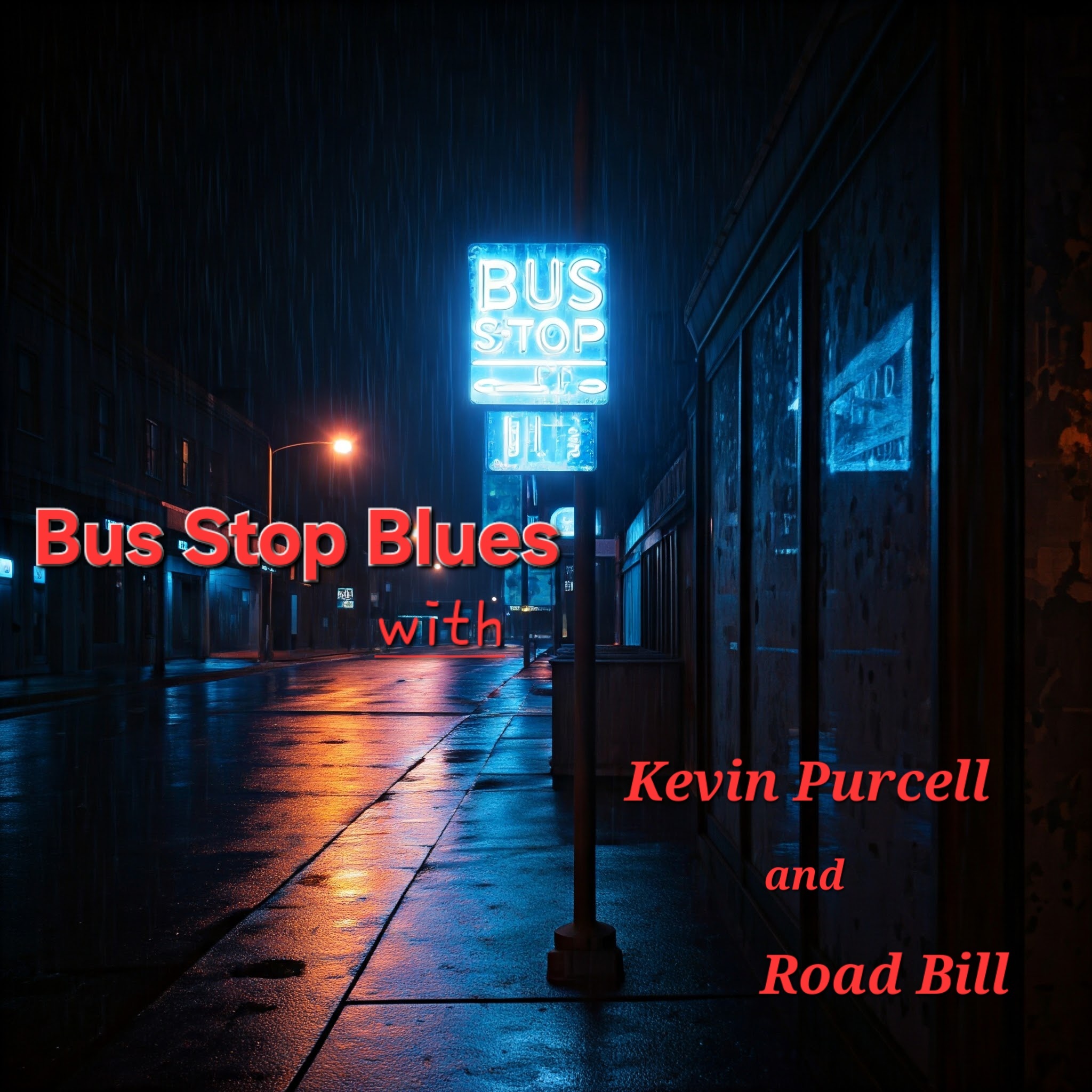
The Bus Stop Blues’s Podcast
thebusstopblues