
Rock n Roll Chicago Podcast
The Rock n Roll Chicago Podcast is a weekly podcast that interviews bands and musicians from the Chicago area. The podcast is hosted by Ray Bernadisius ("Ray the Roadie") and Mike Metoyer ("Hollywood Mike" of Cadillac Groove, Mike & The Stillmasters). The podcast covers a wide range of topics, including the history of rock n roll in Chicago, the current state of the scene, and the challenges and opportunities facing musicians today.
Founded in 2019 by Ray the Roadie and Paul Martin, the two co-hosted the show until 2022. In 2023 Ray was joined by Mike Metoyer as the new show co-host.
The Rock n Roll Chicago Podcast is a great resource for fans of rock n roll and musicians alike. The podcast is informative, entertaining, and inspiring. It is a must-listen for anyone who loves rock n roll and wants to learn more about the Chicago music scene.
Here are some of the things you can expect to hear on the Rock n Roll Chicago Podcast:
Interviews with bands and musicians from the Chicago area
Discussions about the history of rock n roll in Chicago
Information about upcoming concerts and events
Tips and advice for musicians
And much more!
If you're a fan of rock n roll, or if you're just curious about the Chicago music scene, then you need to check out the Rock n Roll Chicago Podcast. You can find the podcast on iTunes, Spotify, and other major podcast platforms.
Show your support of the podcast and visit our Swag Store. Just click copy and paste this link in your browser: https://tinyurl.com/yr5pa7zt
The Rock n Roll Chicago Podcast is edited by Paul Martin.
Theme song courtesy of M&R Rush.
Rock n Roll Chicago Podcast
Ep 282 Dan Peters Band
Use Left/Right to seek, Home/End to jump to start or end. Hold shift to jump forward or backward.
The Dan Peters Band (often referred to as DPB) is a high-energy group based in Chicago that blends a wide variety of genres, including rock, funk, blues, jazz, and jam-band styles.
The group is led by Dan "The Shredabilly" Peters, a versatile Chicago-born guitarist and vocalist with a career spanning over 25 years.
Podcast edited by Paul Martin.
Theme song courtesy of M&R Rush.
www.rocknrollchicagopodcast.com
Coming to you from the studios at the Illinois Rock and Roll Museum on Route 66, it's the Rock and Roll Chicago Podcast. Hey everybody, it's Ray the Roadie. And this is the man from Hollywood.
The man from Hollywood. Are you Clark Gable? No. No? Let's see, you know, I'm thinking, you know, I'd like to have Dwayne the Rock Johnson play me in a movie.
That'd be pretty cool. Yeah. I'm thinking more, I'm thinking more Andre the Giant.
I don't know. Or like Arnold. Like Arnold? Oh yeah, you know what? I'm the only person on the planet that can't do an Arnold Schwarzenegger impersonation.
No? Yeah. He's not a Tuma. I don't know where we're going with this.
I don't either. Yeah, who we got in the studio tonight? We got the Dan Peters Band, and we got the one and only, the main man of the band, Bob Smith. No, it's Dan Peters.
How you doing, Dan? All right. How you doing? Doing well. Thanks for having me.
Absolutely. Thanks for making the trek all the way from Huntley. Yes, sir.
How was that drive? You know, it was not bad. I was anticipating some bad rush hour traffic, but things went smoothly and a very pleasant drive, driving through Lockport and past the prison and everything. I rather enjoyed it.
Especially when you get, when you pass 55 on 355, it just opens up. Yes. Everybody's gone.
Absolutely. Did you notice when you went past the old prison at one point, you actually see the gate that John Belushi walks out of in the movie. Did you know that? People don't realize that.
I saw a couple of gates, and I thought, that looks like the one from the movie, but I wasn't certain, but you've just- Yeah, yeah. There's a parking lot across the street from the gate, and the gate's all kind of messed up, and it's been kind of gnarled up for a while, but back when they made the movie and they showed the shot, I mean, it wasn't as big of a street that it is now. So people don't know.
So if you go and you watch the movie, then go back and kind of remember the gate you saw. That's where it is. I brought like 50 people to see that gate.
They were like, oh my God, that's the gate from the movie. It's like, yeah, just stick with me. I'll take you places.
I told you. They also used that prison for another show, a series, prison, some kind of prison series. Prison Break.
I believe it was called Prison Break. It was Prison Break. Yeah.
And now they're turning the whole complex into an entertainment venue. Yeah. You can- Yeah.
I don't know how far along they are, but every once in a while I'll see a blurb in like the Patch News paper or whatever, where they're putting restaurants and a bar and a venue. And there's already an outdoor music venue because several people have performed there already. Yeah.
And you're going to take- My boys, I'm in a rush. Yeah. Yeah.
You're going to be able to go touring through it and stuff. And I think- They're building a baseball diamond right now. The Jackhammers are going to play a series or something there.
Over there. Yeah. So they're turning this old haunted place into a complex.
Maybe you'll get to play there. That would be wonderful. Who knows? Yes.
Yeah. Yeah. So you always, have you always been from like the northern burbs of born and raised or where you- Well, I grew up just outside the city in a small town called Berkeley, which is- Near Hillside, Bellwood, Westchester area over there.
And I lived in New York for a while. I lived in LA for a while, but I always keep coming back to the area. And then I lived in the plains for a long time.
And now I'm out in Huntley. So yeah. Nobody knows where Berkeley is.
I had a friend that lived in Berkeley and everybody's like, where the heck is Berkeley? And if you blink, you drive through it because it's like you said, it's sandwiched in between all those other cities that people have heard of. It's a small little village. Yeah.
Right in between Bellwood and Elmhurst. Yeah. I guess.
Yeah. Right. Yeah.
So when did this musical journey start for you? I think that's why we're here, right? We're talking about it. Yes. Unless it's a prison show now.
Yeah. Could be. I mean, we've had a few people that can.
So what started you on this musical journey? This was typical suburban kid growing up in a blue collar town. And, uh, I think when I was 13, uh, some friends of mine were, you know, introducing me friends who had older brothers and sisters were introducing me to rock music. And that first time I heard Led Zeppelin, I, I felt my DNA change and, uh, asked my parents, could I have an electric guitar? And so that for Christmas, that was my present.
And, you know, it was that typical, uh, journey of, uh, of discovery with all these bands that were popular at the time, Rush and Van Halen, the police one after another. And I just became obsessed. And the more I listened, the more I wanted to learn how to play like that.
And so it was kind of a typical journey for a lot of kids, I think. Yeah. And then, uh, played in bands and in high school and college.
And after college, I graduated and worked at a commodities brokerage for a couple of years. And I hated my life so much that I told my parents I'm taking out a loan and I'm going back to school. I'm going to music school.
Right. And then that was the, you know, the decision to become a professional. Right.
Where'd you, where'd you go to music school? Musicians Institute in Hollywood, California. Gotcha. My neck of the woods.
Just, yeah, never, never been to Hollywood actually. So how, what was your first Led Zeppelin listening experience? Because everybody seems to have a very similar story. First of all, vinyl cassette.
Vinyl. Yeah. And, uh, and actually it was my brother.
Uh, he, uh, had a Led Zeppelin two and, uh, he put it on and on the record player. And I heard the opening riff to heartbreaker and my whole body seized up. I was like, what is this? You know? And, uh, and that was, I truly became obsessed.
I mean, I remember being somewhere with my dad and, uh, might've even been batting cages and they were playing Led Zeppelin and I thought maybe it was the radio. So when we got to the car, I was demanding him find this on the radio. And I was like, dad, you gotta find this song.
I was, you know, he must've been driving him crazy. But, uh, but unfortunately you really couldn't find that on the radio. You know, you didn't, you didn't hear a lot of Zeppelin on the radio at all.
They were, they were completely underground. Right. It's like, how did they become popular or maintain their popularity even after John Bonham? But at the time when I was growing up, the, uh, the popular station was the loop and the loop was all, you know, that kind of stuff.
Classic rock and album rock, I guess. And XRT was kind of like that as well. So, yeah, yeah, yeah.
My, my, uh, my Zeppelin experience was physical graffiti, all the double L and, uh, and the first song I heard was in my time of dying. And then I heard, um, I forgot the old blues guy that, that did it originally. Was it Roy Harper? Was that, uh, maybe, but it was just an old blues guy that played a resonator and had a slide and same lyrics, completely different rhythm to the song.
It's a slow, it's a, it's a Mississippi Delta blues song that they electrified. But I absolutely loved that. I couldn't believe what I was hearing.
Same experience. Took the album, put it on the white plastic record player that we got from Kmart with the black tape recorder and recorded the entire album. So the sound was crap on a cassette tape, but that's the way I listened to it until I was able to get my own version of it.
But yeah, same kind of story. I love that. Yeah.
And it's like the, the, the sound of the guitar was it. Yes. Robert Plant's voice.
Awesome. Cool. Whatever.
And the music. Awesome. But it was the tone of that guitar.
I could not agree with you more. Yeah. Something about Jimmy Page's tone and people always talk about him being sloppy or whatever, but that didn't matter to me.
There was just an energy there and that tone that really spoke to me. You're the second person this week that's told me they thought Jimmy Page sounds sloppy. And I don't, but, but in a good way, though.
Yes. We're not, we're not crapping on Jimmy Page. Yes.
Yeah. It's sloppy in a good way. Yes.
An element of just sort of abandoned and going for broke and not really caring if it's not perfection. Right. Because the, the energy and the melodies were all there and it was awesome.
Right. Right. And his guitar sound is so prominent in their recordings.
He'd miss fret. He'd miss fret in the middle of a solo. You hear a little click and he just leave it in there.
Right. And again, it gave a, I don't know, a uniqueness and a human element to the fact that, yeah, we're not perfect. We make mistakes and we're going forward.
We're going to leave it in there. That's pretty cool. That's pretty cool.
So I had a question and it just completely left my head because I've got Jimmy Page's guitar tone going through my head Well, there's some steam going by. Is that it? And you know what, when like bands like Zeppelin first came out, they didn't have pedals. Right.
And they ran everything through the amp and they made their adjustments and the sound they got, that was it. Yep. They maybe had one or two things and that was not it.
Maybe. I don't know. Early seventies, late sixties.
I don't even know what they had. Yeah. They had, um, they, was it, uh, Electro Harmonix had a little doohickey that some guys would put at the, on the front, they'd plug it into the front of their amp and they would plug their guitar into this doohickey that stuck off the input of the amp.
And it would, it basically did the same thing that an effects pedal would. Okay. And now they have like a, I think, I think Electro Harmonix calls it nano phase or something like that now.
There was also something, uh, and I forget the company that made it, but it was called a trouble booster. Oh yeah. Oh, I remember that.
Yeah. Used by Brian May and Tony Iommi and I think Jimmy Page as well. But yeah, which also very like added an extra edge to the sound of that guitar.
Right. Right. Right.
So go ahead. No, no, no. Go ahead.
You're going to say something. I was just going to say, I'd love that we're talking about Led Zeppelin because I think that Ray kind of reminds me of Robert Plant a little bit. Yeah.
As you have, you see without the money. Have you seen it lately? Yes. Yeah.
No, he kind of does a little bit. Yeah. So there you go.
Yeah. If he needs a body double, we found your, uh, we found your Halloween costume. Yeah.
You're going to wear the belly shirt or just no shirt. There you go. Yeah.
Yeah. So, um, went to music school, obviously classically trained, right. Here's another conversation that I had with somebody earlier this week.
Um, music theory or playing from the heart. I mean, I, I, for me, it's gotta be a combination of the two. And you know, there's certainly, there are those prodigies out there, people like Jimi Hendrix, who was not classically trained, but yet was this brilliant artist.
And, uh, that's not a common story. Right. Right.
You know, those kinds of guys come and go and you go, wow, there was something extra special happening with that person. And that exists, but for the majority of us, you know, we can find inspiration from that, but also from, you know, getting the knowledge to take it as far as we possibly can. And that for the best version of me as a musician, that's, that's my answer is a combination of, I feel inspired by my musical heroes, Jeff Beck, Jimmy Page, Eddie Van Halen, what have you.
But I also have a knowledge of music that allows me to take it as far as I possibly can. So if that makes any sense. No, absolutely.
And somebody should have told Jimi Hendrix he was playing backwards. Right. Yeah.
You know, I, you know, part of me wants to think that that was out of necessity, I guess, you know, cause that's the guitar that was available to him. Right. Yeah.
But then the other part of me wants to think that, well, you know, Jimi Hendrix was pretty much a blues player. Right. Look at all the people, look at all the Delta blues artists who did exactly that.
True. You know, and then he had guys like Albert King who not only played the guitar upside down, but he played it upside down and backwards. His low E was on the bottom.
I had a friend of mine who was a lefty and he could pick it, pick up my guitar, hold it like a lefty and play it. He learned how to play backwards. It was crazy.
Yeah. The first time I saw that and I was like, what the heck is Albert King doing until I realized that, oh, that's the low E string down there. Right.
Yeah. And if that's the way you learned, it's not weird to you. Right.
Exactly. And hence the, the flying V guitar, because it didn't matter. There was no, you know, piece of wood getting in the way of his hand.
Right. Yeah. Yeah.
Yeah. It is weird. Yeah.
You know, and some of those guys, like the guys that we mentioned, you know, Eddie Van Halen, Stevie Ray Vaughn, you can throw into that. Jimi Hendrix, you can throw into that. Those guys were able to catch lightning in a bottle.
And that lightning in a bottle sustained for a long, you know, period of time, outlived them, you know, you know, to, to, to some extent or some point. But, you know, a lot of times you don't catch lightning in a bottle. You might be hot for one or two songs and man, this guy's a great guitar player.
And then two years later, nobody's ever heard of them before. But I think the guys that have the training and have the theory, those are the guys who become the session players or those are, those are guys who become your first call people, the touring people in the whole bit. I think it's easier to sustain a career because of that than just trying to catch lightning in a bottle.
Because like you said, that's one in a million shot, right? Absolutely. And that's a very good take on it. And, and my story in a nutshell that I've been able to sustain a career in music without being a well-known musician.
I've gotten close, you know, several times only to have my dreams dashed against the rocks. Well, when, when, so when was your first band? Were you in high school or when did you start doing stuff like that? In high school. And, you know, the very typical finding other guys that played, which, you know, was very prevalent in the eighties.
Unlike, you know, my son is 20 and when he was in high school, I'm just like, are there any kids forming bands at school? He's like, no, not really. Yeah. It's just so weird.
And then, but at that, in that era, it certainly was. So yeah, there, I probably was in like three different bands in high school and then a couple of bands in college. So I knew that I loved it, but I wasn't sure if I could take that career path.
Right. Yeah. So you stepped away for a while, you know, tried to work a day job and be responsible.
Yeah. And I went back to school. What, what was, I guess, what was your, I don't know if we can call it a big break, but, but what was the thing that made you say, okay, well, you know, I didn't think I could make a living in this.
Uh, that's, uh, it's, there was no really, you know, moment where I was like, I'm going to, you know, I think it was just the fact that guitar was with me for several years. And I loved, knew that I loved it. And I subscribed to guitar player magazine and guitar world.
And I was reading all these things and I was just like, I think I want to try this. Like, I love this enough that I think maybe I could attempt to, and, and thought about all the things that you mentioned earlier about, you know, if I really get a proper education, I can teach, I can do sessions, I can tour, I can do musical theater, which I do a lot of. Oh, nice.
And, uh, so, you know, that was just the plan. And I thought I've got as good a shot as any, right. Uh, you know, rather than sit and be miserable working in a commodities brokerage, right.
I'd rather give this other thing a try. Yeah. And it, and surprisingly I got a school and started working immediately.
It, it worked. Yeah. It's like, it's like a business.
If you don't take a risk, right. You never know if it'll make it right. You know, most, most businesses, guys were taking, taking risks, putting their homes up and everything and then made it or not.
Right. Same thing with music. Yeah.
That's exactly right. Yeah. So you teach, is that what I heard? I do.
Yeah. And I, and not as much as I used to, I, there was a time in the, in the nineties when I was up and coming and, uh, I played in bands and I did some tours with some groups. Uh, but it was, that wasn't consistent because I was in my twenties.
Uh, and I, I found a place, uh, that had kids coming in for guitar lessons. I went and talked to the guy and I started two days a week. Next thing I know, I was teaching five days a week and I had 50 students.
So that was a lot of money for, for me at the time. And then I had gigs on the weekend. So I didn't feel the stress of having to constantly be out playing somewhere.
It was sort of like the gigs were fun and special, but the teaching was really sustaining me. Yeah. Where'd you teach? Uh, there was a place called, uh, Pro-Am music, which was originally in Westmont.
And then they, it moved to Downers Grove. Yep. And, uh, and you know, the aforementioned or a friend, Mike taught there after I left.
Oh, no kidding. Yes. And that's how my, so my roommate in music school is a guy named Joel Hoekstra.
And Joel, uh, plays with Trans-Siberian Orchestra and White Snake and, uh, played with Cher, Night Ranger. At any rate, Joel was my roommate in music school and, uh, I got him the job teaching at Pro-Am music. So we were both there at the same time until Joe moved to New York.
And, uh, so yeah, I don't even know. Well, how did I get to that? I don't know, but I'm just, but I'm just fascinated that we just mentioned, you know, those three guys in the same, uh, same segment. Yeah, that's pretty, that's a, we could do our own G3, I think.
So who'd you tour with? Anybody, people recognize? So the, the first big touring that I did was I, uh, in the late nineties, I hooked up with, uh, it was when the whole swing craze was happening, was kind of a popular thing. And there was a band in town, 10 piece horn band, uh, with, uh, uh, we had like five horns, piano, bass, drums, guitar, and elite singer. It was called the Big Swing.
Okay. And we played at a place called Frankie's Blue Room in Naperville every Wednesday. That was like our weekly Wednesday gig.
Then I have freaking seen you. Yeah. Yeah.
That's gotta be, that's gotta be where it is. Yeah. We were all wearing vintage suits.
Yeah. I wasn't there every Wednesday, but that used to be a regular hangout. So when I've met my wife in the whole, because she is from Naperville.
So we used to go to Frankie's Blue Room a lot. Yeah. Did you swing dance and all that? Uh, tried.
I'm more of a two-step guy myself. Yeah. It was, it was a blast.
And I, and I was with that group for three years. It seemed like such a huge chunk of my life at the time, but now I'm like three years, that's like nothing, nothing. But it was, that fad was huge.
So we've had, we played at the Green Mill every Tuesday, Frankie's every Wednesday, there was a, a venue in the city called Liquid that was every Thursday. And then on the weekends we'd be touring around the Midwest or sometimes a little further than that. And, uh, and then we got the opportunity to go to Europe and we did this big tour that was mostly Germany, but we ended up spending time in France and Switzerland, Belgium, Holland.
Uh, and we went over three times and man, oh man, that opened my eyes to, to life in a way I had not been familiar with. Yeah. Yeah.
You know, I'll tell you what, I've had the opportunity to go to Germany several times in my life. It, it always surprises me. I'm always shocked by how much they love like American roots music.
They love American blues. They love swing music. They love jazz.
I was like, you know, the, the, the country that pretty much gave us industrial metal, right. Or, or techno, right. But then they've got these jazz clubs and blues clubs everywhere and guitar shops.
I mean, the fantastic guitar shops in Germany. The only music they got there is polka and yodeling. Yeah, no, not at all.
Not at all, man. They've got all kinds of stuff there. Man, they loved it.
They could not get enough. And, uh, yeah, it was just awesome. So that was my first big experience to which was an extensive touring, but it was enough to, to really make me love it.
And then later on I had, uh, after the swing band, I put together a band called the West side winders, which was my group for, uh, you know, 15 years probably. And, uh, and we did a lot of touring around the country and we played in Italy once, but mostly it was the U S and Canada. Right.
Uh, yeah, that was, and that was a very roots oriented, okay. Very, uh, rockabilly blues and a little bit of jazz swing, right. Right.
Surf. So, so it begs the question. We were talking earlier about, um, how you got into music and, and, uh, and I, I thought of the question and I was going to ask you earlier and I forgot about it, but we were talking about guitar player magazine.
Cause we were probably in the same position. Couldn't wait for the next issue to come out, to see what the tabs were. Right.
There's, there was always the tab section. Right. And so I probably learned a lot of the same songs you did looking at the same issues in the whole bit down here.
We are talking about being in swing bands. Right. Um, how did that, how did that happen? How did that transition? Are you still into the hard rock or? Yeah.
Yeah. And it's change. That is a great question.
Um, cause yeah, I had, I, I was brought up on classic rock, hard rock metal, loved all that stuff, especially with the really, you know, flashy guitar players and, and, uh, Steve Vai and Joe Satriani and all that stuff. But, but because of my music education, I was interested in a lot of other things. And I, and Brian Setzer was also a huge influence on me.
I just, man, Brian Setzer, what a guitar player. And he had all that rockabilly stuff and there was a lot more going on. So when the opportunity came to join the swing band, I thought here is an opportunity for me to move into a little bit different direction of something that I'm actually really interested in, but haven't had the opportunity to do.
So those guys were all older than me and seasoned blues musicians. There were a couple of guys in the band that had played with a buddy guy for several years. One of the guys toured with Ray Charles.
So these dudes all showed me, Hey, you got to listen to this. You got to check out this style. You got to listen to Charlie Christian.
And they were, you know, telling me what to listen to, to kind of push me into a more, uh, a less clinical approach to what I was doing. So, yeah, I loved it. I ate it up and I couldn't get enough.
Yeah. Yeah. Yeah.
You started to learn the lesson, uh, you know, and I I'm sure you've experienced this, you know, you, you might be in an open jam or something or just playing with a couple of guys and you're like, Hey, let's do this. Let's do this blues number. And there's always the one person that says, I don't play that stuff.
That's stuff's primitive. It's crap. Right.
Well then do it, play it. And they can't do it. Is it so simple that they can't do it? Or is it so simple that they don't understand it? I don't know what it is, but I've seen people, like you said, I've seen people warming up playing Joe Satriani and then you ask them to do a one, four, five, we're going to play tore down in the key of C and they have no idea where what they're doing.
Right. It's, it's a flavor that they don't get. And yeah.
And I don't know if it's a, just because they don't want to. Right. But yeah, it's, there's a way it's a simplistic, uh, chord progression and yet there's so much more to it.
And so many layers that you can get to, to, to sound more authentic or at least creative and musical. Right. Right.
She never calls your mind to something just cause you don't like it. Right. Right.
I mean, I, I know in my younger days I couldn't, couldn't stand country. He did country, but I've learned to like it now. Yeah.
And it's not as primitive as people think. No. Cause there's some difficult country stuff out there.
Oh man. You look at, you look at some of these country pickers, man. Big time.
Yeah. You ever see the video on, on YouTube? Um, there's, there's a room full of fantastic guitar players. And the only one that I can think of off the, well, Scott Ian from Anthrax is playing rhythm.
The dudes are playing the Game of Thrones. The Game of Thrones thing. Yes.
There's like 12 guitar players. All these top notch first call guitar players are in this room. Right.
Um, who else? The, the guy that I remember cause he was sitting next to the guy that I'm about to talk about is Nuno Betancourt. Right. Right.
He's in there and just all these top guys, you know, you see, you look in this, in this room and you're like, holy crap, how'd all these guys get together? And then, um, uh, what's his name? Brad Paisley. Brad Paisley. Yes.
Brad Paisley comes walking in wearing his trucker's hat with his silver Telecaster. And everybody's kind of looking like, what's this guy going to do? And he lays down the best fricking solo of the bunch. When you, when you see Nuno Betancourt's eyes get as wide as saucers and be like, yeah, you know, you just did something special.
Brad is outstanding. Yeah. Unbelievable.
Unbelievable. Yeah. Don't shut out all their genres.
Yeah, no, not at all. So what's going on now? What band are you playing with now? And, uh, tell us about that. I told you when we started the podcast.
Oh, that's right. It's the George Smith band. That's right.
Did you say George Smith? Yeah. It's been, it's been a long road since those days. And, and, uh, I, you know, I moved to New York for a while.
I'll try and make this quick. I moved to New York for a while. Take your time.
We got to fill in. And my, uh, aforementioned friend, Joel had offered me an opportunity to be one of his subs for the, the very popular rock musical called rock of ages. Oh yeah.
So I was Joel's sub on Broadway and I moved to New York for two years. And now at the time I was married and my son was young. Uh, but, uh, I, I said, I got to try this.
I want to do something, you know, I'm always trying to find something to sort of move my career along to something better. And, uh, so it was great. I, I absolutely loved it.
And Joel kind of opened the door for me for a lot of other things, uh, including playing a musical theater shows, which I still do to this day. I did a musical about the kinks last year and, um, all kinds of other stuff. But at any rate, uh, I met D Snyder of twisted sister through Joel because of playing rock of ages.
And then I did a musical with him called these Snyder's rock and roll Christmas tale. This was after I had come back. I remember that it was a great show.
And in 2015, we did a, a, a holiday time run at the, uh, the Broadway theater, which is kind of near, uh, right off of Michigan Avenue and water tower place. And so that, and then I did some recording with D and so yeah, it's like little things here and there that were always really cool. And, but you know, at the end of the day, those things end and then you're right back where you were and you got to keep going.
So I played in a couple of Van Halen tribute bands. I, I joined a tribute band for the band Chicago, which is, we were talking about earlier on Terry one of my favorite guitar players. Did we find the guitar? Nope.
Nope. They're hiding somewhere around here. Yeah.
Okay. We're going to, we're going to search that we're going to, we're going to turn this place upside down. There was an actual documentary about searching for one of his guitars.
It wasn't that guitar, was it? Probably not. But a lot of people think that that was the only guitar, right? He had a bunch of them and we just have his daughter donated one to the museum or loaned it or whatever. That's us.
There's a bunch of them out there. And they all looked like that. It's not like he had a black one and a green one and a red one.
They all looked like that. Did they really? Oh, I didn't know that. That's very cool.
Yeah. Cause I've seen, I've seen a couple of them and there's, they're close, but neither one of them is exactly the same. The one that they had here in the studio, you know, that's, you know, it's got the, the black Hawks and the Cubs stickers and the stickers and stuff all over it.
Well, what they actually did is, I guess it came in like a template where there was like five or six of the same sticker in a row. So when you remove the stickers, you had the leftover, you know, the circles. Right.
So he even peeled that off and stuck that on. It was, it was, it was definitely the most unique one I'd seen. Yeah.
For sure. Speaking of Broadway. Yes.
You know, Kimmy Hayes? Yes. Yeah. I know Kimmy well.
She's been down there for like five years doing six. Yeah. It's fantastic.
I remember I, in fact, of the lady, there's a lady from town who still is a vocal coach for a lot of musical theater actors and actresses. Uh, she was heavily involved with getting that show started, which they started here in Chicago. And she reached out to me and said, you know, any female guitar players that w you know, and I, and I don't want to say I'm not directly responsible, but I said, you should, you should call him my friend.
And, uh, and then that led to a call to Kimmy or whatever. But, uh, at any rate, I'm, yeah, I saw that she went to New York with the show and I'm so happy that she's doing well. It's still rocking.
Yeah. Yeah. She's great.
Um, but, uh, so after the whole Dee Snider thing, yes, I tribute bands. It's just like, okay, this is a working, this is happening right now. It's working.
Yeah. It seems to be, you know, I mean, he'd go to anywhere in the, in the world even, and it's tribute bands playing everywhere. People are filling amphitheaters with tribute bands.
Right. Touring national acts. What is it? Pink Floyd Australia or whatever.
Pink Floyd Australia has sold out the opera house and stuff. It's crazy. It's crazy.
They're supposed to be amazing. So anyway, you know, whatever, call it what you will. It's not like I, I, I love the idea of it, but I'm just happy to be working.
And so I'm still playing with Chicago tribute anthology. That's one of the bands I play with around town. That's what it's called.
Chicago tribute anthology. Yeah. And, uh, we have a couple of great singers in the band, a guy named Paul Mabin, who used to be a backing vocalist for Seal back in the nineties.
And then another guy, Jeff Anthony, when Paul's not available and Jeff has made a name for himself on the local scene that passed through. He's an outstanding singer as well. So that's going on.
And then I have my own band, the Dan Peters band. That's it. Yes.
That's that. And that's the one I play out with as much as I can. Uh, because it's, I sort of view myself, I would never, ever mention my name in the same breath as Jeff Beck, even though I just did.
But I model it after that. Jeff always, and I sing too, and I'm happy to sing, but I like to find a really good singer. So I've been blessed to have my friends, Pino sing with the band from time to time.
Uh, my other friend, rich Jeff, who I just mentioned. And, uh, and, uh, I, I play out with that as much as I can. And it's mostly cover music.
I always sneak in some originals, which are usually songs that I recorded with the West side winders. Okay. And, uh, what else? I have a project called the three amigos or the five amigos rather, which, uh, which also includes a couple of singer friends of mine.
And, uh, that's a lot of fun. We're playing this Sunday at the broken or, and, uh, fun time. Yes.
Yeah. And, uh, solo acoustic shows. I do a ton of those to keep me busy.
I still teach a little bit. I do still do sessions and every December, late November through all of December, I tour with a group called Luminar Christmas, which is like a more of a intimate version of Trans-Siberian Orchestra. Okay.
You're right. Theater oriented rock Christmas show. And that's really awesome.
Nice. Nice. Yeah.
Well, I see a guitar in the corner. Is that yours? Nope. No, no.
That's not your guitar. That's my guitar right there. That's your guitar over there.
I was being distracted. Who's is that? I don't know. I was here when I got here.
Oh, that's a classical guitar over there. Yeah. Somebody left it, I guess.
Finders keepers. Well, how about we hear some of that original music of yours? Yeah. Okay.
So we're going to take a little break and we'll be right back. You're listening to the rock and roll Chicago podcast. Your Sunday nights just got a whole lot bluesier.
Get ready for the bus stop blues show that takes you deep into the soul of the blues with classic hits, road stories, and live jam sessions hosted by blues man, Kevin Purcell and me, the one and only road bill. The bus stop blues is two hours of nonstop blues, banter, and bad assery. Check out the bus stop blues podcast at thebusstopblues.com where you can listen on Spotify, iHeart, Apple podcasts, or any other major podcast platform.
Hop on board the bus stop blues where the blues never stops rolling. And we're back. First time live tonight in the studio.
I'm going to love this. I can just tell by the way he was just warming up. Yeah, I think so.
No, this is going to be great. It's going to be good. Yeah.
I'm not going to be able to say anything afterwards. You're going to have to chisel the grin off my face. Okay.
All right. Take it away. Thank you, gentlemen.
So this is from my aforementioned band, the West Side Winders, and we did our second album. It's called Snakin' on Not Stirred. This is a big popular song.
Everybody loves the lyrics on this one because it's rather humorous. It's called Keep It in the Family. So here we go.
All right. Sweet 16, your regular drink. I can see it runs in your family.
Your mama's 32, and she's just as hot as you. This kind of thing can really drive me crazy. When I see your little sister, all I want to do is kiss her, hope that it's okay with you.
Now your grandma's 47, she's a real piece of heaven. Baby, this is what I want to do. I want to marry your whole family, be your favorite daddy, grandpa, and your little brother, too.
Won't be just a sailor if I'm moving to your chamber. Want to be the captain and the crew. I'll be the man around the house, the community spouse.
Still I'm saving all the best for you. Yeah, loving one is always fun, but loving four is so much more. And baby, we can keep it in the family.
Teenage honey, you look like a playboy, I want to be around you every day. I'm not complaining, but it's hard behaving when your mama's sunbathing in the nude. Little sister wants to tease me in her little red bikini.
It's hard to keep my eyes on you. Oh, then grandma comes along in a halter and a thong. Baby, this is what I want to do.
I want to marry your whole family, be your favorite daddy, grandpa, and your little brother, too. Won't be just a sailor if I'm moving to your chamber. I want to be the captain and the crew.
I'll be the man around the house, the community spouse. Still I'm saving all the best for you. Oh, cause loving one is always fun, but loving four is so much more.
And baby, we can keep it in the family. I want to marry your whole family, be your favorite daddy, grandpa, and your little brother, too. I won't be just a sailor if I'm moving to your trailer.
I want to be the captain and the crew. I'll be the man in charge, the tugboat and the barge. Still I'm saving all my best for you.
Oh, loving one is always fun, but loving four is so much more. And baby, we can keep it in the family. Yeah, then after all the loving, introduce me to your cousin, cause baby, ain't she family? Baby, ain't she family? Baby, ain't she family, too? What, you didn't hear it? It's not working? No.
It's working. How is it? I didn't hear it. I don't know.
Don't worry about it. It's not going through your, uh, it's not going through your, uh, headphones. I heard it.
Yeah, I heard it. Oh my God. That was hilarious.
Um, we should probably say that he wrote that when he was 16 too. So, you know, it's, you know, no statutory and anything going on there. Nothing creepy happening there.
Although when did you write that song? I wrote that in probably 2006. Okay. Yeah.
2006. Yeah. Yeah.
He was, he was 16 too. Then they were 16 too. Yeah.
Cause there was, there was a period of the, there was a period in the mid eighties to like the early nineties where, you know, you would write stuff about being in love with a 16 year old and, you know, it was legal in some States. That was absolutely hilarious though. Oh my God.
That was hilarious. That was good. I mean, I don't even want to know where the inspiration for that.
Was there a girl involved? I mean, yeah, I was, I was married at the time and I just, I don't know. It was like inspiration hit me. I had this funny idea.
I'm a huge fan of, you know, people like Elvis and the early rockabilly area and you know, Elvis and Jerry Lee Lewis who Elvis was, she was 14 when he met Priscilla and Jerry Lee Lewis married his 13 year old second cousin. Yeah. Yeah.
So I found that stuff. That's legal in Louisiana. No, I'm not, not, not, not, not, not, not really.
But yeah. So I just thought this is a funny idea. No, that's absolutely hilarious.
I absolutely love that. That, that was, God, that was great. Are you still writing? I am.
And I, but nowadays I'm like, I find lyrical ideas difficult for me. So a lot of stuff that I write currently is tends to be instrumental. So, you know, I do a lot of my solo acoustic shows.
I'll do some sort of acoustic Spanish instrumental or, or some various genres. I'll pick a genre and try and write something out of that style. So yeah, lately that's what it's been.
But now is the current band still doing that type of music or have you branched out a little bit more? The current band is, we'll do, we, it's rare for us to play anything rock belly, belly oriented, because we're very much a rock band. But there's a few songs that we did from, you know, from those albums that are more just sort of blues, but there's definitely a bluesy element to what we do. And so a few songs that I wrote with the West Side Winders will still play today because they're just rocking hot rod blues songs.
Yeah. Right. Yeah.
Right. And, and that last song, would that be a typical song that you would do for like, you said you do acoustic solo? Yeah, I will actually. Yeah.
I'll break that out. And to this day, and as you, you know, listen, the, the lyrics catch people's, you know, attention and I see while I'll be playing, I see people just start laughing and big smiles break out on their faces. So it's fun to, to surprise them like that.
Yeah. No, I totally got that, that impression. I could sit in there eating dinner, having a drink or whatever.
And you, you hear those lyrics and it's probably usually the guys like laughing at it and the girlies will smack them or something like that. It's cool because it's families or whatever they, but the kids don't, it kind of goes over their heads. It's not like, it's not like it's too risque.
Right. Right. Right.
Right. Excellent. Excellent.
Wow. That's pretty cool. They don't bother to listen.
Yeah. Yeah. That's what kids are.
Right. So what kind of places do you guys, I mean, what kind of places are you guys playing? I mean, do you play more in the band or you, are you playing more by yourself lately? It's a healthy combination of both. I think, I think my band, the Dan Peters band plays less than my acoustic shows, but, but with the combination of all of the band projects that I play with, it's, it's about equal.
So yeah, equal, equal parts band shows with equal parts, solo acoustic shows. Dan Peters band probably plays out twice a month, once or twice a month. I, and every weekend I'm doing acoustic stuff.
Right. Right. So, yeah.
What I guess, what gives you more, what gives you more joy out of music performing or the time that you spent teaching? Performing for sure. Yeah. Yeah.
I may, I made a lot of money teaching, especially when things were, were cranking with students. And it was, you know, the late nineties was like that until I joined the swing band and I got too busy to teach. And then the, the aughts, you know, the first decade of the two thousands, I went back to teaching a lot of students and it was, it was always fine for me.
And I would love spending time with especially young kids that were like sponges and really wanted to learn. And that was always gratifying. But being on stage is, is my first love.
And, and, you know, nothing comes close to that. Yeah. You've run into any of your old students that I was just about to ask any of your students, not necessarily made it in the music industry, but are out there playing with other bands or anything.
There's a, there's a handful at, but no one that's gotten huge, you know, like I, I have students that live all around the country that, that have bands and they're, you know, maybe not necessarily making a living as a musician, but they, they are, you know, playing on weekends with some sort of a band. I, and I have a couple of students that have gone into teaching themselves. I just, one of my former students, mom sent me a video and it's, and he's not going into music.
He loves music. He's actually joining the armed forces, which I'm, I'm worried about him. So he was at a, a, it's a popular country guy.
I can't think of his name now. Something, not Luke Bryan. Luke Holmes.
There's another, another little Luke. Yeah. It's a, it's a popular dude though.
That Zach Bryant. Zach Bryant. Zach Bryant.
Okay. So he was at a concert and held up a sign saying, I'm, I'm joining, I'm going to bootcamp in two weeks. Can I come up and play? Wow.
And Ryan called him up on stage and he got up and played guitar with him and sang with him on one song. That's pretty cool. Yeah.
Wow. That was kind of cool to see, but that's pretty cool. Send off.
And it all started with you. Yes. That's right.
Excellent. Well, how about another song? Okay. I'd like to hear something else.
All right. Well, it'd be silly to play the same song again. Yeah.
Well, although that was a pretty good song. You know, my wife is the kind of person that when she is driving and she hears a song that she likes and she might be streaming and she hits the back, she'll listen to that same song like 50 times. I'm going wherever she's going.
Hey, do it. All right. Yeah.
Well, this one is, this was very much inspired by, you know, early electric blues kind of stuff. And, and I gave it a little bit of a, we, I recorded this one with the West Sidewinders when we were still the Sidewinders. Yeah.
And yeah, just very much an electric blues tune with a, with a little bit of a Texas shuffle. It's called Yeah, Yeah, Yeah. She said, yeah, yeah, yeah, yeah, yeah, yeah, yeah, yeah, yeah, yeah, yeah, yeah, yeah, yeah, yeah, yeah, yeah, yeah, yeah, yeah, yeah, yeah, yeah, yeah, yeah, yeah, yeah, yeah, yeah, yeah, yeah, yeah, yeah, yeah, yeah, yeah, yeah, yeah, yeah, yeah, yeah, yeah, yeah, yeah, yeah, yeah, yeah, yeah, yeah, yeah, yeah, yeah, yeah, yeah, yeah, yeah, yeah, yeah, yeah, yeah, yeah, yeah, yeah, yeah, yeah, yeah, yeah, yeah, yeah, yeah, yeah, yeah, yeah, yeah, yeah, yeah, yeah, yeah, yeah, yeah, yeah, yeah, yeah, yeah, yeah, yeah, yeah, yeah, yeah, yeah, yeah, yeah, yeah, yeah, yeah, yeah, yeah, yeah, yeah, yeah, yeah, yeah, yeah, yeah, yeah, yeah, yeah, yeah, yeah, oh yeah, that's you quieter this tiny shop I said yeah, yeah, yeah yeah, yeah, yeah yeah, yeah, yeah yeah, yeah Louisiana style I want to love you baby, Louisiana style She said sing for me daddy, New Orleans a few more miles I said yeah, yeah, yeah Yeah, yeah, yeah Yeah, yeah, yeah Yeah! You still can't hear the applause? You still don't hear it? I hear it.
It's there. He brought his own crew with him. Very good, man.
Absolutely. I love your style, man. Thank you.
Thank you much. Awesome. My fingertips are hurting.
I know. Just watching you play and stuff on an acoustic guitar. Wow.
That's awesome, man. Fantastic. Fantastic.
So I want to come out and see you. Where can people find you? Where are you going to be playing? I'd say, what do we have coming up? Probably we want to push it out to like June. Yeah.
And the end of May. Yeah. End of May, June.
What kind of stuff you got coming up? Let's take a look. Yeah. Because you guys, this will go out.
Today is May 19th. Yes. It is.
I'm looking at my calendar right now. So if this, on May 23rd, if this is out before then, you can actually see the Dan Peters Band out where I live in Huntley. There's this great local brewery called So Hopped.
Yeah. Which has gotten a reputation of having live music on the weekends. And I'll be there on May 23rd.
And then May 24th, Sundance Saloon in Mundelein, Chicago. Tribute Anthology is playing. And let's see.
They're branching out. Sundance Saloon is branching out. Yeah.
Yeah. Not just a country bar anymore. No.
Yeah. And for a long time it was. But the past several years, it's, you know, a lot of tribute bands.
Yeah. Obviously. Yeah.
So, look, plenty of solo acoustic gigs coming up. You can always check out my website, which is shreddability.com. Shreddability.com. Yes. Yeah.
And then CTA will be at Riverfront Park on May 31st. That's River Grove. I think it's called Riverfront Fest in River Grove.
We'll be hitting the Tiki Bar that night for sure. Okay. Cool.
CTA on May 31st. And then in Rosemont, there's that big Parkway Bank Park. Yeah.
Yeah. Summer concert. Nice.
CTA will be there on June 4th. Nice. That's a great venue.
Yeah, it is. That's awesome. I love playing that one.
Yeah. And then a lot after that. But I figure that's, there's a couple for the people right there to check out.
Yeah. Absolutely. So, besides the website, any place else they can find you? Online.
If you're on Facebook. Yeah. I'm always posting stuff on Facebook.
You have to have a Facebook page. You really do. Yeah.
And I have two. You can find me, Daniel, which is sort of like my personal. Daniel Peters is my personal page.
And more of the music-oriented page is Dan Peters. Right. And then on Instagram, I am TheShreddability on Instagram.
That's also a good place to go. So, I think those three right there, my website, Instagram, and Facebook are the big ones. Yeah.
Yeah. Yeah. You know, I just saw, it's so crazy.
I just saw something the other day. A friend of mine posted. It said, you know, I just want to be a musician, but unfortunately to be a musician these days, I have to be an internet influencer as well.
Absolutely. You do. I mean, you really do.
It's true. Yeah. Every morning I get up and it's usually the first thing I do.
I'll get out my phone. I'll go, what do I need to promote today? And I'll do it on all the platforms and make sure everything's up to date. And then I try to get that done in 20 minutes.
And then I don't look at it at all. Why is nobody looking at this post? Crazy. Right.
But all that. Yeah. And then all the dark stuff that, you know, people post about politics and all that stuff.
Yeah. I wish I could block it all. Yeah.
That's become my new Olympic sport. I just block political posts and all that stuff. I just block it all.
It's a full-time job. My block list must be this long on Facebook. I can't imagine how many I have them up to now.
It's got to be thousands. Could be. Could be.
Smart. Yeah. Well, thanks for coming down.
Yeah. I appreciate it. My absolute pleasure.
This is a lot of fun. Great meeting you. Yeah.
Great, great listening to you. I really like your stuff. We've got to get out and see them.
Thank you, gentlemen. Thanks. The Rock and Roll Chicago Podcast is edited by Paul Martin.
Theme song courtesy of MNR Rush. The Rock and Roll Chicago Podcast does not own the rights to any of the music heard on the show. The music is used to promote the guests that are featured.
People on this episode


Podcasts we love
Check out these other fine podcasts recommended by us, not an algorithm.
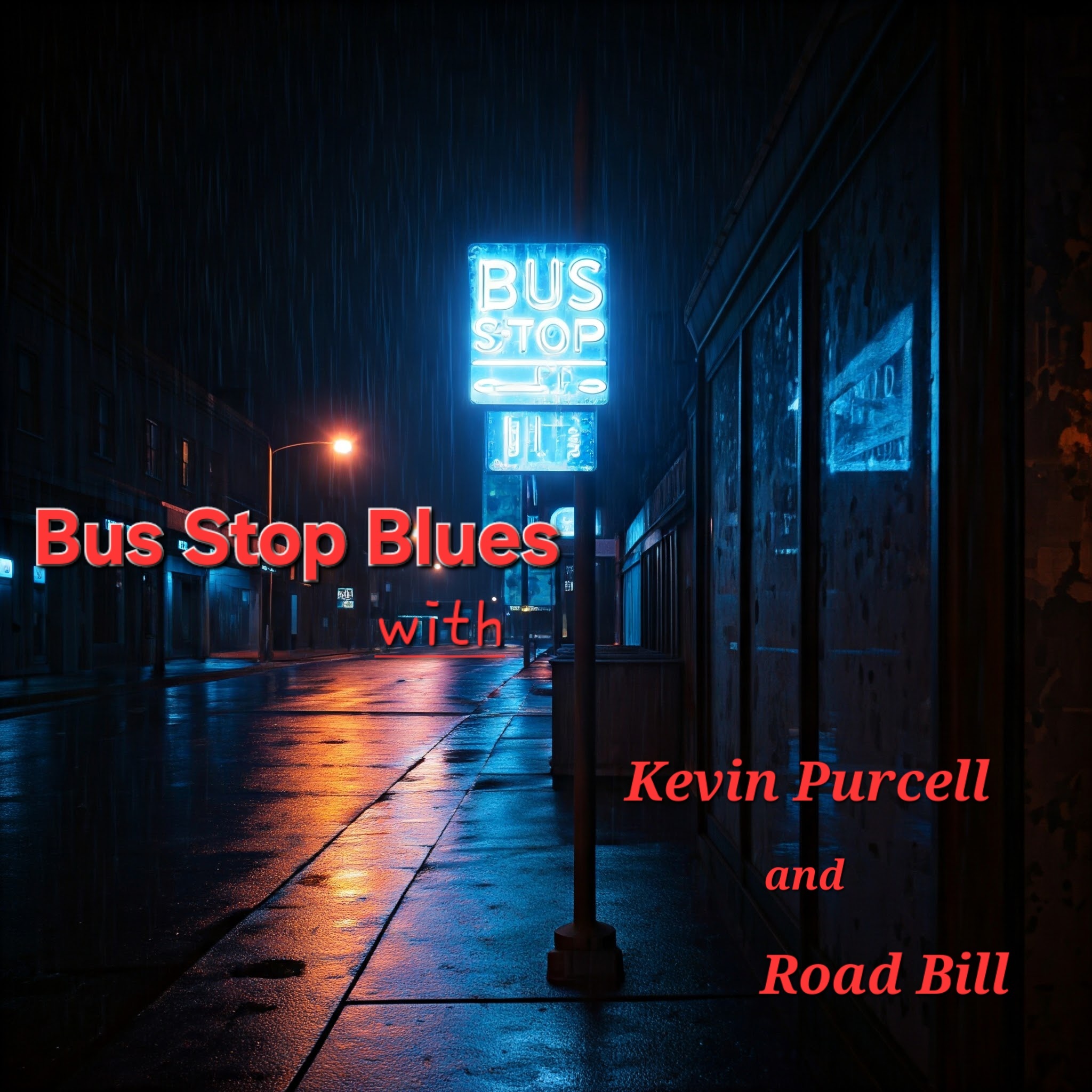
The Bus Stop Blues’s Podcast
thebusstopblues