
Rock n Roll Chicago Podcast
The Rock n Roll Chicago Podcast is a weekly podcast that interviews bands and musicians from the Chicago area. The podcast is hosted by Ray Bernadisius ("Ray the Roadie") and Mike Metoyer ("Hollywood Mike" of Cadillac Groove, Mike & The Stillmasters). The podcast covers a wide range of topics, including the history of rock n roll in Chicago, the current state of the scene, and the challenges and opportunities facing musicians today.
Founded in 2019 by Ray the Roadie and Paul Martin, the two co-hosted the show until 2022. In 2023 Ray was joined by Mike Metoyer as the new show co-host.
The Rock n Roll Chicago Podcast is a great resource for fans of rock n roll and musicians alike. The podcast is informative, entertaining, and inspiring. It is a must-listen for anyone who loves rock n roll and wants to learn more about the Chicago music scene.
Here are some of the things you can expect to hear on the Rock n Roll Chicago Podcast:
Interviews with bands and musicians from the Chicago area
Discussions about the history of rock n roll in Chicago
Information about upcoming concerts and events
Tips and advice for musicians
And much more!
If you're a fan of rock n roll, or if you're just curious about the Chicago music scene, then you need to check out the Rock n Roll Chicago Podcast. You can find the podcast on iTunes, Spotify, and other major podcast platforms.
Show your support of the podcast and visit our Swag Store. Just click copy and paste this link in your browser: https://tinyurl.com/yr5pa7zt
The Rock n Roll Chicago Podcast is edited by Paul Martin.
Theme song courtesy of M&R Rush.
Rock n Roll Chicago Podcast
Ep 284 The Usual Suspects
Use Left/Right to seek, Home/End to jump to start or end. Hold shift to jump forward or backward.
The Usual Suspects group is a highly popular event and party band. They specialize in a versatile blend of classic rock, country rock, oldies, and high-energy party rock.
Podcast edited by Paul Martin.
Theme song courtesy of M&R Rush.
www.rocknrollchicagopodcast.com
Coming to you from the studios at the Illinois Rock and Roll Museum on Route 66, it's the Rock and Roll Chicago Podcast. Hey everybody, it's Ray the Roadie. And it's Hollywood Mike, Mike, Mike, Mike.
Oh, there's that echo again. It's coming through like an echo. Were you in Grand Canyon? Uh, no.
I wasn't in the Grand Canyon. I don't know where I was. You know, the toilet, actually.
I was in the bathroom. Oh, it echoes in there. It echoes in the bathroom, yeah.
Everybody's a singing superstar in the bathroom and the toilet. Oh, yeah, in the shower? Yeah. I know.
I'm like Pavarotti, for Christ's sake. That's how I discovered myself. Wait, hold on.
Wait. No. That didn't come out right.
Hold on. No, it definitely didn't. It definitely didn't.
Yeah. I discovered myself in the shower. Yeah.
No, that doesn't. You don't want to say that. Nope, that doesn't come out right.
No, not at all. But how about you? How did you discover yourself, Ray? Through self... I can't think of the word. I don't know.
Self-enrichment. Self-enrichment. Meditation.
Well, I could pick you out of a crowd. Medication? Medication. Yes.
You could pick me out of a crowd? I could pick you out of a crowd. Yeah, we can just put you there. We're going to line up with the usual suspects.
Usual suspects. That's right. That's who we have here tonight.
That's what we've got in the studio tonight, everybody. That's the most applause we've got in years. Don't sell yourself short.
Come on, man. That's the most applause you've ever gotten, I'm sure. So, how you guys doing? We're doing good.
You guys got here early. You guys got here early. You guys snuck in the building, too.
Something about the latch wasn't working on the door or something. We were kind of hoping you couldn't see us. Well, you know, this place is a little haunted, so when I heard the door slam and the ding dong, I was like, what the heck was that? It could be normal.
Yeah. Yeah, absolutely. Absolutely.
The good thing is we've got a face for radio. Yeah. No, you do.
Well, nice to meet you guys. What are your names? Tell us what you do in the band. I am Buck.
My band is The Usual Suspects. These are my guys with me. I sing, play guitar, and drink tequila.
There you go. The good stuff. Yeah.
Sing, play guitar, and drink tequila. That's what is. What else is there to life? Right.
Narrowly. Right. Narrowly.
I'll tell you what. Our editor, Paulie, is a tequila connoisseur. No, it's common sewer.
Common sewer? Common sewer. Yes. Yeah.
Yeah. What's your favorite? What do you drink? Sincoro is my favorite. Oh, yeah.
That's good stuff. That's real good. Is that the one that's owned by Michael Jordan? Is that his tequila? No, I don't believe so.
No? I don't know who owns Sincoro, but it's got like a little bit of a maple aftertaste when you drink it. Isn't Sincoro the one that the bottle is kind of like shaped like a triangle, but it curves? Yeah. That's the one.
That is Michael Jordan's tequila. Is it? He only sees it when it's poured at the bar. Yeah.
No, that is Michael Jordan's tequila. You know, Jordan's got all that money. Why does he got to sell it for 140 bucks a bottle? He's got to pay for the NASCAR team.
Yeah. But did you know that the reason why the bottle is shaped that way? No. It's the base of the NBA trophy.
Really? Yeah. You put a basketball on the top of it, and that's the base of the NBA trophy. So I probably have more NBA bases than Jordan has.
Probably, yeah. A whole collection. Yeah.
Now you know. Yeah. Yeah.
No, I'll tell you what. That is a good tequila. It's excellent tequila.
I do bourbon tastings as like a side business, side hobby and the whole bit. And one time I had one of the places ask me to do a tequila tasting, and I had a friend who is more into tequila than I am, and I had him come and help, and that's one of the tequilas. He had all three of them, and they were bent to ask.
And I do cigar tastings. Yes. He does cigar tastings.
Oh, there you go. It's kind of weird to just watch him in the corner licking these things, though. It's kind of weird.
I told him, you can't make eye contact when you're licking a cigar, but he insists on doing it. Is that how you discovered yourself? Yeah. It might be.
Might be. So, Buck, who you got with us? Who you got with you? Who's next? I got my lead guitar player, Mr. Frank Gatto, here, and I think he should say a few words. Hi.
How are you? Nice to be here. Yeah. Nice to see everyone.
He doesn't talk much. I mean, I didn't know it was going to be literal. He literally just said a few words.
So, what do you drink, Frank? Not much. No? Coca-Cola. Coca-Cola? All right.
Okay. That's all right. That's why he's such a good guitar player.
So he says. Because he's still standing at the end of the night. All good.
Yeah. Should I say a few words? You should. How much time we got? That'd be a good idea.
Well, Crash Davis. Crash Davis. All right.
His name's Jim Mihaljevic. Drummer. Singer.
Heavy breathing. Tequila drinker. Yeah? Bike rider.
Was that a prerequisite? Got to drink tequila? Well, we've been drinking tequila together since. 40 years. At least 40 years.
Oh, wow. So you guys have some history. But we drink good stuff now.
Okay. We used to drink Cuervo all night. No.
Grab hold of the microphone. Pull it in front of your face. There you go.
Used to drink the cheap shit before. Can I say that? Yeah, you can. You can say shit.
I can say cheap shit? You can say cheap shit. We used to drink the cheap shit. More expensive shit.
Yeah. Well, we couldn't afford the expensive shit. And all the people we played for, we had this routine where we had the shot corner in the bar that we made that famous.
And the shot tray would come up to the stage constantly. All night long. All night long.
Yeah. But that was when we were younger. Before the liver transplant? Better looking.
Yes. Yes. Yeah.
We didn't have any holes in our liver back then. That's true. We were playing at clubs starting at nine, playing until 3.30, playing until 4.30 in the morning.
Yeah. That's what it used to be. Wouldn't.
Yeah. I don't know when that changed. Because all the way through like the 90s and early 2000s, it's like clubs wouldn't start until nine.
And a lot of them, it was 10. You weren't playing until two. Now you can find the eight to 11 shows.
And I like that a lot better. Oh, seven to 10 is even better. Seven to 10.
Six to nine here, baby. I haven't really gotten- I got a three to six Saturday. I haven't really gotten a lot of the seven o'clock, but eight to 11 is popular.
Nine to midnight is popular. I like that a lot better. I really do.
We used to play this place in Stone Park years ago. That was before usual suspects were together. But we were the second band.
They had two bands. This place was called OB Lounge up by a Mannheim Road in North Carolina by Cadillac Ranch and all that stuff. And we were the second band.
The first band starts at nine. They play an hour. Then the second band starts at 10.
You play an hour. And five o'clock in the morning, we're walking out with our guitars, looking at the birds chirping and going, shut up! Yeah. Oh, yeah.
Remember Quamars? Oh, God. Yeah. Quamars, yeah.
You get there, it's light out. You leave, it's light out. Yeah.
Yeah. Yeah. Man.
But you know, those places- And we live to tell about it. Yeah. We had a big circle of musicians.
So the guys that played the early gigs would come in. They'd sit in and do a set. I'd see a drummer come in, hey, man, come on, you know, that's the last they'd seen of me that night.
In fact, when we saw a drummer, we were going, yeah, come on, come on. You know, and I think we were probably all playing for the same amount of money back then too. We're making the same thing now.
Yeah. Being a musician, I mean, this is the only industry, let's call it the industry that nobody gets a pay raise every year. That sucks.
We gotta figure out how that's gonna work. We're making the same money we were making four years ago. Food's going up.
Price of beer's going up. Gas. Price of booze is going up.
Well, I'm talking about the overhead for borrowing. Oh, yeah. But the only thing that's not going up is paying the musicians.
You're exactly right. Yeah. And we're not getting the French benefits because we're too old.
But back in the day. Well, you never know. I mean, you know what? It's not that you're getting older.
You just gotta lower your standards a little bit. That's why I'm with these guys. He didn't hang around with us then.
They were always low. Yeah, but you know, 30, 40 years ago, the crowd would travel. Now, everybody wants to stay within five miles because all the DUI laws and everything like that.
It really changed the whole atmosphere of everything. Absolutely. Absolutely.
Well, that and as you get older, your fan base is gonna get older. You know, when you were 20, you were playing for the 20-year-olds. When you're 30, you're 30-year-olds and it just keeps going up.
And by the time you hit the 50-year-olds, you know, they get their Bluebird special dinner. The band better start by seven. They're leaving at 830.
Yeah. There's a couple of places. That's what I noticed though.
The Denny's Dinner Crush. Yeah. No kidding.
No kidding. So how long you guys been doing this? You first. Been playing for, well, usual suspects.
That's all, folks. He's the suspect. He's the singer.
He's been together for over 20 years, probably 25 years. He's been with me for 25 years. Jimmy's been with me for about five years now, four or five years.
Something like that. But we did play in different bands. I was gonna say, you guys have known each other.
We've known each other for 40 years because we were all playing the same circuit. We all, did you go to high school together and stuff or just know each other from the circuit? No. From the circuit.
Yeah. Which was, which, I mean, precisely what? I mean, you got the Thirsty Whale crowd. No, we were never metal.
No. No. Okay.
All right. Okay. Name them.
A&J's. A&J's. Nashville North.
We were more country. Southern Rock. Southwind Saloon.
Oh, okay. Yeah. I mean, we got really heavy into the country circuit about 1985, mid 80s, because if you wanted to play, you played country.
Yeah. Absolutely. And then it all changed 15 years later and then we're doing blues and then we're doing rock and roll and now we do a little bit of everything.
We just, we mix it up and it's, you never start with a set list. You always, I maybe have one or two songs in my mind when we go to start and these guys are going, what are we going to play? And I go, I don't know. We'll figure it out once we get up on stage, you know? Right.
I take a set list and I rip it up after two songs anyway, so I don't even bother. Played at a crowd. I look and see what the crowd is responding to and generally go that route, you know, you get people up on the dance floor.
You don't go to a slow song, right? You just keep it going. But you read the crowd and I've been reading crowds for about 40 years now that I can see them and they're not doubles, you know, cause I don't drink quite like I used to, but you know. I call it a suggestion list.
You know, you have the list of songs, so you don't stand around going, what are we going to play next? Right. But you got to pick and choose them. You got to have some type of a game plan, you know? Yeah.
We generally have a game plan, but it's not, nothing's written in stone. Nothing at all. And it's just kind of funny because, you know, I'll text these guys and I say, you know what? Learn this song.
We're going to do it next weekend. He lives in the city. I live in Indiana.
He lives in New Lenox. The bass player lives in Manhattan. So it's kind of like hard for all of us to get together to have a rehearsal, but everybody's been playing for so long, it's like, just kind of follow what the song's about and look at me and cause we never do the song the same way twice.
I mix it up. I get, I get bored if I do the same stuff all the time. I could not, I could not play in a tribute band.
I just, I couldn't do it. Yeah. You know, half the people listening to this podcast are going to be like, wow, that's impressive.
They, you know, they never played the same way twice. And the other half of the people that go, geez, these guys must suck. And some people are going to be right with their thoughts.
Not so much. I've been a hired gun for probably the last 20 years. My role was getting a set list on Monday, playing on Friday and Saturday, no rehearsals.
We woodshed. We've been playing long enough where, I mean, you're learning the song proper. Yeah.
Intros and outros. You get to a point where we all watch each other and, you know, you work together and you're a musician. Think about it.
Our first gig you ever do with somebody is usually always the best gig. Everybody's paying attention. Right.
Right. No, that, that, that, that's true. Well, we were just talking about this, you know, there's a certain level of maturity that comes along with it as well.
You know, you reach the point where you realize that practicing is what you do at home and rehearsal is what you do when the band comes together. Right. Exactly.
You know, you know, my, my pet peeve is when we do, you know, you know, we'll get together every once in a while, you know, the band that I'm in, we might get together maybe a half dozen times a year or whatever, just to run through the set list or, or whatever it is. And there's always the one guy that's like, now, what key is this in? Yeah. What were you practicing it in? Pretty bad when the drummer's telling the guitar player what key the song's in.
And then it's a guess at best. You know, you know, whoever knows. We have fun at this point.
It's just fun. I mean, none of us. That's all we've ever done is have fun.
So at this stage of the game, we're, we're, we're not going to make it big anywhere. We're just having fun. And I keep telling these guys when it's no longer fun.
I quit. Yeah. I don't know.
I'm retired now. Anyways, I don't have to do this. I don't have to do any damn thing that I don't want to do.
When it becomes too much like work. I don't want to do it anymore. That's exactly right.
I had a job for a long time, you know, so that's just the way it works. So how does a bunch of guys from the Chicagoland area decide that country music's the way to go? Well, the thing is, if you wanted to play back, back in the, back in the mid eighties and everything, if you wanted to play and you wanted to play a lot, that's what you did. You played country.
Come on. You didn't want to swoosh the hair over and go to a new wave club and do all that garbage. But growing up, the old man was from Kentucky.
And when we got the hi-fi, you know, the big, big beast that was in the living room with the radio on it, it was always tuned to the country stations. So as a kid, that's what I listened to. Dad loved Jim Reeves and mom loved Eddie Arnold, you know, and then you listen to, you listen to everything.
You know, Motown in my house, I'm a prog rock guy, so the transition was weird going into the country. Well, you're one of the illegitimate Jackson brothers, aren't you? Well, that's another story for another day. But you were originally from Gary, right? Yes.
That's what I thought. Yeah. Yeah.
But everybody was doing it back then. You had that big insurgence of country in the early 80s to the late 80s, 90s. Urban cowboy.
Definitely in the early 90s. And if you listen to it, it was a different beast. It was more pop.
Yeah. More top 40. I call it yacht rock country these days.
Yeah. Yeah. It's, you know, it's, it's a different beast.
Yeah. Back then we were doing standards, but we were doing 90s, 80s country. It just went over.
Everybody wanted to line dance. Everybody wanted to. I hated that.
Yeah. I hate it. You know, you're playing it too fast.
It's not, that's not the way the record goes. It's like, fuck the record. Yeah.
Yeah. Now that you can't say. Oh, no.
No. I'm just kidding. Well, fuck.
Just listen up. You know, though, even when we were doing the hardcore country, I called it, we were still playing rock. Yeah.
If they could dance to it, they'll, they were line dancing to rock songs. So. Yeah.
I've seen that. I mean, I've been at a place. I'm like, these people will line dance to anything.
Anything. The thing is back then and probably still, I mean, we don't particularly play country bars right now, but we mix everything up. But back then when we were playing country bars, those people had the most fun out of any crowds that you could ever go to.
Yeah. We used to play this place down in Braidwood called the Golden Nugget. And it was about a half mile away from the nuclear power plant on route.
I know exactly where that was. Yeah. Right across from Effie's place.
I think Effie's place is still there as a matter of fact. And we'd get there early and a couple of guys, they'd be drinking and everything. And then they're getting up to leave and it's like, dude, where are you going? We start in a few minutes.
Oh, we got to get down to work at the power plant. Yeah. Yeah.
Yeah. I mean, these guys are staggering out and they're going to go work at the power plant. Yeah.
Yeah. Yeah. Yeah.
Yeah. That was terrifying. Yeah.
And then, you know, Friday and Saturday nights, I mean, we were doing doubles, you know, I mean, you didn't play just on Friday or just on Saturday. You played both nights. And these guys, they'd be on the John Deere all week.
Come Friday and Saturday night, they want to get pissed up and fight. Yeah. You know? Yeah.
And there'd be three, four fights in a night. And the place, and our drummer was about 350 pounds at the time. And I'm like, you got to go through him to get to me.
Yeah. Yeah. Yeah.
But then they'd be drunk. They'd be fighting all night. And then at the end of the night, we're packing up and leaving.
They'd be sitting on the front porch. You're my best friend. Yeah.
And it's, it's just like something out of the Blues Brothers without the cage, you know? Yeah. Yep. No, it's a different lifestyle.
You know, I mean, truth be told, I know way more country music than I know rock and roll music. I'm more of a country, Southern rock, blues guy. Yeah.
And, and, you know, it's, and I guess, I guess love the whole culture and I love the music and you know, like the stories that you just said, right? Oh yeah. Great. I played with a, I played with a guy that worked third shift as an electrician in a warehouse and he would go and he would, he would play all night long.
And like you said, he'd be pissed drunk and he'd be walking out this car and you can't believe he's going to get in his car and drive home. But guess what? He's not driving home. He's going to work now.
The guy's going to work. He just played a whole show and he's going to work now. It's just like, that's only 240 volts.
It just bites a little bit, right? Just a little bit. Like I said, even when, you know, we were doing the country circuit, I was in a different band than him. Nightlife, we were doing a lot of 80s pop stuff.
We were playing hotel bars and then we would play the country bars, but we always did the rock. And this band now, it's a plethora of music. I mean, Southern rock, blues, rock and roll, fifties and sixties, originals.
We do, we do, we do a lot of everything. We do a lot of everything. It's just, it's just a big cross.
I mean, people will say, well, what kind of music do you play? And I said, well, we do everything for George Jones, ZZ Top and everything in between. And you know. Well, I'll tell you, you know, you have to do that if you're going to call yourself, okay, you may not call yourself a country band, but if you're going to call yourself a band that plays country music, you've got to walk several different lines.
If you're going to be careful about, you got to be careful about, about naming yourself that or saying that, because look at what country music is nowadays. I mean, a prime example is somebody like Chris Stapleton. He'll write a song that sounds like a hard rock, a hard Southern rock song.
Then he'll write something that sounds like a blues song. Then he'll write something that sounds like a classic country song. Right.
But as long as they've all got that common thread, which is a little bit of the twang. It's all Americana basically these days. Look at Zac Brown.
And that's the term. And that's the term Americana. That's what everything's become.
And you can look at decades over the years. In the seventies, country music had a little bit of that disco edge to it. Remember? Remember? Remember when Alabama sounded almost like a disco? Oh.
Phenomenal band. I've seen Alabama like five times. But in the seventies, they had some, in the seventies, they had a couple of the songs that were a little cringeworthy a little bit.
They had a little bit of that to it. I love Alabama too. Oh, that's great.
They're great. Yeah. You know, and then the eighties, the eighties, they were influenced by the singer songwriters.
There was a lot of country guys that sounded like Gordon Lightfoot and Dan Vogelberg and stuff like that. Oh yeah. Yeah.
I've heard that. Yeah. Yeah.
And then the nineties come around and Garth Brooks makes country music palatable for everybody. Don't forget about King George. King George.
Oh yeah. George Strait. Oh yeah.
Yeah. We did a lot of Alabama. We did a lot of George Strait.
Did a lot of Dwight Yoakam. Yeah. Yeah.
A little bit of Johnny Cash. Yeah. Yeah.
More of the outlaw side. Waylon Jennings. Yeah.
More of the outlaw side. David Allen Coe. David Allen Coe.
As a matter of fact, a good friend of mine was a bass player for David Allen Coe. Who just passed away. Just passed away.
Travis was his touring bass player. Yeah. Travis toured with him for a while.
Yeah. We had a revolving door of bass players. For a while.
For a while. Now we... Our regular bass player that had been with me as long as Frank had been with me, he ended up getting sick, medical issues and things. And he's actually just come back within the last, what, six months? Something like that.
And he's a phenomenal bass player. And he teaches fiddle. He teaches mandolin.
He teaches bass. He teaches guitar. He teaches ukulele.
Hey, Billy. Yes. Shout out to Billy Thorpe, our good buddy.
And Billy Thorpe Jr. And Billy Thorpe Jr. Who couldn't make it here tonight. We'll catch up with you, mister. No kidding.
So what's on your personal playlist? You guys sound like you've got a wide range of musical influences and talent and stuff floating around. My roots are... Growing up in my house, it was Motown, funk, soul, that's what my mom listened to. My mom basically played instruments, piano, taught some classes, and wanted us all to play keyboard.
And I'm like, no, I want to play drums. But that's what I grew up listening to. My influences or the music that really grabbed me was progressive rock.
I always liked prog rock, bands, Boston, Rush, Kansas, Journey could be, but not. As I got into the rock, everybody liked, you know, Zeppelin. I was a Zeppelin guy.
My favorite drummers, Billy Joel's old drummer, Liberty DeVito. He's fantastic. He's a beast and he's underrated.
Liberty DeVito is just amazing. And I still would. Danny's brother? Huh? Danny's brother? Kenny Aronoff.
Actually, I know somebody that went to high school with Danny DeVito. Just jump in anywhere there, right? Every once in a while, he's like a drummer, you know, out of the blue he just says something. Nice.
But they basically rock and roll. Let's hear from Frank. Frank's.
You've got to have something to say, right? Sure. Frank's got shit to say. Frank's guitar does his talking.
He's over there with his Coca-Cola. I have listened and I listen to everything. And I mean everything.
I think it came from for decades, I gave guitar lessons. So, you know, you're getting bombarded with students that you're not going to be able to find that are listening to things that maybe you normally wouldn't. But like anything musically, you have to find the good in all of it.
You know? And there's always something good if you go looking for it. You know? So, yeah. So, yeah.
Blues, classic rock, funk, jazz stuff. You name it. If it's good, I'll listen to it.
Yeah. So. He's a good jazz player.
Yeah. How do you twist those fingers to get those? He can lay down some jazz. That's pretty damn good.
But I mean, as far as like everything we do, he just, he nails it. He's the musician. The bass player and this guy next to me, Frank, they're the musicians.
I'm just the damn singer. He's a drummer. You know? Yeah.
You know, we do our thing. And, you know. And me? Allman Brothers.
Oh, yeah. Allman Brothers. Two guys that passed away that really hurt me bad was George Harrison and Greg Allman.
Because I am such a Greg Allman fan. That white guy could sing the blues. Oh, he could.
Yes, he could. Oh, my God. Could he sing the blues? And I just love Allman Brothers stuff.
God, can we talk about for just a second what a fantastic band they were, though? I mean, they were just, that band was so good. Talk about a group of guys who didn't have to say a word. Yeah.
And knew what they were, where it was going. And it was a two hour concert. And they did four songs.
Yeah, I know. Right. Right.
I've seen them. That's our third set. I've seen them four times.
And they were, oh, God. Well, that's why they were so good, because they only knew four songs. Oh, my God.
I saw them at Poplar Creek with Little Feet and the Radiators. Dixie Chicken. Long time ago.
Little Feet was a big influence for me when I was younger, too. I love Little Feet. Yep, absolutely.
Well, I'm ready to hear all these influences in their music. I, as well. I think we should take a break and have them come back and do a little something.
All righty, we'll be right back. You're listening to the Rock and Roll Chicago podcast. Your Sunday nights just got a whole lot bluesier.
Get ready for The Bus Stop Blues, a show that takes you deep into the soul of the blues with classic hits, road stories, and live jam sessions. Hosted by blues man Kevin Purcell and me, the one and only Road Bill. The Bus Stop Blues is two hours of nonstop blues, banter, and badassery.
Check out The Bus Stop Blues podcast at thebusstopblues.com, where you can listen on Spotify, iHeart, Apple Podcasts, or any other major podcast platform. Hop on board The Bus Stop Blues, where the blues never stops rolling. We doing a Dead Guy shot? Yeah, we were going to call ourselves the Dead Guy Band, because we do so many Dead Guy songs anymore.
The Dead Guy Band, yeah, no, that's right. I mean, hell, I'm going to be 70 this year, so it's kind of like, okay, well, I know a lot of Dead Guys. All right, so we're going to call it the Dead Guy Band.
Do some Wilburys. Well, give us something. Oh, wait, we got to get... He's the singer, right? Yes, he is.
Let's turn that microphone around, too, because we don't need a microphone to pick up the cajones. Oh, you sing as well? Oh, okay. Harmony.
I'll do one more phrase. I remember standing on the corner at midnight While sleeping this way In a smoky deep Down on Main Street Down on Main Street With a piece of ass She looked so young and sweet As she got mad and Sunk on Main Street Oh, that was perfect. All right, boys, back in the truck.
You guys want to do it again? I'll take it off of there. What happened? I thought you were doing a sound check. Well, you know what? Normally we do a sound check.
And then when it's good, then we start up again. You guys just went into it. Grab your mic.
No, you know what? They started going back and forth and kind of jawing at each other. So I just hit record and didn't tell them I hit record because it was funny. Okay, because I didn't tell you how you used it on Flairland.
I should have told them. I should have told you that. That was totally my fault.
You guys get started in on each other. I was like, oh, no, I'm recording this. I didn't tell him.
I'm just sitting here. I was like, this is a long ass sound check. That's one of my favorite songs, man.
I love that song. And he's still alive. Yeah, I know.
Isn't that amazing? So we can't be called the Nut Guy Band, I guess. No, I guess not. No, he's one of my favorites.
He's still alive. Yeah, he is. Don't curse it.
You know, that's weird. We go to Deadwood every year for the Sturgis Rally. We stay in Deadwood and there's a guy that does artwork.
Scott Jacobs is his name. And he's pretty famous. And all these people that come into town, these musicians and stuff like that.
The guy that does the Harley. He does a lot of Harley stuff. Yeah, I've been to his shop.
He is the nicest guy, too. He's a great guy. But he's got a wall that's got all these pictures of entertainers on there.
One year we went there. We go every year. One year we went there.
Eddie Money was on the wall. And the next year he died. Then Kenny Rogers was on the wall.
And then Kenny Rogers died. And Charlie Daniels was on the wall. And then Charlie Daniels died.
And it was like every time they had this big... You take your picture. You don't want to be on the wall. At the Grand Mountaineer, all these people would come in and do these shows.
You don't want to be on it. They'd come in and do a show. And it's like the next year they're dead.
Charlie Pryde was another one. He did the show at the Grand Mountaineer and he was dead the next year. And it's like we say, Scott, who's on the wall of death this year? It's just weird.
It's the weirdest thing. No, that is weird and unfortunate. So you never want your picture taken by him? No.
And you don't want to be immortalized in one of his paintings? No. I don't want to paint anything on my bike. Actually immortalized, memorialized.
Memorialized. Yeah. Yeah.
No kidding. I love that. I just love that part of the country.
I swear to God, I'd move there in a heartbeat. You ride at all? Oh, yeah. Absolutely.
Have you ridden the Black Hills? Oh, yeah. Yeah, I've never, I've never, I've never ridden to Sturgis and I've actually never been to Sturgis, but I've been all through there. I used to have to go there a lot for business.
Okay. And so whenever I go there, I just went to Harley whenever I got there and just rode all over the place. He's going this year for the first time.
Oh, no kidding. I thought we were going last year. Apparently, I'm going to be his tour guide this year.
I mean, we got friends out there now that we've been. We usually take off when we ride Tennessee, Southern states. Yeah.
You know, I might go to Sturgis one of these years. You know, I've never been, I've never felt the need that I have to go to Sturgis. I just, I just enjoy riding.
We always, we always go the week before. That's what my group did too, the week before. We go the week before and by Wednesday, you know, the rally starts on Friday and by Wednesday the roads are getting real crowded.
Yeah. And it's a big party and you know what? I don't have to drive a thousand miles to get drunk. Right.
I can get drunk right here. Right, right. Exactly.
It's just crazy. I mean, I've been, I've been, I've been dozens of times and I just, I just like to ride from Mount Rushmore to Deadwood. And I always stay in Deadwood.
Have you ever ridden Needles Highway? Have you ridden Needles Highway? Needles is cool. I may have, but I don't know if I remember. Yeah, you would.
You would definitely remember Needles Highway. Yeah, we ride too. Turnbacks.
Oh, yeah. Yeah. Yeah.
You take Iron Mountain Road to Needles Highway and it's like, oh my God. My wife finally went with me on Needles Highway. The first time I went by myself.
And she's like, I ain't riding that shit. Yeah. So we, we, we, we had a friend who was 80 years old on a trike and he rode his trike out there.
Right. And she said, I'll, I'll ride with him from Keystone to Hill City. Oh, okay.
And then you, you ride Needles Highway, you know. And I rode it. And our buddy, Robbie, God rest his soul, is a great guy.
But that three wheeler was on two wheels pretty much most of the time because he was riding because of these, all the curves and everything. Right, right, right. So we get to Hill City and she's, I meet her at the Mangy Moose in Hill City.
And she comes running up to me and she says, don't you ever let me get on the bike with that son of a bitch. Yeah. I couldn't, I couldn't imagine doing anything like that on a trike.
No. Too many curves. Yeah.
Too many curves. And we used to stay in Hill City. That was the main point there.
Yeah. You know the Mangy Moose well though, don't you? Oh yeah, yeah, yeah. Many times, many times.
Yeah, no, I just love that whole part of the country. Oh, it's great. I absolutely love it.
It's great. Yeah. Man, that was great.
Getting back to the music, I absolutely love that song. I'm getting all nostalgic. God, he's bringing a tear to his left eye.
Yeah, I can see that, yeah. He's finding himself. Why am I laughing? Still, after all these years.
Hey, you know what? I can find myself as much as I want. What was the movie? Oh, American Pie? Oh, gosh. So you don't talk much, man.
You just play guitar and you just sit there. That's what I do. His guitar does a lot of speaking.
That's for damn sure. Yeah, no kidding. I was listening today.
It was played perfectly with the nuances and stuff. So you were a teacher. How many times have you had to teach Enter Sandman? Oh, boy.
Back in the day. It's been a long time now. I don't do as much anymore.
But, oh, boy, that was, yeah. There was a period of time that was a big thing. I spent three years of my life teaching young kids how to play guitar.
And it was during that. It was just the kids in the neighborhood. Give me that.
I'll play. Everybody knows it. Yeah, and they all, you know, I want to play Enter Sandman.
I want to learn how to play Enter Sandman. So that's what it is. I taught them how to play Enter Sandman and then they didn't want to play guitar anymore because they learned how to play the one song they wanted to play.
And that was pretty much it. I had one kid come up to me one time. He lived across the street.
The kid's name was Carson. This is the greatest thing. It was when Carlos Santana came back and recorded his first album in like years and years and years.
And it was that compilation with a bunch of other, you know, famous musicians. Oh, yeah. Right.
And so he did the song Smooth. And we used to do that song. We used to do that.
Yeah. And so this 10-year-old kid, he's probably nine, 10-year-old kid comes running across the street and he's like, Mike, Mike, Mike, Mike. He goes, what? And he goes, you got to listen to this.
And I was like, what? And he goes, there's this new band called Santana. You got to show me how to do this. Yeah, yeah, yeah.
Well, sure. But I mean, the other end of that, too, is I remember when you'd start getting artists that were sampling like four bars or eight bars of somebody else's music. And of course, young kids would all like, oh, there's this new song.
Yeah. Right. You start to know that songs from the 70s.
Yeah. So, you know, they wouldn't believe you until you actually would pull it up and then. Oh, yeah.
Yeah. And now everybody does it. I mean, that's the that's my biggest complaint about music nowadays is, you know, does anybody have an original idea anymore? I mean, yeah, there's there's some people writing some great music.
Right. But there's there's a song that I heard on the radio the other day. I don't even know who the heck it's by.
There was the the Heads Carolina Tales, California. Oh, yeah. That was a Jodi Bacina.
Wasn't that a John Hyatt song originally? I think John Hyatt wrote that for her. I think. I just saw Jodi Bacina and Ship Shawana.
Two weeks ago. And now there's a new song on the radio now about a guy. This guy wrote like an answer to that song.
And I heard it. And he uses that in the song. It's like write your own damn song.
But I mean, it's almost like he stole it. I don't know. You know, everything in the music business, all the all the record producers and stuff like that.
No, you have to do this kind of music. And then a band like Alabama comes on. Yeah.
And I was just reading I was just reading an article about Alabama that Nashville wanted nothing to do with them. So they went to Myrtle Beach and played in a club for like seven years. Right.
And then they ended up being the biggest band in the country. The biggest selling band in country music history. Out of Myrtle Beach.
Out of Myrtle Beach. It's just it's just like, well, like Metallica. Yeah.
Nobody wanted to hear Metallica. And they went out and they just toured and made all kinds of bands and stuff. And the Mavericks, they came out of California.
Yeah. Well, you know, see, that's the thing about about Nashville. I don't know.
I haven't been in Nashville in a long time, but but they have this reputation of Nashville likes singers and Nashville like songwriters, but they don't like singer songwriters. It's all about splitting up the producers, you know, credit and the artist credit and the writer's credit and the whole bit. I mean, Willie Nelson's another story.
Willie Nelson went to Nashville and nobody liked him. So what did he do? He grew his hair long, hung out with the hippies, went back to Texas and became Willie Nelson. Right.
You know, he didn't get he didn't get famous or popular in Nashville. So it was years later. Man, that's wild.
Well, I think you guys need to play another one. If you guys are going to play that well, you need to need to play again. I need to hear this song.
Yeah, here's one that he has heard before, but he's never done before. Oh, this should be interesting. This should be fun.
This is an original. And OK, it's called Out of Control. And I wrote this one.
Life was coming at me in the fast lane real hard. Was it before or after the hospital? You've been acting this way ever since the age of 10. When you're moving on over, the fast lane always wins.
You've been playing hard, living that rhythm and blues. Burning up, can't control. Out, out, out, out, out of control.
You're out of control. There's a train wreck up ahead. Can you stall? Yeah, two by two, you'll be knocking on the devil's door.
Thank God we got back on the straight and narrow though. Back in control. There you go.
There you go. So how can people find you? Social media? We are on social media. Facebook.
We are the Usual Suspects Band. And like you found Usual Suspects Illinois and you came across us. Yep.
Yeah. Yeah, that's about it. A lot of word of mouth.
A lot of bad word of mouth probably too. Of course, we probably deserve most of it. He snuck the microphone over and he was like, I got it.
Throw in some plugs. We mostly do south suburbs, that type of stuff. We don't travel around too much anymore.
Like I say, hell, I'm in Hobart, Indiana now. So we actually are trying to break in a little bit into the Indiana scene. And it's very difficult.
It seems to be a very closed market there. They don't like new talent or something. But people in Indiana hate people from Illinois because they're ruining the scene.
They're ruining the state for them. They're saying, leave your shit back there. Wait, you moved there.
I did. I don't have any friends out there either. It's because you pronounced it wrong all those years.
Yeah, it's not Hobart. It's Hobart. Better say Hobart or they know.
You can catch us live. Here's a plug at the Hangar in Manteno, May 23rd. American Legion.
That was a good show. I was there, if you remember that. Yeah, that was a fantastic show.
Today's June 6th. Real nice venue out there. What do you guys have going on in June? June 6th, we're in Dyer at the White Rhino.
June 13th, we are at the Tinley Park bowling alley. That's an outdoor gig. I think it's 7 to 10 for that one.
The Hangar in Manteno is 8 to 11. Three hour gigs are great. Yeah, they're great.
I sing all night. The thing is, the difference between three and four sets is being able to talk the next morning. You're absolutely right.
You're absolutely right. Maybe your wife likes it when you play four hours. Oh, yeah.
We got the True Country coming up a couple of dates there. The one in Shanahan, the one in New Lenox. We've got the New Lenox American Legion coming up.
That's an outside gig. BFW in Frankfurt. BFW in Frankfurt.
Oh, you know, you talk about good crowds. Oh, my gosh. They're the absolute best to play for.
We just love them. Thomas Hartig post 1977. I happen to be the vice commander.
There you go. And you are full of vice, too. I can vouch for that.
I've been with you a long time, you know. Yeah, no, they've got dedicated members. Oh, they do.
And the people have fun. And the prices can't be beat. And we are in this for fun.
And if I go to a place and everybody's sitting on their dead ass not doing anything, it's like, why am I here? And you go to these places and they're out there dancing and they appreciate you. Yeah, that's, you know, that's why we do it, because we are mere shells of ourselves. We need people to, you know, pat us on the back and give us attaboys, because otherwise we'd probably go out and put a gun in your mouth.
Well, I hope not. You'll end up on the wall of death. That's right.
All right, gentlemen. Thank you for coming out. Thanks a lot.
Good talking to you guys. Thanks for having us. We'll catch you next time.
See you out there. The Rock and Roll Chicago podcast is edited by Paul Martin. Theme song courtesy of MNR Rush.
The Rock and Roll Chicago podcast does not own the rights to any of the music heard on the show. The music is used to promote the guests that are featured.
People on this episode


Podcasts we love
Check out these other fine podcasts recommended by us, not an algorithm.
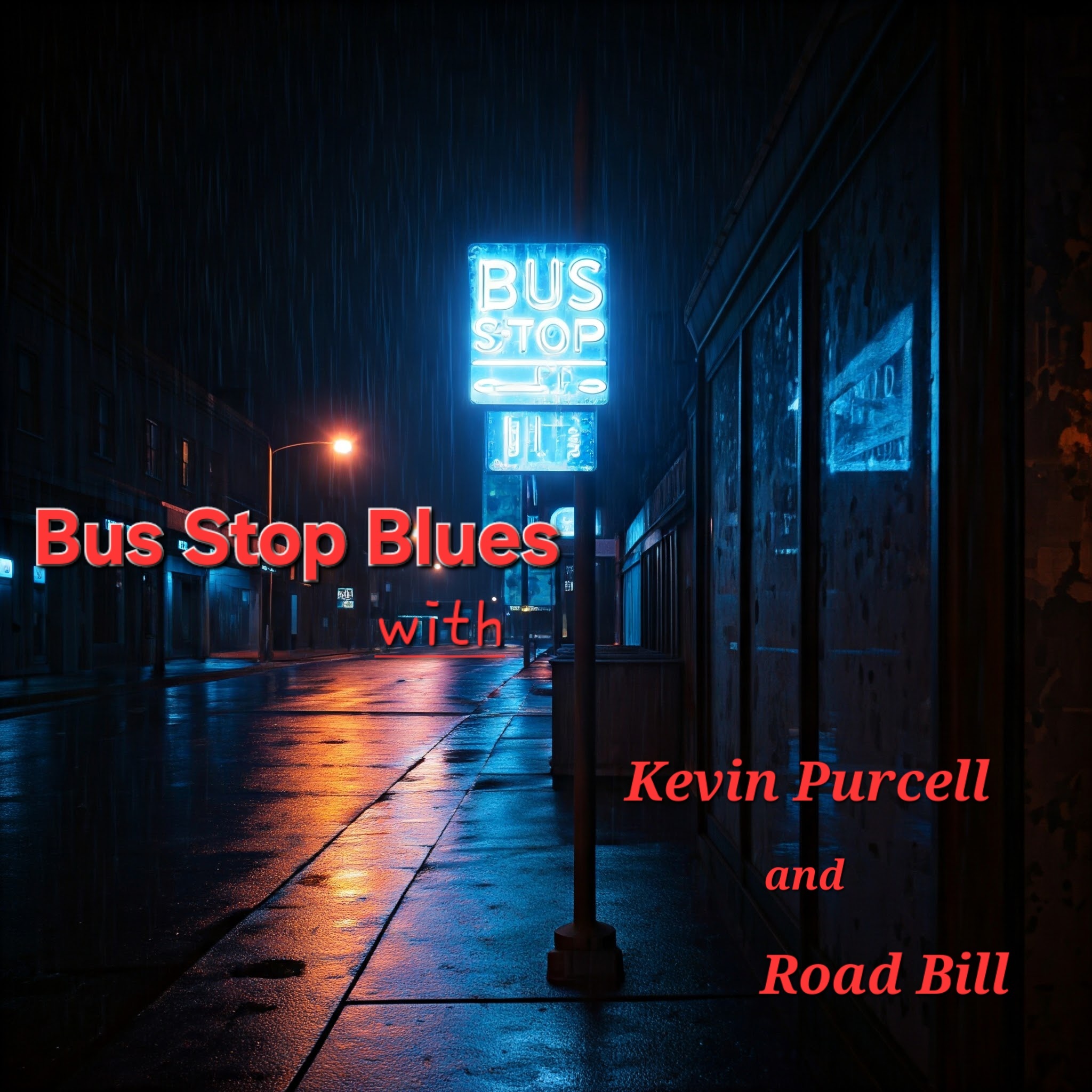
The Bus Stop Blues’s Podcast
thebusstopblues