
Rock n Roll Chicago Podcast
The Rock n Roll Chicago Podcast is a weekly podcast that interviews bands and musicians from the Chicago area. The podcast is hosted by Ray Bernadisius ("Ray the Roadie") and Mike Metoyer ("Hollywood Mike" of Cadillac Groove, Mike & The Stillmasters). The podcast covers a wide range of topics, including the history of rock n roll in Chicago, the current state of the scene, and the challenges and opportunities facing musicians today.
Founded in 2019 by Ray the Roadie and Paul Martin, the two co-hosted the show until 2022. In 2023 Ray was joined by Mike Metoyer as the new show co-host.
The Rock n Roll Chicago Podcast is a great resource for fans of rock n roll and musicians alike. The podcast is informative, entertaining, and inspiring. It is a must-listen for anyone who loves rock n roll and wants to learn more about the Chicago music scene.
Here are some of the things you can expect to hear on the Rock n Roll Chicago Podcast:
Interviews with bands and musicians from the Chicago area
Discussions about the history of rock n roll in Chicago
Information about upcoming concerts and events
Tips and advice for musicians
And much more!
If you're a fan of rock n roll, or if you're just curious about the Chicago music scene, then you need to check out the Rock n Roll Chicago Podcast. You can find the podcast on iTunes, Spotify, and other major podcast platforms.
Show your support of the podcast and visit our Swag Store. Just click copy and paste this link in your browser: https://tinyurl.com/yr5pa7zt
The Rock n Roll Chicago Podcast is edited by Paul Martin.
Theme song courtesy of M&R Rush.
Rock n Roll Chicago Podcast
Ep 287 Rochambeau
Use Left/Right to seek, Home/End to jump to start or end. Hold shift to jump forward or backward.
Rochambeau is a Chicago-based bluegrass band known for bringing high-energy acoustic music to local venues, festivals, and private events across the region. Blending classic bluegrass instrumentation with a driving, collaborative performance style, their sound features a mix of traditional acoustic elements—including mandolin, banjo, harmonica, and bass—complemented by strong vocal harmonies.
Podcast edited by Paul Martin.
Theme song courtesy of M&R Rush.
www.rocknrollchicagopodcast.com
Coming to you from the studios at the Illinois Rock and Roll Museum on Route 66, it's the Rock and Roll Chicago Podcast. Hey everybody, it's Ray the Roadie. And hey there, it's Hollywood Mike.
I almost forgot my own name. I did too. It's been a while.
It's been a long time since we've been in the studio. Yeah. And everything's working.
How you been? I'm good. I'm good. A little sad today.
Oh, why's that? The Chicago favorite just passed away this morning. Walter Perezader from Chicago. Oh, I didn't hear about that.
He died this morning and I just saw before I got here, Tom Dreesen just died. No kidding. Yeah, all these Chicago guys are dying.
You're bringing bad news. I know. I know.
I'm not going to do it. Maybe I'm not going to have bourbon with you later. I don't want to rub up against you too much.
I mean, more than I do. I'm just bringing the news. Yeah, that's true.
Just bringing the news. But yeah. Yeah.
So what we got? What's going on? Oh, we got a podcast interview tonight. Yeah, who's that? Who is it? Yeah, it's Ro Schambo. Ro Schambo.
I was wondering how you're going to pronounce that. Ro-sham-ball. Ro-sham-ball.
Ro-sham-boo. It's like De-sham-bo in golf. De-sham-bo.
There you go. You know, Bryson De-sham-bo. Yeah, I don't watch golf on television.
You know that. This is golf on television. Okay.
And the Cubs announcers are getting to be the same way. You've been watching any baseball? I don't have access to any games. I have not seen a ball game in years.
Because they've got that stupid marquee network. Marquee. And Saks have a network now, so I'll scroll.
We get it because my son pays for it. I was like, I am not paying to watch the Cubs. So yeah, if you want it, you pay for it.
But man, those announcers are just like, they're up. And it's a pitch. It's really boring.
So anyways. So how are you guys doing? Good. Doing well.
Cubs or Saks fans? I like the white Sox. I'm the Cubs. Uh-oh, look at this.
Uh-oh. A house divided. The table is divided.
Yes, it is. In the precise way that it should be then. Yes, it is.
You know what? Truth is, I call myself a Cubs fan if I had to choose. But I mean, I just can't get into it. I don't know why.
Watch it. I played it. Coached it.
Love the game. Can't watch it on television. Well, I haven't seen a Hawks game in three years since they went to that new network.
Fuck you. I can't even watch the Hawks. Oh, well.
And I don't care to watch anybody else. Yeah. Who else are we going to watch? Nobody.
Yeah. So what's going on, guys? Well, we're here. You know, I'm sad about Tom Dreesen.
I used to caddy. He was at Ravisloe, and he was one of our caddies. And he'd come back to the golf course.
No kidding. We used to caddy for him. Wow.
Great guy. Yeah, yeah. Phenomenal guy.
Mm-hmm. Wow. That's pretty.
What golf course? Ravisloe. Yeah, Ravisloe Country Club. Oh, okay.
How'd you know? Because you said it. Oh, okay. See, I listen.
I'm hearing Ravisloe, Rambushaw. It all sounds exactly the same to me. Yeah.
Yeah. So tell us a little bit. I'll tell you what.
I saw a couple of videos, you guys, and everything. And this is probably our first bluegrass band. I believe so.
Ever having on the Rock and Roll Chicago podcast. Yeah, but we've had it all, man. We had two polka guys on here.
Yeah, that's true. But they're playing bluegrass. They're playing rock and roll music in the style of bluegrass.
At least that's the videos that I saw. Anyway, it was rock and roll music kind of converted over to bluegrass. It could very well have been.
We do do that. Yeah. Okay.
It's kind of a thing, you know, when we're not breaking ground. Right. You know, there's a lot of videos out there of people doing that.
Yeah, absolutely. They're doing it for sure. Yeah.
But not a lot of people around here that I've seen anyway. Maybe there is, maybe there isn't. No, you know, I've been playing the banjo for over 40 years and, you know, south side kid, kind of farm kid.
And I grew up, my family, you know, the Eagles were always Led Zeppelin, big Led Zeppelin fans in the family and all this, you know, classic rock. And for some reason, the endorphins went off and I wanted to play the banjo. But we had a little exposure back then, the Beverly Hillbillies and like Deliverance and these couple, you know, iconic movies that everyone who researches bluegrass with.
But I just wanted to find more music. So I'd find myself, Noodle and my buddies were all Rush fans. So, yeah.
Like, how does, how does Alex Lyfven play that? How does, you know, how do you play Stairway to Heaven on the banjo? That'd be really cool. And that's when I, and I was playing out. I was on tour as a kid, kind of that Partridge family experience, but I always gravitated to different music.
Right. So there's a band out of Branson called the Haygoods. It's a family and that's exactly what they do.
They take like rock music and turn it into bluegrass and they are really, really good. Yeah. Yeah.
No bluegrass musicians. I mean, you know, I'll admit I can't play bluegrass. I can't do it.
I don't have the, I don't have the chops for it. No. No, you really have to, you really gotta have some chops to do it.
So he's at a high school party and everybody's listening to Russian stuff and Hee Haw comes on television. He's like, yeah. Right.
You know, I'm 14 and you know, I'm, I'm, I'm in this Partridge family, the band managers. We had four guys in a band. It was kind of bubblegum.
And they'd pick me up from school, get off the bus, hurry up the driveway, have my change of clothes, the outfits. And we were on the road and we're playing somewhere in the Midwest by like seven o'clock Friday night. And then I'd go to another place, to another place.
And I'd get back home Monday and I'd have the experience where I'd play on the same bluegrass festivals. This is the eighties. So I'd play with like Bill Monroe and the Stanley brothers and the golden, the golden, the golden era of bluegrass, Osborne brothers, Jim and Jesse.
And I'd get back to school Monday and I'd be, it's like, Oh man, I'm beat tired. And I was like, what'd you do this week? And I said, well, we played, you know, central Indiana, went down to Missouri and we did this whole thing. I'm back.
It was on a stage with Bill Monroe and this and that. And they're like, Oh, that's cool. Hey, did you hear the new survivor album? And I'd go, no, but I guess what I'm doing is cool.
And then I got this name, golden, golden winker. And I'm playing the banjo. And it was just always a difficult place to find your way.
Yeah. So you got punched in the face a lot. A lot.
We had that one country band. One guy in the band, his name was Mark Tater. Yeah, that's right.
Mark Tater. Perfect country name. Yeah, absolutely.
And that was his real name. You had a choice. You were either going to be a country musician or I don't know, an offensive lineman for the Bears or something.
Mark Tater. That was all you could, that's all. Have you guys ever played the Frankfurt Fest, the bluegrass fest? Yes.
Have you? Yeah, I have, but not with this band. Same here. So did you start the whole band? This is kind of your brainchild? Yeah.
I've known Tracy for a long time before we started a band together, but in the bluegrass circle, you've been probably involved because Tracy has got, you're Mr. Pop. You have this just diverse musical collection. We met through Steve Haberker and he got together a little band to do a fundraiser for the Special Olympics.
We decided that was 21, 2021. And then we had such a good time, we just kept playing. Yeah, we liked what we were doing because again, for me, I played bluegrass one-on-one a lot of my career that traveled into country.
And then I started this project with Steve Ledfoot and that was a little more upbeat and I wanted to be more seasoned in life. I wanted to be able to play everything. I didn't want any roadblocks.
And we got together and we did this benefit and it was a good song list that we put together. And then we just started finding each other and getting together and working on some music. Yeah.
And start creating our own. Yeah, that was Steve and Thomas Lowski, who's a Joliet guy. And then we, I don't know, we did another four or five gigs and then those two dropped out and we just kept playing, added some people.
So who's missing? How many are in your band total? Well, Rochambeau is a big ensemble now. I've got six people in the band. Okay, all right.
So there's three core people and then we've just added another instrument, but we try to keep it four or five minimum. Now, give us the, give us the kindergarten explanation of this, because I'll tell you what, we've got a lot of listeners. We've got, what we just pulled down the stats, right? And we've got like 114 countries or something that listen to his podcast and everything now.
So there's, there's a bunch of people out there going, okay, what the heck is bluegrass music and what instruments are involved in a bluegrass band? Well, right now, Rochambeau, we have Golden Winker plays the banjo. Jake Nelson plays the mandolin. Okay.
We have Aaron Krings plays the standup acoustic bass. Okay. Call it doghouse bass.
Sure. Right. Double bass.
Denny Nicholson plays the harmonica. Jesse Fuller plays the dobro and, and then my name's Tracy Okamoto and I play guitar. And play guitar.
Okay. So when you talk about a rock band, right, you know, everybody automatically thinks, okay, singer, one, two guitar players, bass and drums, run it down. What would that be in bluegrass? What's required? Yeah.
So what's required is a high tenor singer. Okay. You need that.
That's considered bluegrass. The holy grail of bluegrass is a high tenor singer with harmonies. Yeah.
But, you know, think of, you know, Tony Rice has been in bands where they didn't necessarily have that, that high tenor singer. And I'm going with Ricky Skaggs, right? Yeah. Well, yeah.
You know, one counterpoint, but you need, you need, you know, Bill Monroe is created the music and Earl Scruggs took it to the next level. So mandolin and banjo. You know, funny that you mentioned Ricky Skaggs, because I just had this conversation with somebody not too long ago.
What is that rattling? That's weird. Just a microphone? I don't know. But, but anyways, I guess I had the conversation with, with Ricky, about Ricky Skaggs, you know, in a lot of different genres of music, there's always been one person that comes along and makes a genre of music palatable for everybody.
I think Ricky Skaggs is that guy for bluegrass music. He comes along and he started mixing the bluegrass with a little bit of country and a whole bit. Next thing you know, he's on the radio and people are like, I don't like bluegrass music.
Well, do you like that Ricky Skaggs song? Oh, yeah. Well then you like bluegrass music. You just don't realize it.
Right? Yeah. And what he, what he did to create, go back into the bluegrass world, you know, he started in the bluegrass world and then he balled out, you know, he got into the Nashville scene and he pretty much gave up the Nashville contracts and he started his own label, right. To come back into the world of bluegrass and create the music and open up so many more doors for like Molly Tuttle.
And, you know, we can just start diving into all these different people that have come along since Ricky's really promoted the music again. Right. Right.
I actually had the opportunity to see him at an outdoor festival. I was a much younger man than I am now. In fact, I was still in high school on a family vacation and, and where were we? I can't even remember where we were.
We were at the we were at the Opryland amusement park. I think it was. And here's Ricky Skaggs standing with two other guys in a gazebo playing a mandolin.
And the first time I ever wanted to go home and burn my guitars is when I saw him play the mandolin. It's like, it's like, it's like all 10 fingers were on one hand. Yeah.
He's a super picker and his band is always has a super hot band playing with them. Yeah. And in bluegrass, the mandolin is kind of the drums.
Okay. There's a chop, they call it the bluegrass chop. It's on two and four.
Okay. So when you hear bluegrass, you'll hear it. Okay.
Yeah. And that in lieu of drums. Wow.
Although I guess in the sixties, there were drums. Yeah. Yeah.
I mean, you go back to the Earl Scruggs review and Jody may, you know, he, he had a drummer in the band and, you know, and Dylan when he went electric and all that. So there is, there are bands out there and they have the box and John McEwen and those guys. Well, I'll tell you the, one of the things about bluegrass is it's, it's going through revival right now.
If you listen to the right stations, if you listen to the right places, and I don't listen to commercial radio at all, I'm on Spotify or Pandora, I actually prefer Pandora myself. And I'm always listening to the, the, the Blackberry smoke radio station. And they, they've got a lot of bluegrass sound and stuff in their music, but you hear a lot of modern bluegrass bands on that station.
Like if you ever heard of the band chain station, I believe a lot of these guys, okay. A lot of them, I believe are actually from the Illinois area or Chicago. And the first time I ever saw them was I was out in Colorado and they had a drummer in the band and they had a guy playing a fiddle and they had a mandolin and the whole, in the whole bit and all original band, I fell in love with them.
I bought every single one of their albums and I came back home and I told a friend of mine about it and he goes, oh yeah, that's my wife's cousin or something like that plays in the band. So I started listening to, you know, to these guys and it, but then you've got a whole bunch of other bands like, like I love the band Cross-Canadian Ragweed. If you've listened to that band, fantastic band that they are considered to be a Southern rock band.
But I mean, they're a bluegrass band that they're a bluegrass band with an electric guitar and an electric fiddle is pretty much what it is. And we'll have to check them out. Yeah, absolutely.
You guys should give them a listen. And if those bands are listening and you got roots in the Illinois or Chicago area, come on down. We'd love to interview you for sure.
Coyote Riot, aren't they kind of this area band? It's this area band. They play a little more, they lean a little more to Irish music, but still they incorporate a lot of rock, a lot of popular stuff. So, you know, I got to give credit to a band called the Special Consensus Bluegrass Band.
Okay. I've actually heard them. Yeah.
So Greg Cahill, banjo extraordinaire, my mentor and just has done so much for bluegrass and, you know, for me, I'm a kid and I'm playing these festivals and hearing bluegrass and, you know, Earl Scruggs 101. And I went and saw the Special Consensus play at Governor's State University. They're all Chicago guys.
This is a Chicago band. And I saw Greg Cahill play, um, he was doing swing on it. And then he did, uh, Ramblin' Man.
He did some Allman Brothers stuff on the banjo. And I said, Oh, it does work. You know, do people like this music? You can, you can break out of the, you know, the Foggy Mountain Breakdown stuff into fiddle tunes.
You can do other stuff. And it was such a eyeopening experience for me. And Greg's continued to grow the band and do so much more with music and bring so much more into it locally in the city and promoting all these musicians that are around him in the area.
Right. Right. So when you guys started off as, um, when you guys put the band together, you first started off, were you playing a, just pretty much traditional types of bluegrass songs? When, I guess, when did you start to say, okay, I'm going to take a pop song and turn it into bluegrass style? Probably from the very beginning.
You did. Okay. Yeah.
Yeah. So for, you know, Tracy's got such a diverse collection of music. I've got an open mind to playing music and trying to find music on the fretboard of the banjo.
And, you know, every time we get together, we'd noodle or he'd start noodling and go, Oh, that's a great song. Yeah. And it starts like that.
And we would just go, okay, let's, let's see what we can do with it. Right. And these guys are really open-minded too.
So when I say, you know, we should do, you know, ain't no sunshine when we're gone. Oh, fantastic. But we should do it in three, four.
Yeah. Yeah. Fantastic.
And, and they've, Oh, sure. A song that I've done about a hundred thousand times in my career. Yeah.
You almost have to. Okay. Interesting.
Interesting. Well, I'll tell you what we're about 15, actually about 16 minutes in. And, um, I'd like to get a few songs out of you guys.
I'd like to have everybody hear a little bit about what it is you're doing. So I don't want to waste time just kind of talking around. You guys ready to play a little something? Sure.
Let's do that. We'll take a, we'll take a quick break. We'll come back and get a sound check in and we'll, uh, we'll hear you guys play a little.
We'll be right back. Sounds good. You're listening to the rock and roll Chicago podcast.
Your Sunday nights just got a whole lot bluesier. Get ready for the bus stop blues show that takes you deep into the soul of the blues with classic hits road stories and live jam sessions hosted by blues man, Kevin Purcell and me, the one and only road bill. The bus stop blues is two hours of nonstop blues banter and bad-assery.
Check out the bus stop blues podcast at the busstopblues.com where you can listen on Spotify, iHeart, Apple podcasts, or any other major podcast platform. Hop on board the bus stop blues where the blues never stops rolling. All right.
We're back for the first time in the studio tonight. We have Rochambeau. There you go.
All right. I was going to do that, but I was like, yeah. It's like a rock and roll crowd.
Just got turned down. Man, your fingers don't stop moving on that thing over there. I mean, so, you know, the banjo is the drive.
Yeah. Tracy said the mandolin in, in, in, in bluegrass, the mandolin and bluegrass, that does the chops or the drum beat, but I do the role of the drive. I keep the, the train running.
Yeah. And then we're going to do that. Cause I mean, I've seen banjo players and they strum a banjo, like a guitar, and I'm probably not a fan of that particular style of banjo playing.
I prefer exactly what you were doing right there, but is that a different style or something like that? Different style. So, you know, a little bit on the history of the banjo, you know, it comes from, everything comes from Africa. Then it stopped over in the Southeast and, you know, plantation, it was a rhythmic instrument.
And then this thing called the civil war came on kind of paraphrasing this thing called the civil war came, came around and they actually used the banjo. You see the civil war, the soldiers marching with the fiddle, but they marched with the banjo because it was a lot louder. And they did that strumming.
Yeah. To keep the march time. Oh, okay.
And then it evolved out of that and it got into banjo, how it's tuned. It's fairly easy to fret with the fingering and it became as loud. So people brought it into their houses and the parlors, because a lot of people couldn't play or buy a piano.
Right. Because you sang as a family and they could play the music. Guitars were so soft back then.
So a lot of people played the banjo in the late 1800s. Then that kind of went through in the strumming thing. And then this guy named Earl Scruggs came, came in about the late thirties from North Carolina and thunder hit.
And he created that three finger where you use your index and your middle finger to roll. Right, right. Got rid of that strumming.
Wow. They still do it. They call that claw hammer.
Claw hammer. That's right. That's right.
We were talking about that one time. I've heard of that before. Yeah.
Is that different than claw hammer? No, that's the same thing. Same thing, but that's right. So yes, it's rhythmic and Pete Seeger was a big, you know, claw hammer player.
And there's quite a few still out there who do it, making it popular still. Right. Abigail Washburn.
Okay. Is really big on the Frailing. Right, right.
Because somebody decided to put a stick on a drum and turn it into a string. And I didn't realize they used it in the Civil War. Was that just, they had them in the back and everyone's trying to get away from the sound? Yeah, well, charge, go.
We're going to play the banjo. We got to march a hundred miles today. A hundred miles today, everyone.
Light up that banjo. Get them going. Get them running forward.
Get them running forward. It's one of my favorite jokes. I love musicians jokes.
Wow. The banjo joke is, you know, what's the definition of a true gentleman? And it's somebody who knows how to play the banjo, but doesn't. All right.
Oh, I hear my fill. Let's join in everyone. Oh, okay.
Oh, look, she's laughing over here too. Oh, she's got a million of them. His wife is laughing at him.
Just be glad you're not a drummer. Yeah, that's true. I mean, I do know how to shut up a guitar player.
I just show him sheet music. Every time. Yeah, yeah, absolutely.
You know, well, what the heck? I'm going to, I'm going to say it. You know what they call a banjo player's girlfriend? What? A relative minor. Yeah, we've done this for a few years.
We've heard quite a few musicians jokes. They'll be at Zaney's all weekend. Yeah, that's right.
So when did this all, when did this whole thing start for you? When did you start playing guitar? I started playing guitar about 73. Okay. From the Chicago area and the whole bit? Highland, Indiana.
Highland, Indiana. Okay. Well, Chicago area.
Yeah, exactly. Yeah. And did you start off playing bluegrass? Oh, absolutely not.
Okay. All right. What legend here? He got lost.
Yeah. Car broke down. Yeah.
I, you know, I've always liked acoustic music, you know, so as, as time went on, I went from rock bands to, you know, country bands. And I did a duet, acoustic duet with a woman singer for a bunch of years. And then when we stopped doing that, it was like, you know, I'm, I'm going to play bluegrass music.
And I, I had, at that point, I had met some people that played bluegrass and again, going back to Steve, you know, he, this guy runs jams out in the Frankfurt area. Right. Right.
Right. Okay. So there's a, there's a community of musicians.
Yeah. And, you know, it was always fun. Do him for four or five years, probably before we actually played, because he would get to the jam about the time I was leaving.
Was it just a general jam or was it just a general jam? It wasn't like a bluegrass jam or something like that. No, bluegrass jam. 15, 20 people gather around a table in a bar or a restaurant.
Yeah. Right. And, you know, and there's kind of like a song book of standards that people, you know, that people know.
But there's also a lot of music that people would bring in and just want to play and we'd adapt to it and perform. Yeah. Was it hard to, was it, was it difficult to put together a bluegrass band being in the Chicago area? Cause let's face it, it's not the preferred genre of music around here.
Right. Yeah. Yes.
It's more difficult finding players who want to, who have the availability to get out and be dedicated and learn and want to play the music out in public. You know, a lot of people want to play and they want to sit around a jam and play on the front porch is that, but just take it to the next level. Yeah.
It's, it's not easy. And there's, go ahead. But it's probably easier to find people that want to do it than there is to find places to do it.
Oh, that's for sure. You know, that's changed over the years. Yeah.
Yeah. I'm assuming there are people out there though, because I've been, I've gone to the Frankfurt Bluegrass Fest. You know, I actually volunteered and worked there for the first five years and they got that pickin' tent and that, that thing's always packed with people.
So, you know, there's musicians out there and they just may not be coming out and don't know where to go. But when you, they put that tent up, it's packed all day. Right.
Right. I'm assuming you had, I'm assuming you came across a lot of people that were like, you know, bluegrass is cool. I think I can do this.
Right. And they stick with it for a little while. Then all of a sudden they get the opportunity to join a rock band and they're gone.
I'm assuming that's probably what you, what you had to struggle with. There's a lot of crossover. There is a lot of crossover.
You know, if you want to be rich, what's our joke? You know. Don't, don't play bluegrass or blues. Anything, anything with the word blue in it.
Yeah, Mike, anything with blue in it. It's, it's tough to, you know, have people be dedicated and practice and learn the music and then go out and try and make a few bucks playing bluegrass and do it again. It's not as easy as you're saying, going into the rock or the country world, spending that life.
That's a different life. It's a, it's a very, very exciting life. We joke, you know, we say we can't stand one another, but we make money hand over fist.
But the reality of it is, you know, we've been fortunate to get together with people that really get along well and, you know, and, you know, the money isn't there, but. Right, right. But it's not what we're playing for either.
We're exactly, you know, we, you and I have been playing out for decades collectively, you know, our whole life. And I'm trying to just create this entity, Rochambeau, be good music. People can go out and listen, have a good time, not be blown out of their chair with the, with the sound levels, with the sound levels and, you know, have a, have a nice evening and listen to some music and get some, something a little different in the play, playbook, you know, in the song list.
So we just want to carry that forward and give these other people to the opportunity to hear it and perform it. So with that in mind, what do you see on the horizon for the future of bluegrass music? Cause like I said, we just talked about, it's kind of making a comeback. What do you, you know, give us your opinion from somebody who's got their, their finger on the pulse of it.
So when I started in bluegrass, it was the world of Rocky Top. Dueling banjos had just had its run and I would go with songs. So, you know, it's the early eighties and, and country music at that time, US 99 had just come out and there is, there was a growth.
Chicago had bluegrass festivals, the local bands, Chicago bluegrass bands, Special C, these, some of these bands, mostly bands are long gone, but there was festivals for bluegrass in Chicago, not just the Frankfurt Bluegrass Fest, but there was a handful of quality instruments or quality festivals. And then that kind of gave way, you know, and then it got re re-energized maybe in the late eighties when country came back and, you know, they were playing on the coattails of the country bands. We had some opportunities to perform out, but it really didn't exist.
Probably it faded out till Oh Brother, Where Art Thou? Till that soundtrack came out. Fantastic point. Yeah.
Yeah, absolutely. And that brought a lot of people together to listen to the music. Cause yeah, I mean, it's, it's mostly a bluegrass or it's a purist country, you know, album, but it gave a lot of people the opportunity to hear this music again and give them desire.
And then Alison Krauss, you know, she's Illinois person and she was very, you know, well known with her band at that time and it helped grow the, grow the music. Right, right. And like right now, Billy Strings.
Oh yeah. Just a monster. My kid loves his guitar playing.
Who doesn't? Yeah. He is, he is, he is incredible. Yeah.
And Molly Tuttle. I mean, you're getting people that are playing big venues now, not just, you know, the old town school of folk music, but you know, big, you know, 10,000 people's seat venues playing bluegrass style music, you know? Well, yeah. So through that time you had Bela Fleck come in with the Fleck Tones and make his music, which was jazz oriented, but he brought a little bluegrass, him and Howard Levy, you know, they tried to bring some of the music into it.
And then he started his bluegrass heart just before COVID, like the late teens, he went with that project and it opened it up. And then we were talking about Ricky Skaggs and Kentucky Thunder opened it up and I got to put Steve Martin in there, which you're going to say, well, yeah, you know, yeah. But what he's done for bluegrass music in the last, since probably 2010, since he brought the Crow out, he brought these great musicians who just didn't have the, they didn't have the access and they didn't have people that just didn't really know who they were, but fantastic musicians.
And he brought them out into the front. And I think that helped spearhead some movement. The first time I saw that, I was like, no way.
It had to have been about 10, 10, 12 years ago or something like that. And I think Steve Martin may have just been learning the banjo himself. I saw him with a banjo 20, 30 years prior to that.
I'm lucky enough. I know John McHugh and I've met him a few times in my life, the Nitty Gritty Dirt Band and him and Steve Martin were roommates. And, you know, Steve, this is back in UCLA days.
And he's like, and John's an incredible musician. So he was teaching Steve how to play the banjo. And he's like, here's how I get my breakdown, play it like this.
And he'd show it to Steve and Steve would just be like, you know, doing his college things back in the sixties. I'm not going to say, I don't know if I can say that on the podcast, but you know. On the podcast? Did he say the podcast? And he's like, and he'd walk away and Steve would just learn it on his own.
And he just, you know, with his mother's brothers and he was able to develop more music on the banjo. Yeah. And he's pretty much full-time now musician.
I mean, I don't think Steve Martin's. Oh no, he's got a, he's got a series he's on. Oh, he's got that thing with Martin Short that he's got doing murders in the apartment or something.
Yeah. Something like that. Yeah.
Yeah. But he's brought across the Bluegrass community. He's willing to, you know, there's a woman, Alison Brown, who produces them and, and these great musicians.
I'm going to go like with Gina bread of sister Sadie and these just musicians you want to hear about. He's given them an opportunity to come out and just grow the music for no other reason than just to better the music. Yeah.
And you got to respect that. I mean, I did see a, but maybe within the last year I saw the thing that he did with Edie Burkell. Yeah.
Which is actually, which is actually pretty good. Interesting. Yeah.
So do you guys have any original music? We do. Yeah. Well, hold on a minute.
Hold on. We've taken this whole damn thing over on your own. Okay.
What the hell is a Rochambeau? Rochambeau. So, you know, I wanted to be a golden in the breakdowns. I want to be, no Rochambeau it's a rock, paper, scissors.
So, you know, it's, it's actually a game invented. I don't know if you can say invented, but made popular by Rochambeau, the general. Okay.
Right. So when they were had downtime, his troops, they would play Rochambeau, which is where you stick your hands, rock, paper, scissors. So I don't know where it was, if it was Ulysse or if it was, we were at the party and, and I'm trying to create a name for a band.
I knew Tracy and I, we were doing something, but we didn't want to be just stuck as the Walnut Valley boys or the typical one-on-one bluegrass band name, because we do a lot more than that. So rock, paper, scissors, you know, it's just all over the place. You could be anything.
And then for me, my great-grandfather times six marched with Rochambeau. I've got a, you know, a string to that. So.
That's, that's a pretty good historical answer to where the band came from. That's pretty good. And I'll go back to these other names, you know, people's names, but going back to the Special Consensus, Greg Cahill and his band.
And I remember asking him why Special Consensus, why are you guys called the Special Consensus? He goes, because we can do anything with it. We don't have to play bluegrass. And that's, that was 50 years now he's been doing it.
So it worked for him. Right. Yeah, absolutely.
I agree. Because, you know, you say bluegrass and sometimes, I'll be honest with you, people want to run away. Yeah, they do.
Yeah. Or they think ding, ding, ding, ding, ding, ding, ding, ding. And that's it.
And so that's kind of one of the things that got me into bluegrass was after, like Brother Were Out, all of a sudden there was all these new groups popping up, Newfound Road, Kenny and Amanda Smith. They didn't do that high lonesome harmony. Their harmonies are almost like Elvis or Everly Brothers or Beatles-esque.
But with the bluegrass instrumentation. And when I heard it, it just, it knocked me out. And it was, you know, that's what I want to do.
Sure. There are people that don't want it to change, but it has changed a lot. Yeah, there's still some absolute purists.
Oh, absolutely. I was playing a jam session with a local hero, Harold Lamb and the Tennessee Rail Splitters, who really were the bluegrass band before the Special Consensus was, and I played with Harold forever. And I have an electric banjo.
And this one wasn't available. I think it was in the shop. So I have an electric banjo.
It sounds like a banjo and it wasn't plugged in. And I was playing a jam and they made me get off stage. There was no chords.
I didn't plug anything in, but I was not on an acoustic looking instrument. Five-string looked a little different and it sounded sort of like a banjo. It was a banjo.
Right. Wow. And they wouldn't let you play.
No. And I was with the guy who, you know, the guy, the bluegrass guy was playing with them. And wow.
Yeah. Well, no, there's, you know, bluegrass and blues kind of face the same issues. You know, there are blues purists out there.
Right. And then you've got the young guys that are coming around nowadays playing blues, a little bit more of a rock edge. It's still blues.
Technically it's all still the blues, but the blues purists don't want to hear it. You know, there's those schools of thought where we love Muddy Waters, but then Joe Bonamassa could play that Muddy Waters song note for note, but because he's plugged into a Marshall amp, they don't want to hear it. They want nothing to do with it.
Like what'd you do? Why'd you destroy that? Yeah. It's incredible. Yeah.
Right. Right. So can we get back to the original music now? Sure.
After they tell us where people can find them on social media. Sure. Okay.
Well, you can start off by, you can go to our website, rochambeauchicago.com. That's the email address. Oh, so it's just rochambeauchicago.com. There you go. And Facebook.
Should we confer with our social media manager over here? Okay. She is. Yes.
There is a third person. There is a fifth person in the studio. She's sitting over there quietly, not saying anything, just laughing at them.
She was taking notes though. Lisa does all our social media and our promo. She's... We have also a YouTube channel and we have Facebook and Instagram.
I saw the YouTube channel. That's where I saw your videos and stuff, I think was on YouTube. Yep.
I saw that there for sure. Yeah. And where are you playing? You got some dates coming up? Yep.
We do. Yeah. Why don't you... So we're playing this Friday at the Mantino at the hangar down in Mantino at the American Legion, starting at eight o'clock.
And then we've got a couple of private parties to carry us through the July, the month of July. We're going to... We've got another private party down in Michigan Avenue. Thank you, Lisa, because I don't remember all the dates we have.
That'd be too much. We're playing here in Joliet at the Porch and Park Fest. Oh, nice.
Oh, that's cool. Yeah. That's cool.
Late August, Saturday, August 22nd. Nicky's at Beverly. We're up there at Nicky's in Evergreen Park, Beverly area.
That's in July 25th. We've got Workforce Brewing. We play breweries, you know, we're bluegrass bands.
We got to play the breweries and we've got a couple of coming up too. We're playing Naperville. So if you want to, if you want, check us out on Rochambeau Chicago or go to Facebook and you'll see those dates.
But you know, we've been together for a few years now and we've had some setbacks, medical setbacks and we're back to it. Yeah. They had to put him back together.
They can rebuild him. They can. We're bionic now.
And they rebuilt him better. He can probably play that sound effect on the banjo. Yeah.
Whenever Steve Osborne starts running. All right. Now that's his actual neck sound now.
We're great. We're gaining traction, you know, south side of Chicago, Northwest Indiana, the circle, some Southern Wisconsin. Excellent.
Excellent. Well, how about taking us out with an original? So this is one of Tracy's originals. He's got quite a songbook of originals.
What's great about Rochambeau is we've all written music and we perform it on our instruments. Right. Which is even better yet.
So it's part of what we want to do as a band. We just don't want to play other people's music. And, you know, we try to keep our songs to the Chicago area, the Chicago songwriters.
I kind of call it shy grass is what we're trying to do. Trying to create this new type of music. Shy grass.
All right. So this is one Tracy wrote called I'll Admit. One, two, three, four.
One, two, three, four. Well, I'll admit I've wasted many nights Singing songs from the corner of these smoky little bars And I'll admit I've wasted lots of time Wasted in the company of wasted unknown stars But hindsight's a 20-20 view And I'll admit it's clear to see I've not wasted time with you But I'll admit I'm still in love with you Some 30 years ago I gladly said I do And I'll admit I'm still a fool for you Won't admit to all the foolish things I've done But I'll admit that for me you're the only one But I'll admit I've wasted many a chance And an awful lot of money without a second glance And I'll admit it's squandering my share of years But I hear you say good morning and I see it all so clear Because hindsight's a 20-20 view And I'll admit it's clear to see I'm not wasting time with you And I'll admit I'm still in love with you Some 30 years ago I gladly said I do And I'll admit I'm still a fool for you Won't admit to all the foolish things I've done But I'll admit that for me you're the only one And I'll admit I'm still in love with you I just said I do And I'll admit I won't admit to Hey, thanks for coming out, guys. Thanks for coming out.
Thanks for having us. Thanks for having us. The Rock & Roll Chicago podcast is edited by Paul Martin.
Theme song courtesy of Eminar Rush. The Rock & Roll Chicago podcast does not own the rights to any of the music heard on the show. The music is used to promote the guests that are featured.
People on this episode


Podcasts we love
Check out these other fine podcasts recommended by us, not an algorithm.
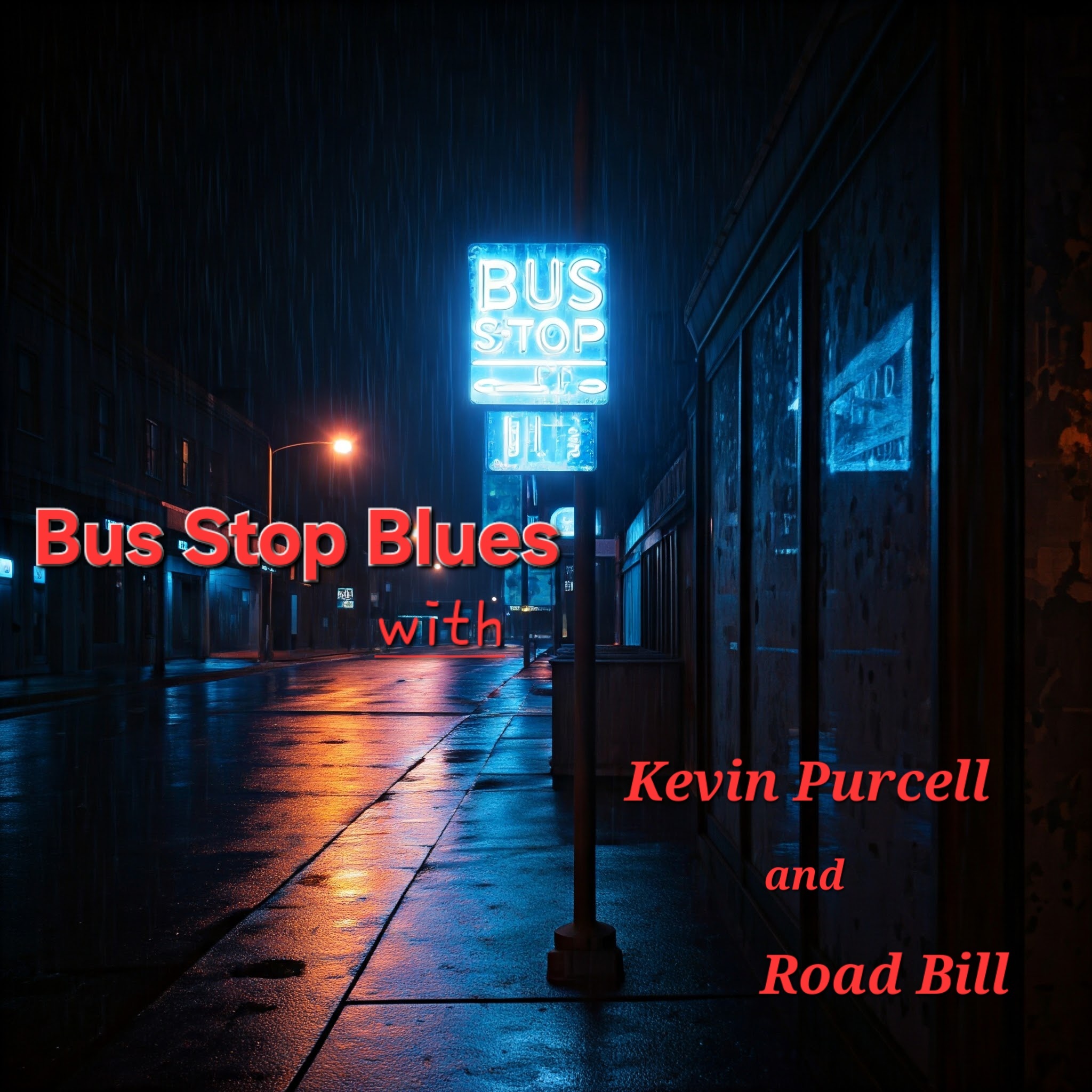
The Bus Stop Blues’s Podcast
thebusstopblues