
Rock n Roll Chicago Podcast
The Rock n Roll Chicago Podcast is a weekly podcast that interviews bands and musicians from the Chicago area. The podcast is hosted by Ray Bernadisius ("Ray the Roadie") and Mike Metoyer ("Hollywood Mike" of Cadillac Groove, Mike & The Stillmasters). The podcast covers a wide range of topics, including the history of rock n roll in Chicago, the current state of the scene, and the challenges and opportunities facing musicians today.
Founded in 2019 by Ray the Roadie and Paul Martin, the two co-hosted the show until 2022. In 2023 Ray was joined by Mike Metoyer as the new show co-host.
The Rock n Roll Chicago Podcast is a great resource for fans of rock n roll and musicians alike. The podcast is informative, entertaining, and inspiring. It is a must-listen for anyone who loves rock n roll and wants to learn more about the Chicago music scene.
Here are some of the things you can expect to hear on the Rock n Roll Chicago Podcast:
Interviews with bands and musicians from the Chicago area
Discussions about the history of rock n roll in Chicago
Information about upcoming concerts and events
Tips and advice for musicians
And much more!
If you're a fan of rock n roll, or if you're just curious about the Chicago music scene, then you need to check out the Rock n Roll Chicago Podcast. You can find the podcast on iTunes, Spotify, and other major podcast platforms.
Show your support of the podcast and visit our Swag Store. Just click copy and paste this link in your browser: https://tinyurl.com/yr5pa7zt
The Rock n Roll Chicago Podcast is edited by Paul Martin.
Theme song courtesy of M&R Rush.
Rock n Roll Chicago Podcast
Ep 293 Tyler Holcomb
Use Left/Right to seek, Home/End to jump to start or end. Hold shift to jump forward or backward.
Tyler Holcomb is a veteran singer and musician from the Chicagoland area, best known for his work in popular local rock and tribute bands.
Performs as the lead singer for ARRA, one of Chicagoland's most prominent classic rock cover bands.
Co-founded the tribute act Bon Journeyed alongside long-time friend Matthew Pablecas, where Holcomb handles lead vocal duties on Journey tracks with a style close to Steve Perry.
Began performing at a young age, starting his first band at age 11. Early in his solo career, he signed a digital publishing deal in Nashville with The Cornelius Companies and has released solo projects, including his album Every Road.
Podcast edited by Paul Martin.
Theme song courtesy of M&R Rush.
www.rocknrollchicagopodcast.com
Coming to you from the studios at the Illinois Rock and Roll Museum on Route 66, it's the Rock and Roll Chicago Podcast. Hey everybody, it's Ray the Roadie. And this is Reverend Mike Hollywood, my son.
Bless you. How you doing? Still riding that Reverend thing, huh? Yeah, I am. You know what, it's with me now.
I was wondering why you had that collar on. Yeah, well, that's for a different reason. It's kind of a sadomasochistic thing.
Oh, I gotcha, I gotcha. But, you know, everybody heard about what's going on, you know, me marrying you and your lovely bride, and so I'm a reverend now. That's what it is.
Yeah, I even had somebody at the Candlelight Groove Show last week bring me up a business card, and it said it on there. Wow. That's kind of cool.
Pretty cool. I feel like I haven't seen you in like forever, but it's only been, well, you went golfing last week with the... I went out of town. Oh, you went out of town? I went out of town.
Oh, really? No? Okay. But I was out of town. Yeah? How was that? It's out there.
Yeah. Yeah. All right.
Well, hey, well, welcome back. All righty. Yeah.
Nice talking to you. Yeah. See you next week.
Later. Later. Who we got? Tyler Holcomb.
All right. So I think we have to add Tyler onto the list of multiple, like, appearances, don't we? This is number two. Is this two? This is two, yeah.
We've got some threes and fours. We do have some threes and fours. Who's our leader? Gosh, what's his name? The drummer.
Aren't we terrible? Yeah, we are. Buddy Rich Band. No, not Potter.
No, not Potter. Oh, who was it? Oh, God, I can't remember now. Oh, well, that's okay.
We'll figure it out. We'll figure it out somehow. Yeah.
So how long ago was it? It was about two... Two and a half years ago. Two and a half years ago. It was March of 2024, which is wild.
You remember that date exactly? Well, because I had to look it up on our website today and say, when was that exactly? But it was, yeah, it was March of 2024. And I can't believe it's been two and a half years. Yeah.
It'll be three years in, you know, this March. So it's, uh, yeah. Time flies when you're having fun, right? And rocking.
Greg Rapp. Oh, that's right. Greg Rapp.
He's been here like four times. Yeah, he's been here so many times. Yeah.
How can we forget about Greg? Yeah. He comes in. I think he's a chameleon.
He just changes bands to come in because he wants to hang out with us in this cool place. Yeah. I think Brian McKenna's up there with him too.
Yeah. Yeah. I think so.
Because he plays with everybody. Yeah. Yeah.
Yeah. Oh yeah. He's been here like three times.
Hasn't he? At least. Yeah. At least.
Yeah. Okay. So you're on your way too.
So join another band and be here for dessert. Well, you know, I think I'm good where I'm at right now. I've got, I've got enough, enough irons in the fire.
So we'll just, we'll stick with that. Yeah. With, uh, the solo album and, uh, ARA and the new band Bond Journeyed.
It's, uh, definitely enough to keep things going. You're in Bond Journeyed. Yeah.
I've been seeing that name and I'm like, who is doing this? Yeah. So I guess I, I, I can't make my Bon Jovian drink. No, you can't.
No. That part of the show is over with. Yeah.
No kidding. No kidding. So I've been seeing you around.
So that band's playing, well, I don't know if a lot, but enough, right? Yeah. I mean, I think the strategy behind it was to, you know, build something that we can do kind of bigger, uh, theater type shows. Um, we put a lot into the production of it, you know, we've got a video wall behind us.
So the, the goal with that, with everybody's schedules is let's, let's play less. Let's make it more of an event. Let's make it more of a, a big show type feel, which is what we've been able to do.
And so, yeah, we're going on our third, uh, this fall will be our third year Bond Journeyed already. And so ARA takes up the majority of the schedule, but, uh, we're doing about two to three shows a month with, with Bond Journeyed and it's, it's working out great because the schedule is, you know, uh, we're able to tour a little bit outside Chicago. We do some of the theaters and, you know, Indiana, Wisconsin, obviously outside of Chicago, a little bit more.
So the routing works out good. You're not kind of diluting everything here in the Chicago land area, which as you know, it's easy to do if you're not careful. Right.
So yes, it's worked, worked out great. And, uh, you know, I sing all the Steve Perry and my partner in map obliques is in a band called, Oh yes. Okay.
And he does the Bon Jovi. So we're splitting, splitting the front man duties. And so altering, it works out great.
Not burning out that voice anymore. And, uh, it's been great. It's been like a rocket ship and, uh, uh, couldn't, couldn't ask for anything, anything better.
Is there overlap with members in, in ARA and Bond Journeyed? Uh, not in ARA. Not in ARA. In, Oh yes.
So there's Brian Sheridan who plays bass and I sing backup vocals with Matt and Oh yes. And then, uh, Doc Watson, uh, uh, Robert Watson plays keyboards with Matt and Oh yes. And in Bond Journeyed.
And then, uh, on drums, we have Joe powder Lynch was my buddy for 25 years. And then also we have Marty, the great Marty Craven. Oh yeah.
And guitar. Nice. Nice.
So I've been trying to get Marty, one of my bands for 25 years. I finally took him to agree to cover two bands before he'd agreed to play guitar one band. Now we've had Marty here too.
What was, I forgot who Marty was here with. We've had Marty in the, in the studio. Was it Rock Brigade? No, it wasn't Rock Brigade.
I can't remember who it was, but I'm pretty sure Marty was here and I can't remember what band it, what band it was. Okay. But no, that sounds interesting.
I'm glad that's working out for you. It's been, it's been great. You know, it's one of those, one of those things a little bit, be careful what you wish for, right? Because your schedule just, all of a sudden you turn around and you have normal, no more weekends free and no free time.
But you know what? You can't complain when you, when you, when that ship is taken off, you got to jump on board and, and take it for everything it's worth. Yeah. Yeah.
You're preaching to the Reverend. Yeah. Right.
You really are. Yeah. Yeah.
So where does this country thing come from? You know, that's, that's a great question because I don't, I don't listen to a ton of country. You know, I, I, you know, obviously I like, you know, Rascal Flats and I like, you know, some of the older stuff from, you know, the nineties and two thousands, but when I write songs, it comes out country and it kind of always has. And I don't know why, you know, the bands I listened to are, you know, Firehouse, some of the eighties stuff, like more obscure stuff in the eighties, Saints and Sinners, you know, stuff that a lot of people don't listen to that, but I get, I go deep into, but when I write songs, they tend to come out country.
Yeah. And when I started, when I started in, in this town, I was really trying to go for, you know, being an original artist and writing my own music and writing my own songs. Um, I, I went down to Nashville in the early two thousands and, uh, recorded some demos down there and, uh, got some great feedback.
Everyone said, you sound great. You look great. Uh, I was 25, 26 years old.
I was all excited. I thought I was on my way. Um, and basically they said, if you want to make it in this town though, you have to be here.
You have to, you know, lay everything on the line, give up your career. I just started a career in medical sales as a 25, 26 years old. Right.
Um, I had a fiance and, uh, I just wasn't ready to kind of make that leap and give that all up and go all in. And, uh, I, you know, I had some success and some people listen to the demos. I actually signed one of the, um, I would call it maybe one of the first digital, uh, distribution deals out of Nashville with a company, the company called the Cornelius companies.
It was Don Cornelius, not, not from Soul Train, but the country, the country, Don Cornelius, who is a kind of an old session guy from the sixties and seventies. And he put a publishing company together and we did some stuff and, you know, I, I signed the deal and, and, you know, about four or five years went by and nothing really happened. And I was like, okay, well that was fun.
And all of a sudden this thing called, you know, digital streaming came out in like 2005, 2006, 2007. And the demos that I put out were all of a sudden streaming online on Apple music, on Spotify and some of these early versions of what we know as the digital kind of boom and digital distribution that we have now. And I would go to my mailbox and there would be like a, a check in there for $7 or $8.
And I'm like, okay, well maybe there's something to this. And I'm like, okay, well at least like what I signed was real in some, in some degree, but it kind of always, you know, stayed with me. But by that time, you know, I'd kind of bridged that gap and got gone into the cover scene and the tribute scene in Chicago and had started singing with Hairbangers Ball.
I was also doing some work with R, singing for R about that time as well, and kind of bouncing between those bands. And for the last, you know, 15, call it 20 years, I've been in this, this path of paying tribute to the bands that we love. Yeah.
And it was just time to, to put these, these ideas and these thoughts I had and, and write, write some music again. But once again, Ray, it came out country. And so why, why, why change it? Yeah.
No, that's interesting that, that when, that when you write, you sound different than what you actually, but, but now I'm really curious to see if you actually do sound different from the bands that you love. That's going to be interesting when we, when we ask you to play a little bit in the studio. But I mean, I totally get that though, because I am the same way.
When I write, most of the stuff that I write is like country sounding and blues, but I listen to absolutely everything. So we'll see, we'll see. This will be, this will be interesting.
Isn't it strange how that works? How it's just like, you have, you have, you have all these influences. And then when you sit down and try to write something, maybe, maybe that's a version of the real you. I don't know.
Could be, could be. I've listened to the album a few times. I really like it.
I think, I think that's the next song, the version of the real you. That might be your next song. I like that.
Can I borrow that? Yeah, there you go. Our $7 royalties. Yeah.
So, yeah, that's right. Yeah. But you know, you, I'll tell you what, you hit the nail on the head because, you know, I don't know, maybe within the last 10 years or so is when it, when it really took off.
And you're exactly right. I mean, I've done the Nashville thing. I've done the LA thing, you know, I've, I've tried, I've tried to, you know, at one point in time tried to make it not wholeheartedly, but did the things that I thought that I needed to do right.
And the, and whenever I heard anybody say, well, if you want to make it in, you know, in this town, kid, you got to be here, or you got to play this place, or you got to do this, you got to listen to this guy, or you got to record it this way, the way we tell you and stuff like that. All that did was teach me that, okay, I probably shouldn't be doing it that way. And I think that's the mentality that everybody takes now that the whole streaming thing is available to everybody.
And you can record a song sitting at your kitchen table, you know, even though you might not be using real instruments, as long as it's your song, and your music and your idea, and you're putting it down. And because you can, you can easily duplicate it on a guitar or a piano with drums or whatever, whatever it is. But people are able to do that stuff nowadays and put their music on their own.
And there are literally thousands of bands out there now that are getting success, both commercially, financially, whatever you want to say. And they've never had to work with a record company. Yeah.
What about that time? What about that time that you were trying to be a drag queen? Oh, yeah. You know what? That didn't work out too well. That didn't work out either? No, it didn't work out too well.
You know, I couldn't find a bra with, you know, to hold my biceps and my pecs. Oh, I gotcha. I gotcha.
But you know, Mike, that is something that I think you, you touched on. I think the big difference between putting out the original stuff now and 20 years ago was that I did all that work 20 years ago. And the only people that heard it were the people I shopped to in Nashville or the thousand CDs I bought on CD Baby and handed out to my friends and family.
Right. Right. The difference now is I can, I can put it, I can put it on, I can put it on Facebook.
I could post it out there. I'm distracted. Yes, that's me.
Yes, that's me in drag. Yes, that's me in drag. I, I, I, I, I performed with my band.
We performed the Rocky Horror Picture Show soundtrack live at a bar. And they did it well. And I said, I am not going to dress the way Tim Curry dressed.
God rest his soul. God rest his soul. Just lost him.
Oh yeah. We just talked about it before we came in here, right? Yeah. Yeah.
I think he, uh, he'd been sick for a long time. He'd been sick for a long time. He had a stroke, I think about 15 years ago.
He'd been wheelchair ridden for a long time. He'd been sick for a while. But, but when I did that, I said, I'm not going to wear the same outfit.
I'm not going to emulate him. So I'm going to be my version of Frankenfurter. Right.
So it was, I, I wore my, my motorcycle vest with my chaps and a pair of very small gold underwear underneath the chaps. And then, but I actually had a real drag queen, a friend of mine do my makeup and everything. So I like to see that video.
I'm sure there is one. I'm sure there's one somewhere. Yeah.
But anyways, before we were rudely interrupted. No, I was, I was just saying, I think, I think the reward system's in place now. And the reward system for me is just getting people to hear it.
Right. And you could post it on Facebook and all of a sudden 4,000 of your friends. Yeah.
They can choose to listen to your music. And I mean, I, I wouldn't be here if, you know, Ray wouldn't have heard it, you know, from, from social media and the, and the, and the push that I did. And so I think for me, uh, if this would have been available, you know, maybe 20 years ago, it would have been a little bit of a different story.
And maybe it would have fueled me to keep going down this original path versus now, you know, I'm 50 now and it's a different deal. And now it's just about, I want people to hear this stuff. I want, if it brings some joy to somebody's day and they want to listen to it, that's, that's the reward.
Absolutely. Absolutely. Well, actually, I mean, look at our little podcast here.
All we're doing is sitting in a room, interviewing local musicians like yourself, and we reach thousands and thousands of people. And we're in what, 41 countries? Something like that all over the world. And it wasn't a thing in 2003 or 2004, 2005.
It was like, you know, the first podcast were being, uh, you could, I think you could go on early, um, Apple music and download them. Right. You could put them on the, remember the, the old iPods that had the dial on them, right.
You know? And I think it was like Adam Curry from MTV had one of the first ones, I think. Right. He was Joe Rogan.
Yeah. And Joe Rogan. Yeah.
Yeah. But I mean, you think about it, you know, you know, not that I'm comparing us to, to this legend by any means, but Larry Lujan was on the radio, right? Did Larry Lujan reach 41 countries? No. Well, I don't know.
He was at WLS. He wasn't, he wasn't WLS, but I don't know the reach of WLS was, I don't know. You can get it all the way down in Miami.
Yeah. So there, I'm sure they got it in Mexico, Canada. Yeah.
But not Europe or anything. Yeah. Like 41 countries.
I mean, there's, I mean. There was one time the second most popular country that listened to us was India. No idea why.
Isn't that interesting? And your episode 293. I never saw we did this many yet. Yeah.
You know. Oh, this one right now? Yeah. That's awesome.
200. Wow. Coming up on 300.
We got to have a party for 300. We should. How many years has it been? Started in 2019.
Okay. You know, went a little slow during the pandemic and all. Right.
And then had a little break because my original co-host, Paul, he left. And then Mike came on. Yeah.
Yeah. But Paul, he still does it. He does.
All right. I read that. Yeah.
He still does all already. Hi, Paulie. So, hey, you know what? I think we're at that time.
You think so? Yeah. It's time that we take a little bit of a break here. Okay.
And we're going to tune up a guitar. And make a sandwich or something. Yep.
Do that and come back. And we're going to get some live music in the studio. I think.
All righty. We'll be right back. All right.
You're listening to the Rock and Roll Chicago podcast. Your Sunday nights just got a whole lot bluesier. Get ready for the Bus Stop Blues.
The show that takes you deep into the soul of the blues. With classic hits, road stories, and live jam sessions. Hosted by blues man, Kevin Purcell.
And me, the one and only, Road Bill. The Bus Stop Blues is two hours of nonstop blues, banter, and badassery. Check out the Bus Stop Blues podcast at thebusstopblues.com. Where you can listen on Spotify, iHeart, Apple Podcasts, or any other major podcast platform.
Up on board the Bus Stop Blues. Where the blues never stops rolling. All right, everybody.
We are back in the studio. And we are going to get some live music. And I think you're really going to enjoy this.
I'm just going to finish this sandwich while he plays. Yeah. You go right ahead.
Just don't spill on the guitar. So tell us a little bit about the song you're about to play. So this song is called Forever Isn't Long Enough.
It's going to be the second single. And I wrote it about my beautiful fiancee, Tonya Lang, who's in the studio. She's sitting right here.
And he didn't say that just because she's sitting here. So it's that feeling when you find that person in your life. And you just wish you could have them forever and ever.
And sometimes that's just not long enough. There you go. Wow, that's so sappy.
And it goes like this. Every road I travel on, just led me back to you. Now I'm standing here beside you.
Where my heart was always true. Forever isn't long enough. The time we spent apart.
Moments that were wasted. I keep it close within my heart. Nights when you were lonely.
Makes me sad I wasn't there. Late tomorrow lasts this time. Cause forever isn't fair.
I hear the echoes of your voice. In every empty room. Like a light that kept on burning through the silence and the gloom.
But love can make through storms and years. And love can still survive. Now I'll spend the rest of my days.
Making up for lost time. Forever isn't long enough. The time we spent apart.
Moments that were wasted. I keep it close within my heart. Nights when you were lonely.
Makes me sad I wasn't there. Late tomorrow lasts this time. Cause forever isn't fair.
No more shadows in the doorways. No more tears left to hide. If forever isn't fair enough.
Then stay right by my side. And forever isn't long enough. The time we spent apart.
The moments they were wasted. I keep you close within my heart. Nights when you were lonely.
Makes me sad I wasn't there. Late tomorrow lasts this time. Cause forever isn't fair.
Oh my god, I totally wanted to throw a guitar solo in there somewhere for you. Thank you. Oh man, I really did.
When we play out, listen to the album. It's on there. Yeah, yeah, yeah.
I totally, totally wanted to throw a guitar solo in there for you. I was like, damn, of all times not to have a guitar. Oh, we still got that thing in the corner.
Oh wow, that thing's been sitting here forever. We have no idea who it belongs to. There were actually three leads on the album that I played.
And that was one of them. So yeah, you could have done much better, I'm sure. But I don't know.
But I don't know. That was great. I loved that.
Thank you. God, I did that one. Can you blame me? Hey, no, I can't.
So this record company you signed with, did they do anything for you? I mean, the original one back in the 2000s. I mean, the Cornelius Company, yeah. I mean, I got like, I would say probably $150 in royalty checks over the years.
Yeah, yeah, a whole $150. But you know, again, it was one of those things where it's like, you know, back then, if I probably would have hustled and laid it on the line and put a band behind it and toured and did all the work in Nashville that you did, you know, here in Chicago, maybe could have been different, right? But it's okay. You know, for me, I feel incredibly blessed because I've been able to kind of have that rock star lifestyle, have the balance of having a career, have a beautiful family life.
I'm not sure if you go all in on that path, whether it turns out great for everybody. And it seems like it's a treacherous path when you look at it. You are 100% correct there.
Yeah, there is. Because you hear all kinds of stories. You know, we talk about it all the time.
The famous musicians that you know of, the people who, the millionaire rock stars, it's less than 1% of the people who are actually making their living as musicians. That's right. So you think of how many there's been over the years.
That's less than 1% of the people that are actually out there making their living as musicians. Right. And then think of all the musicians that aren't able to make a living doing it.
That's right. And then the ones that do, you know, are they happy? I mean, you hear a lot of tough stories, right? I mean, about what that path looks like. So, you know, I'm glad it worked out the way it did.
I'm thankful now that they had the opportunity with social media to push the original stuff out there and then still have the balance to play in front of thousands of people with Aura and now Bon Journeyed. But, you know, you can see very easily how, you know, when you're doing this weekend after weekend and you're on the road and, you know, even when I was in Hairbanger's Ball, we toured quite a bit. Right.
And you can see how you can get sucked down a path. Right. And you can see after you're partying, you're having a great time.
You know, you go Thursday night, you know, in Bloomington, Friday night in Indianapolis, you know, Saturday over to ISU playing Daddios. Yeah. Before, you know, you're like, OK, like Sunday, like I've got to drive home now, you know, but like you could see if that if that if that pattern continues, like how sustainable is that? So for me, I feel blessed that to have the balance of playing in front of thousands of people every weekend in the in the tribute bands and that I've been in and been blessed to do it for this many years.
And now, you know, on the side, come back to the original stuff that's always kind of been calling and kind of where I started. Yeah, yeah, yeah. You know, I think, you know, we've been having more and more original artists and songwriters on the show.
And I think my favorite songwriters are people who have lived a multifaceted life, people who have experienced, you know, maybe the life of a rock star, have a day job, right? They're raising kids, paying off student loans. They're doing all those different because you write about what you know, right? You've got more things to write about when you've lived that kind of life versus, you know, 20 years in the back of a Winnebago with more smelly guys, you know? Yeah, sure. Do you ever do you ever feel this way, Michael? Like you have this weekend persona, right, where you're the front man, the musician, and all of a sudden you have your day job.
And maybe like, I don't know, most of the people in your day job don't know what you do on the weekends. You know, it's a weird dynamic when you're kind of weaving in and out of those. And then sometimes those worlds collide.
Yeah, I mean, talk about great material, right? I mean, that's great material. So yeah, it's been interesting to kind of navigate all that. And again, I feel obviously incredibly blessed where I've landed now.
And yeah, it's been it's been a fun ride. You know, it's funny that you that you said that because I literally did that two days ago. Like I let the people in my day job know who I am on the weekends for years.
I've known some of these people for decades. Yeah. And they had no idea because I kept it secret.
I kept it. I kept it private. So I had to lead this this national sales meeting through video conference, like 180 people around there.
And so I took the opportunity to introduce myself to a lot of people that didn't know me that I haven't met around the world. And the very second slide of my presentation was and this is also me. And it's this picture that a photographer took of me on stage wearing this multicolored shirt and this cowboy hat.
And I got my arms up in the air and my less balls hanging around my neck like that. And you see this crowd behind me and lights and stuff. And you heard this collective gasp of people.
They're like, that's you. And it's like, yeah, yeah, I don't play golf. I don't play video games or do any of the stupid shit that salespeople are supposed to do.
I, I play rock and roll music on the weekends. And then I said, and the amazing thing about it is, I guess I'm good enough because people let me do it in front of other people. Yeah.
Yeah. And, and now the next time they see you, you're not going to be just the, the, the VP of sales or head of sales, right? You're now the, you're now the, you know, the rock star and they'll remember you. He's a badass.
He plays guitar. I've been able to use it selectively, like in my career to like really, you know, whether it was, you know, with, uh, I'm in medical sales, so, you know, doctors, physicians, nurses, you know, invite them out. So they come out to a show, they have a great time.
You put them on the VIP list, you know, make them feel special. Now, next time you come in, you're not just the sales rep, right? You're the, you're the guy that entertained them and they, they don't forget. They remember you.
So, but you have to be, I think, selective about it because not everybody is going to maybe take that the same way. Right. And I think it's gotten more accepted over time.
Um, but, uh, certainly I think now it's, um, you know, you could use it to your advantage for sure. Yeah. Yeah, exactly.
Oh, that's great. That's great. It's a good outlook to have too.
Yeah. So what do you have? No, I don't even know if I should ask this. Oh, what the hell? What's, what's more, let's put it this way.
What's more fulfilling to you playing with a large band or, or, or doing this, doing your own thing? What's more fulfilling? There's gotta be different facets to it, different aspects to it. You know, I, I think the playing in front of a large crowd is, is like the short term energy boost, right. And the short term, um, fulfillment.
Right. Right. And you get, you kind of get that every weekend, you get that little boost.
Right. And like, you know, I even noticed like, I'm, I'm thankful when we have weekends off because we, we do work so much, we do like, you know, 90 to a hundred shows a year. It's great to have a weekend off.
But I, I do notice, and she'll, she'll tell you by the, by the, that second weekend, I'm pacing around the house by like Thursday and Friday. Right, right, right. So I'm grateful and I love that for the short term energy boost.
I think for the, the fulfillment of the soul is where the original stuff has come in. Right. You know, and, and my, you know, like so many other people, I think I, I did a lot of soul searching during COVID, um, had some extra time and I was like, okay, I'm gonna, I'm gonna dive back into this world.
Right. Because it's, it's a scary place to go to because once you start, if you leave that, the way my personality is, if I leave that unfinished or unattended to. Right.
It's not gonna, it's, it's gonna hurt me in other facets of my life. Of course. So I had to make the conscious decision that, okay, it's time, I'm gonna do it.
Yeah. And it was a six year process, you know, to, to come up with 13 original songs and figure out a, figure out a workflow that worked for me and the technology and it was changing and you got different ways of recording and finding the right guys. And, um, you finish a song and then you, you redo it again because you have a different vision for it now, or it doesn't mean the same anymore.
So I would say that the, the, the long answer to your, to your question is that the original music is the long-term food for the soul. Yeah. And the weekend gigs with, with the tribute and cover bands is the, the short-term energy boost to get you to the next week.
Yeah. If that makes sense, do you understand that? I totally understand that. I totally get that.
And like, if we have too many days off in a row, my wife knows it. She's like, when do you have another gig? You're being an asshole. You get edgy, you get a little punchy, right? You get a little edgy.
Yeah. She yells at me. She says, will you sit down already? Like sit your butt down.
You're just, you're pacing right now. And I'm like, I don't even know what I'm doing. You don't have to shake your head.
You can say, yeah. So do you go to his shows? Do you go into like every one of them? I go to quite a few of them. Yes.
Yeah. Yes. And do you enjoy it? I do.
Yeah. It's a lot of fun. Now I'm selling merch.
So that's exciting. Oh, I see. That's what you got to do.
You got that. Now she's working. So yeah.
Yeah, absolutely. Yeah. Well, that's, I mean, how many times can you hear don't stop believing, you know? I can almost put it, I can, I can almost put a number on it.
Right. Yeah. Right.
Exactly. Yeah. Okay.
I still love the song. Don't get me wrong, but. Oh yeah.
Yeah. It's something different if you're hearing it every, every weekend, right? Right. And not performing it.
She's like, I'm not that one again. Geez, please. Yeah.
Performing it and having to listen to it are two completely different things. Yeah. Yeah.
And she's like, thank God he knows how to play it so well because I couldn't listen to him rehearsing and practicing it over and over again at home too. So, so before I ask my, my next deep question, I guess I have to ask you, how many times do you think you've performed that song? Okay. Well, I mean, 90 shows a year for the last 20 years.
So I mean, I mean, what is that? Like 1900, something like that. Yeah. Yeah.
Something like that. Yeah. Something like that.
I mean, it's close. You know? Absolutely. I think that's how many times I've performed Uptown Funk by Bruno Mars.
It's going on about the same. When did that song come out? 2016, 2013. No, no.
Cause that song is like 15 years old. Okay. Yeah.
It was like 2005, 2006, something like that, I think is when it came out. So yeah, I've been performing that song. Same thing, 90 shows a year.
Do you still like it? No. No. Okay.
No, I actually never did love the song. Okay. I liked the reaction that I got from the crowd and we do this really cool thing.
Cause you know, it's just got that basic funk beat. So we, we, we throw in a couple of songs. So we got, we got the horn section and stuff and kind of like, so we do like, we throw in a couple of songs by the Gap Band.
And we do, we do, um, we do the bird by the time and we do it all to that Uptown Funk rhythm. So we've turned it into like this 15 minute long medley kind of thing where we go through each one of the songs and stuff. And we've got this schtick surrounding it and the crowd reaction is always great.
But geez, I don't want to sing that song. If it comes on the radio, do you listen to it? No. No.
You listen to Don't Stop Believin'? I do. Yeah. I do.
And I think it's because of Steve Perry's voice. Oh yeah. And I think because every time I listen to it, I hear something different.
Yeah. And it's, it's, you know, I, there's, there's a nuance to his voice and, you know, sometimes he sings, he's actually sharp on the record. Oh yeah.
You know, he's, he's over the note and you know, and I'm like, okay, well, like he's singing a little sharp there. And it's like, you pick up on all these little nuance things. He, she wants me to turn the channel, I'm sure.
Yeah. But I'm like, okay, I'm just trying to pick up little, little things, but I, but I know that feeling. There are definitely some songs that we play over and over again that as soon as it comes on the radio, I'm, I'm out.
So do you, are you trying to sing like Steve Perry or are you trying to sing like Tyler? Trying to, I try to sing like Steve Perry in Tyler's voice. Okay. You know, I tried, I tried it.
I'm never, no one's ever going to sound like Steve Perry, right? Even Arnell, even Hugo Valente, who's amazing. Um, you guys know who that guy is? Yeah. The guy who looks just like Steve Perry.
He looks exactly like him. He sounds a lot like him. He's got the, he has the head, head voice thing down.
He doesn't have the same chest voice, but he's, he's got the tone down. But for me, Ray, it's trying to pick up the, like the little nuances, you know, the little Sam Cooke vocal runs, you know, all that, all that little stuff that made Steve Perry, Steve Perry, you know, because Steve Perry was influenced by Sam Cooke, you know, all day long, all those, all those sixties, you know, type of soulful runs. And, you know, you make me, I mean, all that stuff, Sam Cooke, you know, all of it, all of it.
And, uh, so for me, it's like, okay, what, what can I do in my voice that, that picks up on that persona and try to pull that into my performances? Yeah. Yeah. You know, being in, I've been in a lot of cover bands and cover bands that were, we've done such a huge spectrum of music.
I mean, we could be doing a Muddy Waters song and the very next song is System of a Down. I mean, we, I've been, I've been in bands like that. What was that band called? That band was called Static.
That band was called Static. And that might be actually the first time we met because I think Static opened up for ARA at 115 Bourbon Street years ago. Back when the, back when the main stage was actually kind of off the side, down the corridor that led to the, to where the new bar is.
Yeah, yeah, yeah, yeah, exactly. So the little stage, the first stage. Yeah.
The first stage. That might be the first time that, that you and I met, or at least, at least, uh, brushed elbows together or something, but yeah. You apparently didn't leave a good impression on him.
Maybe I didn't. I don't know. Who knows? But, but, uh, but I, I, I don't try to imitate the singer, but I, but the one thing that I think is important is, is that you kind of get the diction down, you know, you don't have to sound like Steve Perry, but if you don't do those vocal runs, it's not going to sound anything like Journey.
That's right. See, that's, that's the, that's the thing. Trying to get the character, get the character while you're trying to get across.
Exactly. Like, like I was in a, God, I can't believe I actually ever did this, but I was in a band where we covered Green Day. And if you don't get the, do you have the time? You know, if you don't, if you don't sound like that, it doesn't sound like Green Day.
You can't be up there and be like, do you have the time? It doesn't sound like Green Day. Right, right. Yeah, exactly.
So it's, it's not that you're trying to imitate the person. You got to get the diction down because it just doesn't sound right. So totally getting back to, yeah.
Often played songs. I always wanted to ask ZZ Top. How many times have you played La Grange? And do you still like playing it after what? 40, 50 years? Now I will tell you, I do see that now.
See, that's like my Steve Perry for, for him because Billy Gibbons is one of the reasons why I play guitar and that's the sound that I like. So, and plus I prefer blues and Southern rock over everything else. So I absolutely love ZZ Top.
You guys do La Grange? Yes, we do. We do La Grange. You play it on the solo? Do you do the solos on it? Me and the other, I'm not the lead guitarist.
Scott Evans is our lead guitarist, but that's a song where we actually split the lead solos. Sweet. So I do the first one, which is in the key of C and then he does the second one, which is the slide solo and when it modulates back to the A, so we split those.
Oh, sweet. Yeah. That's cool.
We have a, we have a good time with that song. What didn't, well, we lost another one, right? Frank Beard. We lost so many musicians in the past week or so.
Of course, we lost Dolly and we did a tribute to Dolly in our last show and- Oh, cool. And then we, then of course- Shelley Fabry. Yeah, Shelley Fabry.
She died too. And a musician that not a lot of people have heard of, but blues hall of famer, Lattimore, Kenny Lattimore wrote the song Straight Now. That was probably his biggest hit.
He passed away last Saturday. Yeah, there's been a lot of people, a lot of people passed away. It reminds you.
We got to do it now. Yeah, do it now. If you want to put out an album, you want to write a song, do it now.
Don't let another 20 years go by. No, do it, do it now. Those days, you know how it is.
There's days where you're tired. You don't want to do the gig. You know, maybe the gig's not great, but you know what? We're the lucky ones that we can still do it.
And you have to sometimes tell yourself that like, look, get off your butt, get out there and sing, whether it's for 20 people or 2000 people and do the best you can because we're fortunate to be here on this earth doing what we love for people that love it. Absolutely, absolutely. With gratitude.
Speaking of which, what else you got prepared for us? Oh, man. Maybe a nice potato salad or could use that with that sandwich. Yeah, a baklava or something.
Yeah, I don't even know if I have another original prepared, but I could do a little cover of something. That'd be cool. Isn't that cool? Yeah, yeah.
So are you performing at all? The country stuff? I'm not. No. Just because I don't have the time right now to put the band together.
I would love to. You know, I would love to find some. The other challenging part about having original music in this town is it's tough, right? Like to book a show and to find musicians that would want to do it for, you know, a cold beer and a cheeseburger.
Yeah, yeah. It's tough, right, in this town? Because let's face it, a lot of the really good guys are working and busy and playing in bands. But there's nothing more gratifying than playing original music out.
That's for sure. You never consider doing it one-man band-like acoustically? Throw some covers in there? That could be an option. You know, that could be definitely an option.
I'm just thinking ways to get your music out there. You could perform exactly the way you just did right now. Yeah.
I mean, I would definitely consider that, you know? Maybe an acoustic guitar. Maybe a piano player would be kind of cool. You know, a keyboard player.
I'd take 10%. OK, all right. I like that.
Well, I'll tell you what. Let's take a real quick break and we're going to come back in just a second and get another tune. OK, be right back.
You're listening to the Rock and Roll Chicago podcast. We are back. Yes, we are.
Yes, we are. We got another song coming up with Tyler Holcomb. And we're not telling you what we did when we took that break either.
We're not. OK. I'll tell you what we did.
We learned another original of mine. That's what we did. We are going to do an original.
So this was the first single off of every road. And it's called Dam 65. All right.
And it's about that highway that goes from, you know, Northwest Indiana all the way down to Tennessee. Yeah. At 65, at Dam 65 that we love to hate, right? Yeah.
That's kind of what it's a fun road trip song. And it goes like this. You find yourself on a ramp that's going nowhere.
We're headed down that road where we will take us. Nobody knows. There's no turning back now.
The music is calling. That Dam 65, pull over, I'll drive. We're nine hours in.
I see the rise of the sun. Crank on Tennessee. Look what you're doing to me.
And there's nothing but blue in the sky. A little taste of Dam 65. Yeah, there you go.
We call that a parking lot song. You know, whenever somebody requests a song from Cadillac Groove or whoever I'm playing with, it's like, and we go out and we learn it on the break and we come back and play. We call it a parking lot song.
That's the number one song on his album. Very first. Yeah.
Excellent. Excellent. Yeah, no kidding.
Man, I don't. When did the album come out? We put it out. I put it out in the end of June.
Okay. June of this year, June 21st. Okay.
You know, it wasn't that long ago. Yeah. Cool.
Yeah, man. So how can people find and get information and get the album? Is it on every streaming service? Tell us about that. Yeah, thank you.
It's on Apple Music, Spotify, YouTube Music. You can go to Tyler Holcomb Music and listen to all the stuff in case you're not hooked up on those streaming platforms. You can go to the website and order.
If you still like the old hard copy version of the CD, you can order those off the website as well. Free shipping. And yeah, just trying to push it out anywhere and everywhere we can.
Yeah. Didn't do vinyl? I didn't do vinyl, but I like the sound of that. Yeah.
And I think it would be cool to have vinyl. Yeah. Nothing sounds like vinyl.
Yeah, I would totally do that. Have you done any vinyl with your stuff? Years ago, years ago. I have never done anything recently, but years ago.
In fact, the band we were talking about- He's talking about music, not your kitchen floor. Yeah, or the clothes that I was wearing during the Rocky Horror Show. But no, years ago in that band we talked about earlier, Static.
We went in and we recorded an album and we did it all analog. I mean, we did it on reel to reel tape the whole bit. Well, that's the key, right? You know, I think if you start in that analog world, there's even more incentive to finish in the true analog vinyl world.
And it's got such a cool sound because it's like, you know, you get the natural breakup and distortion from recording onto the reel to reel and then transferring onto the vinyl. And it's like I heard like distortion, natural distortion coming from my voice that you normally wouldn't hear. And it's there because it adds this extra thing to it.
And you can get that in plugins. Yeah, you can. But you can't get it in plugins.
You know what I mean? It's a different texture to it. Right. There's no doubt about it.
Right. Exactly. Exactly.
Yeah. So I wish, you know, I would love to see you play live. You know, I mean, I've seen you play live before, but I mean, to do your solo thing live would be pretty neat.
Thank you. Well, let us know. I mean, post, you know, if you do land some shows, make sure you post them to our fan page.
The friends page. Yeah, we have a quick stuff on the friends page. Yeah, that would be awesome.
Thank you so much. And go and download the album and everything, you know? That's right. Appreciate it.
And then if you do, let me know which song you like. And I'm curious to hear what's hitting with people. You know, it is cool to go on Apple, iTunes or Spotify, because you can see the most popular things, they light up, you know, and so it's like, OK, like, and more confirmation that people are hearing it.
Right. And that's really what it's all about. Yeah, yeah, yeah, yeah.
Well, one thing I forgot to do is to comment on it. That the last song that you just played, I heard the country in it a little bit more. OK.
It kind of had a, that kind of had a, it's just going to be kind of weird. It had kind of a John Hyatt feel to it. But when Kathy Mateo records John Hyatt's music, because Kathy Mateo has done a couple of his songs and put her own, like, spin on it.
The twang on it. So it kind of, so it kind of had that kind of feel to it. But the first song that you played, I heard, I heard the hair band influence.
Yeah, OK. I heard the Warrens. You heard the C.J. Snare hype.
Yeah, yeah, I heard, I heard that. Yeah, I heard like the Warrens feel, that kind of feel to it for sure. But yeah, no, I like that.
I'd love for you to hear it and tell me what you think, Mike. Yeah, I will. So what about album number two? Well, gosh, I'm just recovering over album number one.
But I was messing around with the idea the other day and someone goes, are we doing another one already? I'm like, well, maybe. Yeah. But again, I think it's making that conscious decision that, yeah, we're going to go down this path.
It's because it is a little bit like self-torture. Once you commit yourself to it, you have to commit to it. But you're doing it because this is what you want to do.
You're not signed with a record company that says, hey, where's that second album? Let's go, let's go. And you go, that's right. But it's like working out.
It's painful, it's hard, but you know it's good for you, so you're going to do it. So making that conscious decision that we're going to go into that world again, at least for me. Not quite time yet.
Yeah. But we will store the ideas or record them so we don't lose the hooks, right? That's also painful too, when you have that hook and you don't record it and then it's gone. It's gone forever.
Don't let that happen. Have an iPhone nearby. Right, right, right, right.
We used to have the tape recorders, remember? Yeah, that's right. We always walked around with the tape. Now we got the phone, just turn the phone on.
Yeah, exactly. It's probably recording us even if we don't want to know it's recording us anyway, right? Oh, it is because you talk about something and all of a sudden you're getting ads for stuff. And they deny it.
You know, half the songs I've written over the course of the last three to five years or so, it's a video and it's that angle of me because my phone's sitting there in a cup holder like that. That's a good song. And it clicked and I started humming a line or singing a tune or whatever like that.
And I go back and play it and I'm looking at myself. It's crazy. All right, everybody out there, get a hold of Tyler.
Let him know what songs you like and where you want to see him play. Yeah, that'd be great. Thank you guys.
We start a campaign for the first Tyler Holcomb solo show. That's right. And I only take 10%.
Yeah, there you go. All righty, Tyler. Good to see you again.
Thanks for coming in. Mike, good to see you. Thank you very much.
Good to see you. Good luck. Thanks.
Cheers. The Rock and Roll Chicago podcast is edited by Paul Martin. Theme song courtesy of MNR Rush.
The Rock and Roll Chicago podcast does not own the rights to any of the music heard on the show. The music is used to promote the guests that are featured.
People on this episode


Podcasts we love
Check out these other fine podcasts recommended by us, not an algorithm.
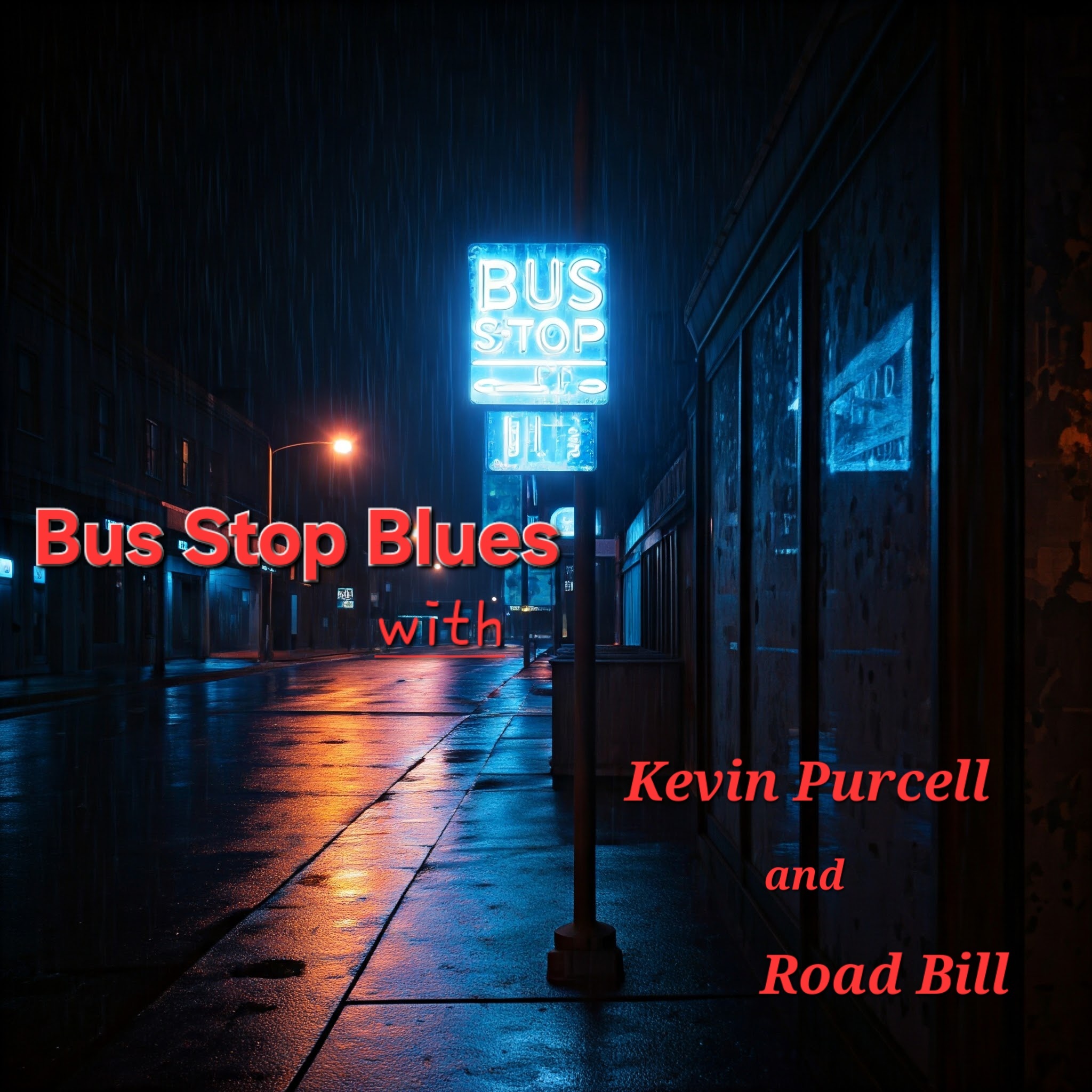
The Bus Stop Blues’s Podcast
thebusstopblues