
Rock n Roll Chicago Podcast
The Rock n Roll Chicago Podcast is a weekly podcast that interviews bands and musicians from the Chicago area. The podcast is hosted by Ray Bernadisius ("Ray the Roadie") and Mike Metoyer ("Hollywood Mike" of Cadillac Groove, Mike & The Stillmasters). The podcast covers a wide range of topics, including the history of rock n roll in Chicago, the current state of the scene, and the challenges and opportunities facing musicians today.
Founded in 2019 by Ray the Roadie and Paul Martin, the two co-hosted the show until 2022. In 2023 Ray was joined by Mike Metoyer as the new show co-host.
The Rock n Roll Chicago Podcast is a great resource for fans of rock n roll and musicians alike. The podcast is informative, entertaining, and inspiring. It is a must-listen for anyone who loves rock n roll and wants to learn more about the Chicago music scene.
Here are some of the things you can expect to hear on the Rock n Roll Chicago Podcast:
Interviews with bands and musicians from the Chicago area
Discussions about the history of rock n roll in Chicago
Information about upcoming concerts and events
Tips and advice for musicians
And much more!
If you're a fan of rock n roll, or if you're just curious about the Chicago music scene, then you need to check out the Rock n Roll Chicago Podcast. You can find the podcast on iTunes, Spotify, and other major podcast platforms.
Show your support of the podcast and visit our Swag Store. Just click copy and paste this link in your browser: https://tinyurl.com/yr5pa7zt
The Rock n Roll Chicago Podcast is edited by Paul Martin.
Theme song courtesy of M&R Rush.
Rock n Roll Chicago Podcast
Ep 297 Scott Carfello
Use Left/Right to seek, Home/End to jump to start or end. Hold shift to jump forward or backward.
Songwriter Scott Carfello joins us to discuss his songwriting and parodies he has produced.
Podcast edited by Paul Martin.
Theme song courtesy of M&R Rush.
www.rocknrollchicagopodcast.com
Coming to you from the studios at the Illinois Rock and Roll Museum on Route 66, it's the Rock and Roll Chicago podcast. Rock and Roll Chicago, Rock and Roll Hey everybody, it's Ray the Roadie. And this is tired-ass Hollywood.
Tired-ass, not even a reverend anymore. Not, not, well I said tired-ass, I, you know, I can't curse and be a reverend. Oh that's true, that's true.
I mean, I guess. So you're like a tired donkey. There you go, yeah.
A Hollywood donkey. Why are you so tired? I don't know, it's been a long day. I don't know why.
It's gloomy today too. No, I know, it's just terrible weather out. You know, yesterday it was like, it was like 85 degrees.
And then today I wake up and it's 66 and raining. We hit a record on Monday. Yeah, we did.
Set a new record. That's a cool thing. And everybody's sick.
I saw like, I saw like 12 clients today. They were all like sick and sniffling. I went, stay the hell away from me.
Exactly. I got two shows this weekend. I can't be showing up with all, you know, pussy and snotty and everything.
That's right. It's kind of disgusting. But now it's, you know, the weather's changing.
It's, uh, and I know you're a motorcycle guy. Yeah. You know, you like the outdoors and stuff.
I never asked you though. Are you a car fellow? Am I a car fellow? Yeah. You like cars and stuff? And yeah, I do like cars.
I'm a car fellow. Are you? Yeah. I know.
This guy over here is a car fellow too. Yeah, he is. Yeah.
Joining us tonight is Scott Carfellow. Who brought a fan base with him. Yes.
And came in on a motorcycle. How you doing, Scott? All right. Good, good, good.
So, uh, Scott and I know each other from, uh, my part-time job. Oh, porn, huh? Yeah. I thought he kind of looked like Ron Jeremy.
Yeah. Yeah. He would come in.
We'd just talk stuff, talk music. And he told me that he's a songwriter. Oh, no kidding.
Yeah. He's written a whole bunch of stuff. Really? Yes.
I've never heard of a damn thing. Well, it's primarily parodies. Okay.
But, uh, I'll let him talk about it. Yeah. Okay.
Well, go ahead. That's it. Yeah.
It started off as, uh, just wanted to do something funny and, uh, kind of a background story. And how'd that work out for you? Not at all. I realize I'm not a funny guy at all.
Yeah. I mean, there's nothing like a good joke and that's nothing like a good joke. Yeah.
So, uh, my dad was a funny guy. And when I was a kid, I thought, you know, he was the funniest guy on earth. And one of the things he used to do is he used to make fun of the jingles that came on the radio.
So whatever the thing was, whatever it ended in, he would rhyme that ending and sing his own verse. And it always involved, well, I was like eight or 10 years old. So it always involved shit or, you know, poop or piss or something or something.
So, and that was hilarious. Uh, so then when I started to think about doing this, I was thinking that, you know, I'll just take music that already exists for, for, for sake of disclosure, I'm not a musician. I'm trying to take piano lessons.
I have in the past, I'd taken guitar in the past that, but I don't play anything. If you gave me a guitar, I couldn't play anything other than like four of the notes to wipe out. Okay.
All right. Uh, and that's, Duh, duh, duh, duh. Yeah.
Yeah. I can name that song in four notes. Uh, and so I was, for whatever reason, talking to somebody about this strip club that we went to when we were young.
Involved here somewhere. Ray was the, at the door. Yep.
And next on the poll we have, yeah. It was one of these, if you're from the South suburbs, if you remember, it was in unincorporated Chicago Heights. It was called Johnny O's.
It was only open for like a couple of years, but whoever opened these clubs, I'm not going to say there was a criminal enterprise or anything else behind it. Not in Chicago Heights. No, no.
But they opened them and several places around the area in unincorporated parts of Cook County. Right. So the only police that had jurisdiction were the Cook County cops.
Right, right, right. And maybe they were not as excited about closing these places down as they should have been. So they stayed open for years, even though it was completely illegal.
Right. Full nudity, stripping, you know, but they didn't have a license because there's no license they could get for that because it was illegal. Right.
And so I went there and the name of it was Johnny O's. And I, for whatever reason, I started playing with that. And I said, well, you know, Johnny O's Jingle Bells.
And so that was one of the first songs that I wrote was Johnny O's to the tune of Jingle Bells. I knew we were coming back around some kind of way. That's why we got the strip clubs in a little bit.
Right. Well, and then the most of them are all based on Christmas songs. Not for any reason, you know, it's not anti-religious, not anti-Christmas.
You know, I was just trying to be funny. But everybody knows the tune. Right.
So I figured I can kind of buy into that. Right. So Johnny O's is about the strip club and I kind of a loser guy.
It's a little bit of a pathetic story that, you know, goes there to see his regular girl. And he's, you know, he talks about the fact that they're in love and that, and then his credit card gets denied. And then the conclusion to the song is he doesn't want to leave.
And he says, and then he wakes up in the parking lot on Christmas Eve. So that's the pathetic part of it. This is where he spends his Christmas Eve with what he thought was his love.
And Johnny O's, Johnny O's treats you like a king. If you want to spend enough, you can get anything. And Johnny O's, Johnny O's, this trip's just for you.
Just take some credit cards. Yeah, you're right. You know, and people do know the melody.
Yeah. So, I mean, they can kind of go, if you do something they don't know there, it's gonna be hard to understand. Well, and I didn't realize it when I started, but when I did do the first recording, you know, it was working with the singers.
So I really lucked out that they knew the melody to some extent, but then they had to learn how to sing different words to the words that were running around in their mind. And that was, that was at a garden apartment studio in Chicago. Johnny Esposito, if you've ever heard of him or not.
Yeah. Died a couple of years ago, I think. A friend of mine who was in music here, always in Chicago and that, and I was calling, I called him and told him what I was doing.
He said, it sounds like fun. I said, yeah, you know, I just took early leave from my job. I got nothing doing, so I'm going to play around with this.
So he hooked me up to him. He said, he's somebody you can work with. And it was great because Johnny called musicians for me, found music online.
I said, look, I want to make some CDs. He goes, that's good. That's what I do.
And I said, I'm not a musician. I'm not a singer. And he goes, well, what exactly are you going to bring to the package? So he brought in singers that he had known, many of them names you'd recognize.
They're Chicago people for years and years. I was really cool to work with them. That's cool.
So how many CDs do you have there? I mean, how many, how many CDs do you have? These are the two that I actually made. Okay. And this one has five songs on it and this one has just one.
Okay. And then these are some that I had. These are the masters from other songs that I've never put onto a CD.
I put them online for sale. Okay. And I'm probably right around 50 bucks so far.
Okay. That's more than some people over the course of what, seven years. Yeah, that's right.
So those mastered ones, so that somebody is singing on those. You had some little, yeah, they're just, okay. Yeah.
So, I mean, if somebody goes online and starts downloading some of these songs, about a thousand more copies and it's going to go aluminum. All right, I'll take it. So, I mean, so that's a good question.
So you're not a musician, you're not really a singer in the whole thing. You go to a guy that owns a recording studio and he makes his living recording. I mean, after he said, what are you fucking stupid? Then he says, okay, how are we supposed to do this? I mean, literally you just show up a pieces of paper with lyrics and you had all these musicians that were willing to sing and play the music for you? Well, first I went and met with him and we walked through it and I said, here's the lyrics I've got and this and that.
He said, okay. And I said, I don't, I don't sing, you know, I do sing, but nobody wants to hear me sing. Right.
And he said, okay, it was, I got people. He said, this, he goes, this is what it's going to cost you like this much for a song. He goes, I'll get them, I'll get them down as cheap as I can.
They'll come in here. It'll be fun. And that, and then he got background music online.
Right. Just picked it off at different places. Cause obviously there's 10,000 versions of Jingle Bells that you can just grab offline.
Sure. Sure. So it's, it's almost like he downloaded like, you know, voiceless tracks of these songs.
Exactly. That were available to the public for download. Yeah.
To be used for that. And then he says, you know, I'll get some musicians next time, our singers. So he said, you know, so you can interview, you know, interview them.
And I said, what am I going to ask? Do you speak English? Yes. Does your guitar have a strap? I'm going to sing something. Can you sing better than that? Okay.
Can you play more than four notes of Wipeout? So, okay. So, so obviously you're not performing these songs anywhere. No.
Okay. You, you just recorded these things. You put them online in hopes that, that you sell them.
And eventually you become the next Weird Al Yankovic or something like that. I'll blow Weird Al Yankovic away. Oh yeah.
Yeah. These are not, not necessarily for public broadcasting. Okay.
Some of these are a little dicey lyrics. Okay. And certainly the themes get more and more than the strip club.
Yeah. They get a little heavier. Right.
But that's all. But yeah, just to be funny. And if people like them, they could download them or, you know, sing it at a bar or that kind of stuff.
Right. Yeah. I mean, cause I mean, totally in the bands that I'm in, there's always somebody that decides to be a jokester.
And we changed the title and the name of a song, a very popular song. And 99.9 times, you know, it always ends up being like really dirty. Yeah.
That's the funniest way. It's the, it's the easiest way to do it. Yeah.
No, you go right to the core. Yeah. It really, it really is.
I mean, and some of them have been really raunchy. I mean, so raunchy. We've got a female singer in our band now and it's like, geez, don't say that in front of her.
It's disgusting. Oh yeah. I forgot about that.
Yeah. Yeah. Wow.
Excellent. So, so other than your father, what was your influence to start doing this? I mean, just, was that your one and only influence or were you a huge Weird Al fan when you were younger or? No. How did we get here? I thought he was kind of funny.
I, Weird Al, I mean, I don't mean to disrespect him and that, but not, not my bag, you know. Yeah. Let's eat it.
You know, that was cute, but. Yeah. But it wasn't dirty.
And it wasn't funny. Yeah. Like the Johnny O's one is not necessarily hilarious, but I think that it's a little clever because it does a kind of a story.
Right. And it's a pathetic story about guys who go to strip clubs, which is all of us. And always in the back of your mind, you're thinking, yeah, they do like me here.
These girls, they really do. They laugh when I say stuff and they always say hi to me and they come up and hug me. I think it's real.
It's not because I have dollar bills in my pocket. No, no, nothing to do with the money. Nothing.
No, nothing. No. Yeah.
So that one. So what else, so what else do you have? What are the other subject matters that we can explore? Okay. This is, I'm just reading right off the back of this CD.
The first song is I Came Upon Your Little Blue Dress. Very nice. It was just laying there in the street.
And I came upon it. Yeah. That's, I relate to this.
I came upon a midnight clear. Yeah. Yeah.
That's the story of Bill and Monica. I was going to say Bill and Monica. Yeah.
Yeah. Absolutely. It goes through everything that happened.
Allegedly. Yeah. Allegedly.
Yes. The next one, My Midwest Town of Chicago. That's just my exposition of the sad state of the city of Chicago.
Okay. With the governor, you know, whatever help he has to give and the mayor. But not this one.
Right. I wrote this six, eight years ago. Right.
And it's still perfectly in tune. Okay. Because nothing changes.
Yeah. It doesn't matter. I'm not talking politically.
It's not, oh, the Republicans are this, Democrats are that. The city of Chicago has been just historically in a slow death spiral. Yeah.
And nobody wants to step up and try and stop it. Right. Right, right.
You know what's, you know, on another note, you know what's funny about that? One of my favorite television shows of all time is All in the Family. And I stream it and I watch it and hope it. And this was a little while ago.
But my, I can't remember who was my son or my daughter. One of them. They come walking in there and they sit down and they're watching this and stuff.
And it was an episode where they're talking about the riots. They're talking about riots. My kids had no idea this was taking place in Queens, New York.
They had no idea or anything. And finally, it was, it was my daughter. She says, this is weird.
The show looks like it's old. But they're talking about the stuff on the news right now. It's like, who's doing this? And I was like, you don't understand.
This show is from like the 1970s. And that shit was still going on back in the 1970s. Right.
Nothing has changed. No. It's remarkable.
And that show was just so cutting edge back then. The name of the president was different. The name of the city was different.
But it was still different races and nationalities they were talking about. And they were writing and they were fighting over the same thing. And it was the, it was the, it was, it was liberals calling Republicans fascists.
And I mean, it was just, it was crazy. It was the same thing. Nothing has changed.
Nope. Yeah. But anyways, crazy.
Yeah. Needles in your butt. That's.
Oh, who is this guy? Needles. And what's he doing in my butt? And how come I didn't notice it before? That's like Eddie Murphy boogie in your butt. Remember that on the Eddie Murphy comedian album? Yeah.
So that has to do with, you know, again, the quick version that has to do with having sex under the Christmas tree, which the old Christmas trees, you know, the needles actually fell off when they were alive and that. So if you're, if whoever is on their butt underneath there, you're going to get somebody who's stuck in your butt again, just being funny. Yep.
Johnny O's. And then this one is just, the title is Merry fucking Christmas. Nice.
Get down to the point. Yep. Pretty much.
That's, that's the more religious one of all of them. Yes, it is. Yeah.
But that, that's with, you know, with caroling, I just thought about, you know, what if somebody doesn't want carolers coming to their house? Which is pretty much everybody nowadays. Yeah. Yeah.
Now we got to stand here. Yeah. Yeah.
So, you know, the chorus is, we wish you would fucking go home. We wish you would fucking go home. Yeah.
Leave me alone. I always thought, I always thought, in fact, like one of the guys at a different studio in Mokina that I did some of the other ones, he, he had a punk band, a little interested in covering that one at one time. And I think that would be good for somebody to do it.
They could speed it up a little bit and, and just tear it off. There's, there's money in that. So how many copies of these have you sold? You said it's, you're, you've got like 50 bucks.
Yeah. That's all from online. Right.
Right. And how much did you sell them for? Online? They're 99 cents. The songs.
So you have sold like 50 copies of this? Yeah. Wow. Yeah.
That's not bad. I think some of them, I don't think, I don't think they get a full 99 cents. Right.
So maybe I've sold 60. Yeah. Yeah.
Cause I'm already, I'm already, you know, massaging the numbers. Yeah. I know you're on Apple music or, you know, places like that and they sell it.
Yeah. You get like a half a penny for that 99 cents, which I don't understand why they get all that money. Right.
I got a royalty check one time and it was so low. I would have spent more gas. This is the days before you could bank online.
I would have spent more money in gas driving to the, to the bank and depositing the check. Yeah. Or the postage is more.
Yeah. So I guess I kept it. I, I still have it.
Actually. I use it as a bookmark. That's funny.
I did bring this one too, which is maybe to somewhat to redeem myself. This one is not funny. And it is, it's based on silent night and it, and it is what I consider to be a reverent piece of work.
A reverent piece of not irreverent. Yeah, no. A reverent.
Yeah. Yeah. Okay.
A serious. How about if I use that word? Sure. Okay.
And it, and it has to do with the, the gang shootings in Chicago. And what I've done is I've kind of told it from the spectator point of view of somebody who watches the news and sees this stuff. And then from what happens to the people who live there and who suffered, not the gang bangers.
I'm not talking about them. I'm talking about the people who live in the neighborhood and have been there for years. And, and what do they do after these terrible acts happen? Right.
One was the little girl who got shot at her sleepover party. I don't know if you remember this is probably from eight, 10 years ago. It's, it's just a horribly ridiculous story.
These people, the mom, the dad, whoever was there at the house, they're trying to do the right thing for a little 10 year old, eight year old girl. She has some girlfriends come over. They're sitting around, whatever they do, listen to music, talking about boys or whatever.
And a fucking bullet comes through the window and kills it right in front of her friends. Yeah. Right.
Those people are scarred for life forever. Oh yeah. Right.
And then there was another one about a little boy who was a big basketball fan and that's all he talked about. And are those lyrics? Yeah. Do you have the lyrics to that song you're telling us about right there? Yeah.
Yeah. Read the lyrics off. Okay.
I'm just curious. I probably should. Well, before we read these lyrics, how about we take a little break? Sure.
Go ahead. We'll be right back. I'll be here.
You're listening to the Rock and Roll Chicago podcast. Your Sunday nights just got a whole lot bluesier. Get ready for the Bus Stop Blues, the show that takes you deep into the soul of the blues with classic hits, road stories, and live jam sessions.
Hosted by blues man, Kevin Purcell, and me, the one and only Road Bill. The Bus Stop Blues is two hours of nonstop blues, banter, and badassery. Check out the Bus Stop Blues podcast at thebusstopblues.com where you can listen on Spotify, iHeart, Apple Podcasts, or any other major podcast platform.
Up on board, the Bus Stop Blues, where the blues never stops rolling. All right. We're back.
And normally, this is where we would have a performance in the studio. But we are going to have a performance. Yeah.
Spoken word performance. That's right. That's exactly what it is.
So we can't have the applause. We got to do the. Yeah, right.
That's what we have to do. Yeah. Yeah.
Because the car fellow doesn't play any instruments. And it's not recorded, you know, video. So I can't do my interpretive dance.
No, no, no, no, no. And we thank you for that. We wondered why you came in with these hoops and stuff.
Okay. This is a Violent Night. So this goes to the tune of Silent Night.
Violent night, lonely night. Morning news, the same sight. Crime scene tape and empty shells.
A peek into a scene from hell. Neighbors show that they care. Bring candles and teddy bears.
Just little girls, giggles and curls. Happy for a sleepover. Somebody's son fired a gun.
Took a life on a violent night. Families weep in the streets. They will never know peace.
Just little boys, basketball joys. Dream to be like 23. Somebody's son fired a gun.
Took a life on a violent night. Mothers fall to their knees. They will never know peace.
Violent night, lonely night. Kids don't deserve this deadly plight. This shouldn't happen in our country.
Children deserve some sanctuary. Take a stand for peace. Let the children know peace.
Very good. Oh, yes. I forgot to do that.
So the reason why I wanted to have you read that is because you've put all of this time and all of this effort into making parodies and the whole bit and making it funny. Why don't you hire the singers and hire the musicians and sit down and make that your own and forget about the Silent Night thing? Because somebody could take that and turn that into an actual original song that you can put out on the internet. I could.
May I do that? I mean, we know a few people that might be able to help you out in that regard. You guys have musicians? We know a few. We know a few musicians.
Come across. Yeah, we know a few. Here and there.
Yeah, yeah, yeah. 295 episodes times approximately two to three, four or something like that. Yeah, we know quite a few musicians.
There's a couple of things there. Yeah. I have written an original song that I did.
I didn't bring it with me, but I did write that. And that was an interesting thing. I put the melody down from piano.
And then when I went to Bill at Axis Music, that's a place in Mokina. I'm not doing a commercial for them, but that's where I recorded that. He filled it out for me with guitar and chords.
But I wrote the melody and I wrote the lyrics. And it was a parody on Illinois. Okay.
If Bill hears this, we are looking for sponsors. Yeah, I haven't contacted him in a couple of years, but I'll tell him that it is on here and he better listen to it. He got a free plug, which is not going to be free once I squeeze something out of him.
Yeah, that's right. That's right. Yeah, yeah.
But no, that's one of those songs where I turned it into a completely original song. I mean, it's got the lyrics and it's got the message behind it, right? Yeah. That's got to be an interesting thing to go in and just have lyrics, right? It must be what Bernie Taupin felt like when he's trying to work with Elton John.
Yes. And he's sitting there in a studio and the only thing he has to do with this song is the lyrics. And he's completely dependent upon the other musicians to put his poetry into music.
Exactly. And you got to be sitting there just going, no, that's not what I want. No.
Right. You're right. That's not the feel I was going for.
Well, what did you? I don't know. I'm not a musician. Yeah, go play it for us, right? Yeah.
Yeah, right. That's kind of a funny, again, funny, I say, because I'm hoping funny, but it was just an interesting little thing that came out. When we first started recording one of the songs, I was saying to the guy, I said, no, it's, you know, it's to whatever, Silent Night, whatever it is.
And it goes, and I said, so, you know, it goes, and he says, well, he goes, oh, let's sing it for me real quick, how you want me to say it? I said, well, I can't sing. So I sing it. And I probably out of the five notes, I probably hit two flats.
Right. So then when we start to record it, he's singing it flat. And I said, you know, Dave, I said, the music is, you know, and there was a piano there or somebody, and I did ding, ding, ding.
He goes, that's not how you sang it. I said, well, don't sing it like. I just finished telling you, I'm not a singer.
Don't take my lead. I was just trying to give you the syncopation. I'm like, yeah, yeah, I'm a hummer.
And we're back to the porn again. Yeah, we just came full circle. Yeah, yeah, yeah, yeah.
I'm not sure I initiated that. No, no, you didn't. Yeah, well, so I mean, we have to be careful what we say, because he's going to write a parody or something like that.
He will about us. Yeah, I'm trying to think if you were to write a podcast, a podcast, if you were to write a parody about this podcast, what would we do? What would the song be? Hmm. Rock and roll Chicago.
You, you, you need to come up with the song first, right? Before you write your lyrics. Well, for the ones that the songs existed. Yes, I see that.
That's a good answer. The one that I wrote that was original. And the ones I'm actually writing a couple, but I've done it both ways.
Back to your porn. Yeah. Uh, and so sometimes I hear a little tune that I think, I kind of like that, or I'd be piddling around the piano.
And I do, do, do, do, do that kind of, you know, I think that was Jeopardy actually. But then other times I've seen like a, like I write a line or something and then as I write it, I can hear what music should go to that. Okay.
I sound like I'm very accomplished, which I'm not, but that's how it works for me. Actually, you don't sound. No, you know, that's, no, that's, that's actually interesting.
It's so, now I'm sitting here thinking, you know, a parody for rock and roll Chicago. I'm thinking maybe, maybe rocking around the Christmas tree. Cause we're just getting kind of rocking around the table here.
Yeah. You know? Yeah. At the museum.
I don't know. There you see, there you go. See, bam.
I want, I want, I want royalties for that. Under Gigantar. Yeah.
There you go. And Ray can sing it. Yeah.
No, he's dying to. So if people want to pick up your, your CD here, how can they, how can they find it? I'm online. So if you go to CD baby or one of those, I put them on there.
Okay. And just type in Carfello or the title. They're in there by the title.
Right. Right. And we're still trying to get onto like Spotify and Apple music and all them places too.
Yeah. Well, you've been the first step on that by telling me how you, you know, we're playing around with that. Cause I want to do that next.
Right, right. You don't. So you haven't done it yet.
No. You haven't researched it yet for yourself. Okay.
Cause I'm wondering how that, I'm wondering how that would work. Because knowing that the music on some of your songs is just like a downloaded license or a download copy, if they would, if they'd allow that. That's a, that's a good question.
You're going to be our guinea pig and tell us, and tell us if they accepted or rejected or not. Yeah. And I don't know.
I don't know if there's any copyrights left on Christmas music. Well, some of them, some of them are. Oh yeah.
Oh yeah. Definitely. Some of them are.
Yeah. That's why, that's why I don't hear some of the other ones. Okay.
Yeah. Oh yeah. I can put them out.
Like we're talking like, like if I got a Google channel, I can put them on the Google and play them because I'm not doing it to make money. It'd be there on free and it would be a parody. So hopefully it would be, you know, within the exceptions from the copyright law.
Right. But there are some that are still copyrighted. The ones that I have are public domain.
So Silent Night is public domain. Right. Right.
I'm guessing more like the religious hymns maybe are probably public domain. But there's a lot of stuff like, there's a lot of stuff that was written specifically for movies. Oh yeah.
Like I think White Christmas was written for the movie. And it wasn't white. No, it wasn't from White Christmas.
It wasn't. It wasn't in White Christmas. The White Christmas came after the movie.
Oh really? Yeah. It was Bill, what do you call it? Crosby and Danny Kaye. But it was, it wasn't.
It was the Holiday Inn. Holiday Inn. That's what it was.
It was in, they sang it in the Holiday Inn and then White Christmas came afterwards. Gotcha. Okay.
All right. See, you learn something new every day. I wasn't alive back then.
I didn't know. Yeah. Neither was I. Yeah, no.
But you told me about it. Wait a minute. Wait, when did those movies come out? Holiday Inn? It was probably 40s, 50s.
Yeah. It's gotta be the 50s. Wasn't it the 50s? Maybe the 50s.
Probably 50s. No, I would bet against 60s. I don't think it'd be.
Because they weren't colorized. They were black and white. Oh yeah.
They got colorized later. Yeah. They were black and white.
I know that. Black and white. So probably 40s or 50s.
Yeah, I don't think it was the 40s though. I think 40s. The 40s would have been quite old, I think.
Let me. Maybe too much war stuff. Yeah.
Yeah. I can check this right here. Oh, look at this.
It wouldn't be something amazing if we had something in our pocket. Yeah. That gave us all the information in the world.
Some sort of technology. Yes. Nobody could come up with that.
Irving Berlin's Holiday Inn is a stage musical based on the classic 1942 Paramount film. Wow. 42.
1942. Wow. You can't blame us for not knowing that.
We weren't alive then. Yeah. We were not alive then.
Okay. How about this one? And White Christmas came out in 1954. Oh wow.
So 12 years after White Christmas came out in Holiday Inn. Right, right, right. Wow.
But some of my, a couple of my most favorite Christmas movies. I love those movies. Yeah.
So make sure, well, you know, if you're going to go forward with this thing, trying to get it out there and stuff, you're probably going to have to consult an attorney. Yeah. That never goes well for me.
No. Yeah. Well, I would highly recommend that.
I would highly recommend that. Just to disclose that I am a retired attorney. Right.
Okay. That's why I said it. That's okay.
Yeah. Yeah. He knows that.
He sees me when I come in from court. Okay. So all right.
So. So you said you've got some something in the works. You're still writing some stuff.
Yeah. Okay. So there will be a future.
I'm writing one that's just a country song. Just a straight out country song. It's a little bit of a love song.
Do you have the melody already? Yeah. Got the melody. Okay.
Yeah. Original. Yeah.
Yeah. Okay. Very good.
The great thing about it is you can find country versions of a lot of public domain songs. Okay. There's a Garth Brooks country version of Rockin' Around the Christmas Tree.
Yeah, there is. So you can get the fiddle and all that stuff in there and give it a little bit of a different sound. Okay.
Cool. Yeah. We're going to have fun with that.
I'm doing a punk one. Oh, wow. I really like punk.
Wow. Oh, yeah. Do like a death metal.
Oh, geez. Yeah. Remember like our interview last week? Yeah.
Yeah. That's right. But you have to sing it like this.
See, even you could do that. You could do that. You know, jingle bell.
Yeah, you could do that. That's right. All right.
All righty then. Well, Scott, thanks for coming out. This is very interesting.
We hope some people get some new information. Awesome. Thank you very much.
So where was it again that they can go? CD Baby. CD Baby. Okay.
CD Baby. Last name Carfello. C-A-R-F-E-L-L-O.
Yeah. Yeah. I guarantee it's the only one on there.
Right. And if everybody listening to this podcast right now goes and downloads a CD, he'll have. Oh.
54 copies sold. That's right. Yeah, that's right.
Or more. Yeah. Or more.
All righty. Thanks a lot, Scott. Thank you.
The Rock and Roll Chicago podcast is edited by Paul Martin. Theme song courtesy of MNR Rush. The Rock and Roll Chicago podcast does not own the rights to any of the music heard on the show.
The music is used to promote the guests that are featured.
People on this episode


Podcasts we love
Check out these other fine podcasts recommended by us, not an algorithm.
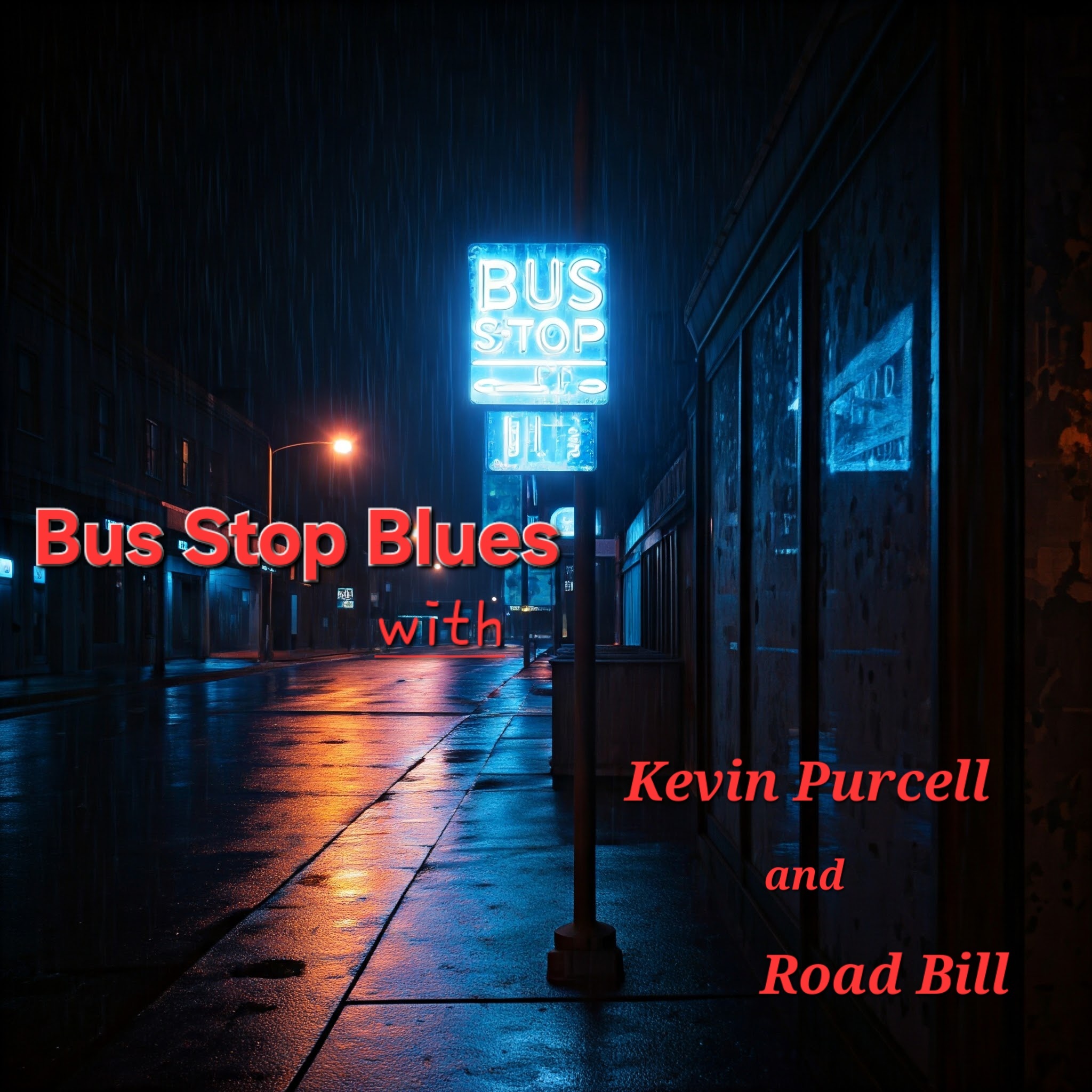
The Bus Stop Blues’s Podcast
thebusstopblues